

- What Is Prospecting?
- Inbound vs Outbound Sales Prospecting: What’s the Difference?
- The 5 Most Effective Sales Prospecting Methods
- How to Structure Your B2B Sales Prospecting Strategy?
- What Tool Should You Use to Manage Your Sales Prospecting?
- What Is a Sales Funnel in Prospecting?
- Let’s Recap about Sales Prospecting
- FAQ: Mastering Sales Prospecting
What is prospecting? It’s the foundation of any strong sales strategy. Without a clear process, though, it can turn messy fast and, yeah, frustrating too. 😅
The good news? With the right tools and tactics (LinkedIn, email, automation), you can turn prospecting into a structured, repeatable, high-performing system.
Let’s break down exactly how to turn prospects into customers. 🔥
What Is Prospecting?
The definition of prospecting is:
Sales prospecting is the ongoing process of identifying, reaching out to, and qualifying potential customers so you can turn them into paying clients.
But let’s be real it’s more than just “looking for clients.” 👀
The goal of sales prospecting is about creating opportunities. It’s about starting conversations with the right people, understanding what they actually need, and guiding them toward a solution, ideally yours. 🕺🏻
When done right, prospecting in sales isn’t pushy. It’s strategic. It’s structured. And most importantly, it’s intentional. 🧠
To do it well, you need to understand two key ideas first:
- The “temperature” of your prospects. 🌡️
- The way you approach them. 🤝
Cold vs Hot Prospects
Before you start sales prospecting, there’s one critical distinction you need to understand: not all prospects are at the same level of awareness. Treating a cold like a warm prospect is one of the fastest ways to lose a deal. 🤓
Here’s how they stack up:
| Criteria | Cold Prospect | Warm Prospect |
|---|---|---|
| Awareness of your brand | Doesn’t know you yet | Already knows your company |
| Level of interest | No expressed interest | Has shown clear interest |
| Previous interaction | None | Website visit, content download, reply, engagement… |
| Objective of your message | Spark curiosity | Move toward a decision |
| Sales approach | Educate and create relevance | Reassure, clarify value, handle objections |
| Conversion timeline | Longer | Shorter |
The takeaway? Your messaging should match their temperature. 🌡️
Sales Prospecting Approaches: Direct vs Relationship-Driven Strategies
When it comes to sales prospecting, there are two main ways to create opportunities.
One is proactive and immediate. ⚡
The other is gradual and built on trust. 🌱
Here’s how they compare:
| Criteria | Direct | Relationship-Driven |
|---|---|---|
| Who initiates contact? | You | The prospect (after engaging with your brand) |
| Main objective | Generate quick opportunities | Build trust and long-term interest |
| Timeline | Short-term results | Medium to long-term results |
| Typical channels | Cold email, LinkedIn outreach, calls, ads | Content prospecting marketing, SEO, social media, webinars |
| Level of personalization | High (when done right) | Indirect but value-driven |
| Scalability | High with automation tools | High with strong content strategy |
| Risk | Can feel intrusive if poorly targeted | Slower pipeline growth at first |
The smartest sales teams don’t choose one or the other, they combine both. 🚀
Inbound vs Outbound Sales Prospecting: What’s the Difference?
If you want consistent sales results, you need to understand one key distinction 👇
Are you attracting prospects… or actively reaching out to them? That’s the difference between inbound and outbound sales prospecting.
Both work. 💪
Both generate leads. 📈
But they operate in completely different ways. 🚙
Inbound Prospecting: The Long-Term Strategy
Inbound sales prospecting is all about attracting potential customers by delivering value first. 🎯
Instead of reaching out directly, you show up where your audience is already paying attention. Through content, visibility, and real expertise, you build trust before the sales conversation even begins. 🤝
Inbound usually includes:
- Posting valuable content on LinkedIn. 💬
- Writing blog articles optimized for SEO. 🔎
- Sharing insights, white papers, case studies, or helpful resources. 📚
The goal isn’t to push. It’s to educate, add value, and stay top of mind. 🧠
Today’s buyers do their homework. They research. They compare. They look for credibility. If you consistently show up with useful, relevant content, you naturally warm them up over time. 🔥
The catch? It takes patience. Inbound is powerful, but it’s a momentum game. The results compound over time, not overnight. 😴
Outbound: The Short-Term Growth Prospecting
Outbound sales prospecting is more proactive. ⚡ You define your target. You reach out. You start the conversation.
This process usually involves:
- Cold LinkedIn messages. 🥶
- Cold email campaigns. ❄️
- Phone outreach. 📞
Outbound gives you control. You decide who to contact and when. That means you can generate opportunities faster and build your pipeline in a more predictable way. 🥸
When your segmentation is sharp and your personalization is on point, outbound doesn’t feel pushy, it feels. The key? Precision. 🎯
- Poor targeting feels like spam. ❌
- Smart targeting feels like perfect timing. ⏰
Why You Need Both ?
If you rely only on inbound, growth can feel slow. ⏳
If you rely only on outbound, trust can take longer to build.
The strongest strategy? Combine both. 💡
Show up consistently and reach out strategically. That’s how you create sustainable, predictable growth. 🔥
The 5 Most Effective Sales Prospecting Methods
Not all prospecting methods are created equal. Some scale, some are outdated, and some are incredibly powerful, if you use them the right way. 😅
Here are the 5 most effective sales prospecting methods right now! 👇
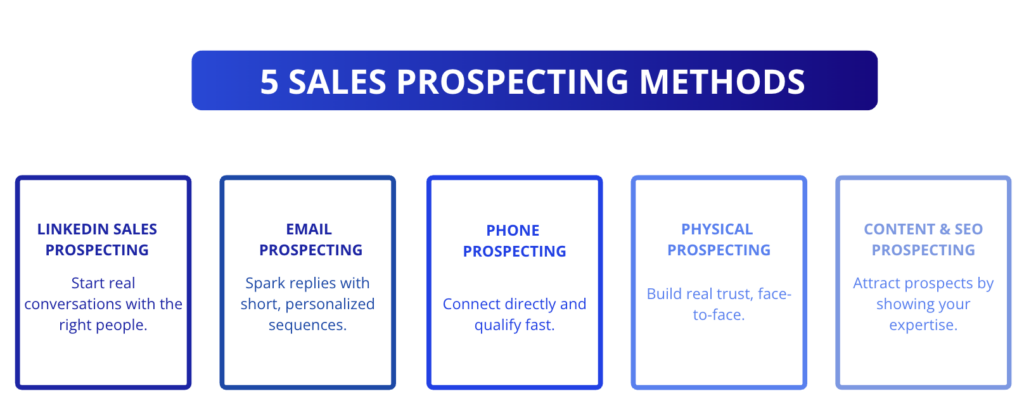
1. LinkedIn Sales Prospecting
With over a billion users worldwide 🌍, including hundreds of millions of decision-makers, LinkedIn is the largest professional database on the planet. And the best part? Your prospects are already there. 👀
When your targeting is sharp, everything else gets easier. But great LinkedIn sales prospecting doesn’t start with sending connection requests. It starts with positioning. 🧠
When you consistently share insights, engage with relevant conversations, and demonstrate real expertise, you build visibility. Visibility creates familiarity. And familiarity boosts response rates. 🔥
That’s social selling in action. 🤝 Instead of pushing your offer, you earn trust first. Then comes outreach, that’s where prospecting in selling begins.
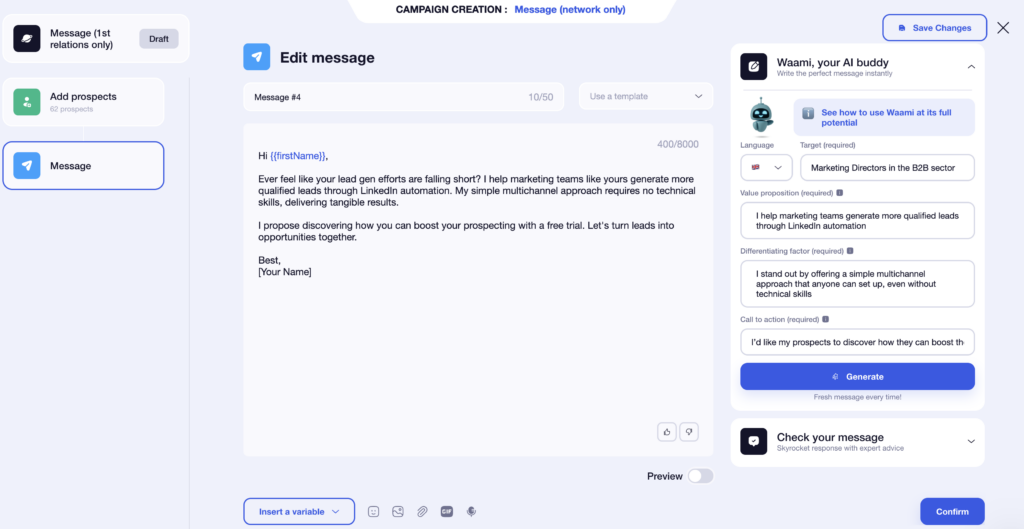
Effective LinkedIn messages are:
- Short ✂️
- Personalized 🧩
- Relevant 🎯
- Focused on the prospect 👤
Long sales pitches? Don’t work. ❌
Copy-paste templates? Even worse. 🚫
What works is proving you understand who they are, what they care about, and why you’re reaching out.
Structure matters too, LinkedIn outreach should never be random. 🎲
It should follow a clear sequence: connection request → follow-up message → reminder → conversation. 🔄
LinkedIn becomes truly powerful when you stop thinking in one-off messages and start thinking in systems: ⚙️
- Segment your audience. 🗂️
- Write targeted messages for each segment. ✍️
- Follow up strategically. 📨
- Track your responses. 📊
When you approach it this way, LinkedIn prospecting becomes scalable, measurable, and seriously effective. 💪
2. Email Prospecting
Email sales prospecting is still one of the most powerful outbound channels when it’s done right. 📩
In fact, studies show that around 80% of sales require at least 5 follow-ups. Yet most sales reps stop after the first or second attempt. That alone explains why so many campaigns underperform. 😅
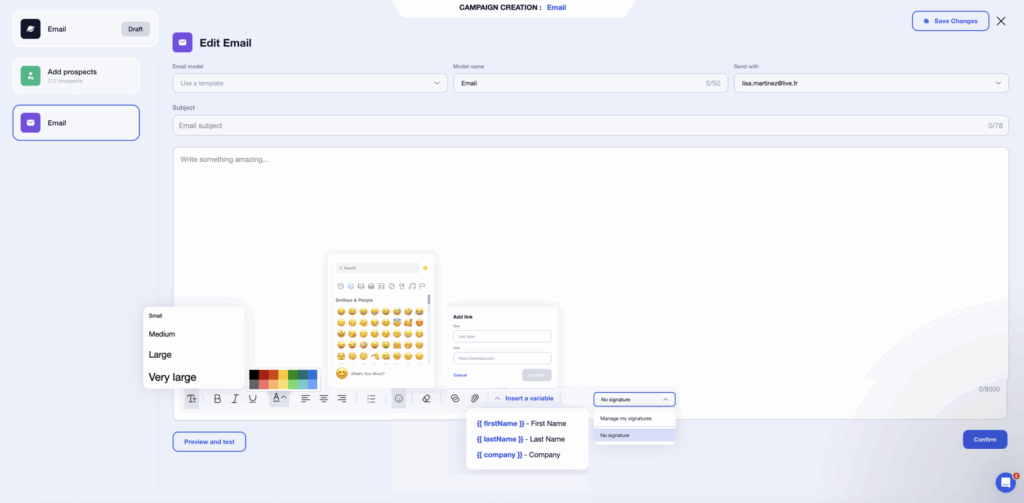
The problem? Most cold emails are too long, too generic, and way too focused on the sender instead of the recipient. A strong cold email follows a simple structure: 👇
- A short and relevant opening.
- A clear problem or opportunity.
- A concise value proposition.
- A simple call to action.
You’re not trying to close the deal in one email. You’re trying to start a conversation. 👭
Personalization is non-negotiable
Using someone’s first name isn’t personalization. 🙅♂️
Mentioning their role, a recent company update, or a specific industry challenge? That’s personalization 🎯
➡️ Ask yourself: Could I send this exact email to 100 people without changing anything?
If the answer is yes… it’s not personalized enough! 😅
The Follow-ups
This is where most conversions actually happen. 📈 Very few prospects reply to the first email. Many respond to the second or third touchpoint. That’s normal. A strong follow-up:
- Is short. ✂️
- References the previous email. 🔁
- Adds a small piece of value. 🧠
You’re not being annoying, you’re being consistent. 😉
Automation cold emailing
Instead of sending emails manually one by one ⏳, you can build structured sequences that:
- Trigger follow-ups automatically. 🤖
- Track open and reply rates. 📊
- Test subject lines and messages. 🧪
Automation doesn’t remove personalization. It removes inconsistency. When structured properly, email prospecting becomes predictable, scalable, and incredibly effective. 💪
3. Phone Prospecting
Phone sales prospecting is one of the oldest sales methods and definitely one of the most intimidating. 😅
Cold calling can feel uncomfortable. But when you do it right, it creates direct interaction, lets you handle objections in real time, and helps you qualify prospects fast ⚡
It’s less scalable than digital channels 🌐, but in the right industries, it can be extremely effective.
Here are 5 essential tips 👇
- Prepare your objective before you call. 🧠
- Make sure you’re speaking to the right decision-maker. 👤
- Keep your pitch short and clear. ✂️
- Ask open-ended questions. ❓
- End with a clear next step. 📅
Tone matters more than the script. Your energy, pace and confidence will influence the outcome more than the exact words you use. 😊
For example:
“Hi [Name], this is [Your Name]. I’ll keep this brief. I work with companies like yours to help them improve [specific outcome]. I was curious, how are you currently handling [problem you solve]?”
4. Physical Prospecting
Physical sales prospecting, on-site visits, in-person canvassing, and trade shows are much less common today. It’s less scalable, more time-consuming, and often more expensive 💰. But in the right context? It can be incredibly effective. 🕺🏻
Especially for:
- High-ticket sales. 💎
- Complex solutions. 🧠
- Products that require a live demonstration. 🎬
When the deal is big or the solution is sophisticated, relationships matter even more. And nothing replaces face-to-face interaction when trust plays a major role in the buying decision. 🤝
5. Content & SEO Prospecting (Inbound)
Unlike direct outreach, content and SEO sales prospecting strategies work differently. You’re not chasing prospects, you’re attracting them. 🧲
And the data makes a strong case for it. 📊 Companies that prioritize blogging generate 67% more leads than those that don’t. And inbound leads cost, on average, 61% less than outbound leads. That’s not just a small win, it’s a long-term competitive advantage.
Inbound prospecting is all about positioning yourself as the trusted expert. So when prospects need a solution, they think of you first. 🧠
It mainly relies on:
- Publishing valuable content (LinkedIn posts, blog articles, newsletters). ✍️
- Optimizing your website for SEO. 🔎
- Creating educational resources that solve real problems. 💡
SEO is especially powerful because it works 24/7. ⏰ Organic search drives around 53% of total website traffic for most businesses. That means more than half of your potential visitors may come from search alone, without you sending a single message. 📈
On LinkedIn, the principle is the same. The more consistently you share insights and engage with your audience, the more visibility you gain. And visibility builds authority. 🔥
Inbound sales prospecting takes time, it requires consistency and strong positioning, but once momentum kicks in, it becomes a long-term acquisition engine, one that supports and amplifies your outbound efforts. 🏋🏻♀️
| Method | ✅ Pros | ❌ Cons |
|---|---|---|
| LinkedIn Prospecting | Precise B2B targeting Scalable Strong response rates | Requires personalization Platform limits |
| Email Prospecting | Highly scalable Measurable performance Strong ROI | Crowded inboxes Deliverability challenges |
| Phone Prospecting | Real-time interaction Fast qualification | Not scalable High rejection rate |
| Physical Prospecting | Strong trust-building Ideal for high-ticket sales | Time-consuming Expensive |
| Content & SEO | 67% more leads with blogging Long-term authority | Slow initial results Requires consistency |
How to Structure Your B2B Sales Prospecting Strategy?
A lot of sales pros don’t fail because they lack effort, they fail because they lack a system. 😅
If you want predictable results, you need three things: a clear prospecting sales plan, organized data, and a consistent follow-up process. 🔁
No system = random results.
Clear system = controllable growth. 🚀
What Is a Prospecting Plan?
A sales prospecting plan is your roadmap for generating new business, simple as that. It answers three essential questions:
- Who are you targeting? 🎯
- How are you reaching out? 📩
- How are you moving prospects through your funnel? 🔄
A strong plan always starts with segmentation, define your Ideal Customer Profile (ICP): industry, company size, job title, common pain points, and buying triggers. The clearer your target, the higher your response rate. 😉
Then, choose your channel: LinkedIn, email, phone, depending on your objective and audience. The goal isn’t to “try everything.” It’s to be intentional. And most importantly, your prospecting must connect directly to your sales funnel. 🤓
Every message should move the prospect one step forward: from awareness → to conversation → to opportunity 📈. If your outreach doesn’t move the deal forward, it’s just noise. 😪
Prospect File vs Prospecting Sheet
These two often get confused, but they serve very different purposes. A sales prospecting sheet is your structured list of leads. It’s built using targeting criteria like industry, geography, or job title. Think of it as your organized pool of opportunities. 🗂️
A prospect file, on the other hand, zooms in on one specific contact. It includes details like:
- Contact information. 📇
- Decision-maker role. 👤
- Pain points. 💡
- Previous interactions. 💬
- Opportunity stage. 📊
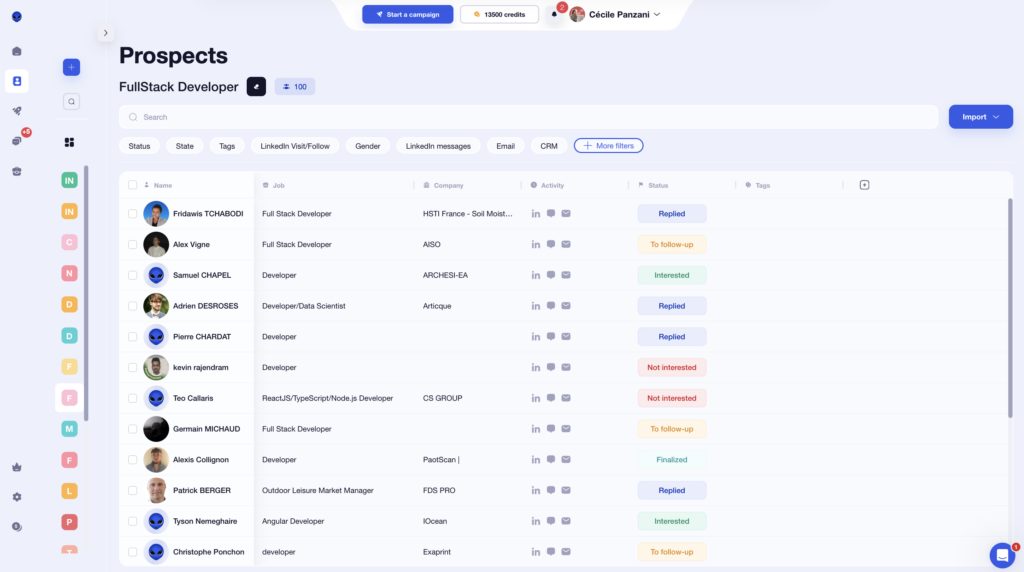
The sheet helps you manage volume, and the file helps you personalize and close. Both should live inside your CRM.
No more forgotten leads. No more duplicate outreach. Just structured, scalable sales prospecting 🚀.
What Tool Should You Use to Manage Your Sales Prospecting?
A sales funnel isn’t just a concept, it needs the right tool behind it. If you’re managing prospect lists in a spreadsheet, sending messages manually, and tracking follow-ups in your head… your funnel will eventually break. 😅
To make sales prospecting predictable, you need a system that centralizes everything. That’s where Waalaxy comes in! With this tool, you can:
- Build and manage segmented prospect lists. 🎯
- Launch LinkedIn and email sequences. 📩
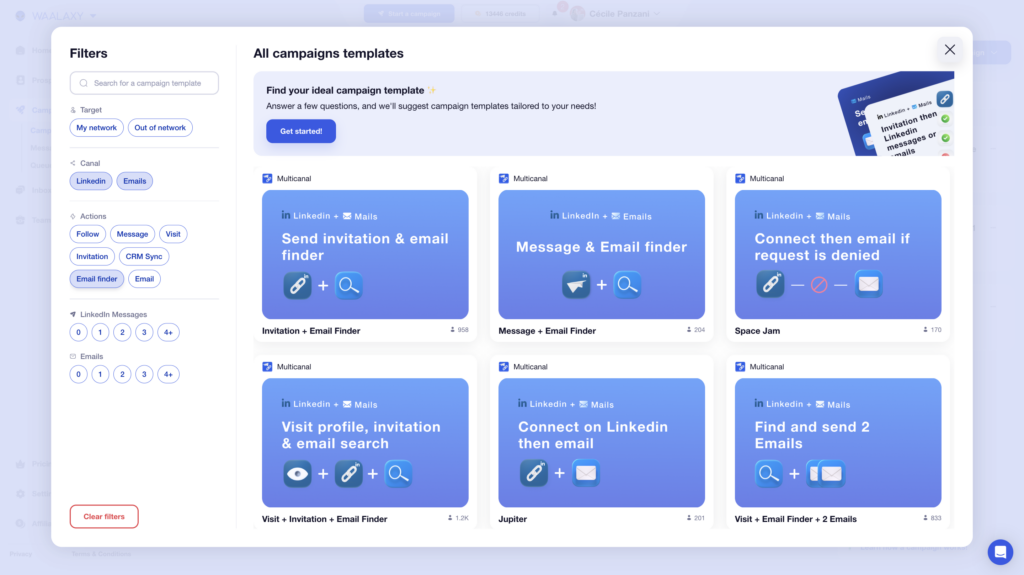
- Automate follow-ups. 🤖
- Track conversations in a unified inbox. 📥
- Move prospects through pipeline stages. 🔄
- Monitor performance in real time. 📊
Instead of jumping between LinkedIn, your inbox, spreadsheets, and sticky notes, everything lives in one place. 🏠
You can instantly see:
- Who replied? 💬
- Who needs a follow-up? 🔁
- Who booked a meeting? 📅
- Who moved to the next stage of your funnel? 📈
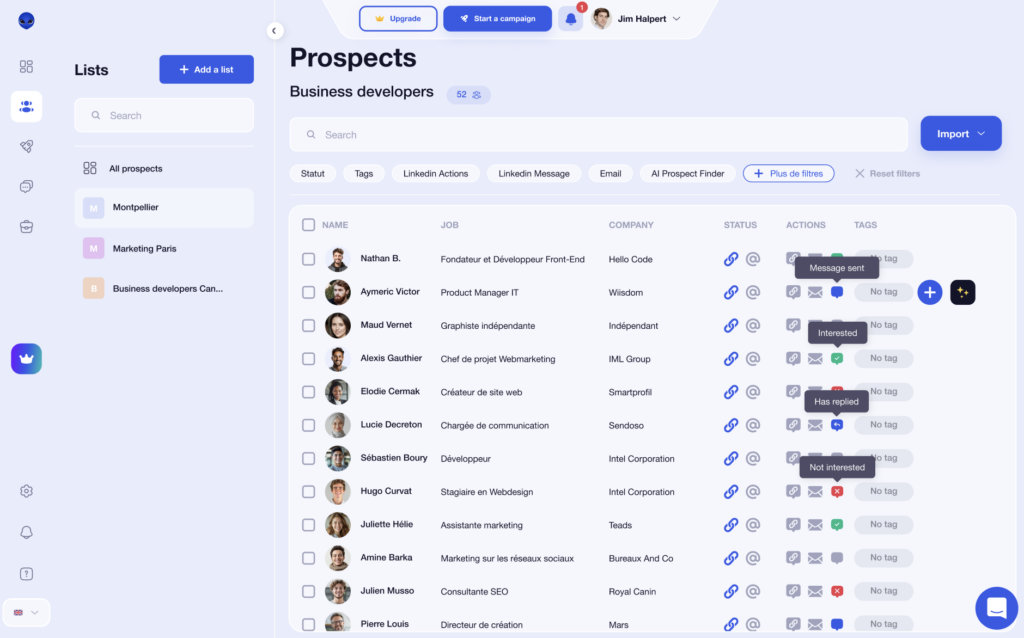
That kind of visibility changes everything because optimization isn’t about guessing. It’s about tracking, adjusting, and improving continuously. ⭕️
Sales Techniques That Convert Prospects into Customers
Sales prospecting starts conversations. Sales techniques close deals. 💼
Reaching out is one thing. Turning interest into revenue? That’s a different skill set.
A sales technique is simply the right mix of structure, psychology, and communication that helps you guide a prospect from curiosity to commitment. 🎯 Two classic frameworks are still incredibly effective today: AIDA and SPANCO.
Let’s break them down!👇
The AIDA Method
AIDA stands for:
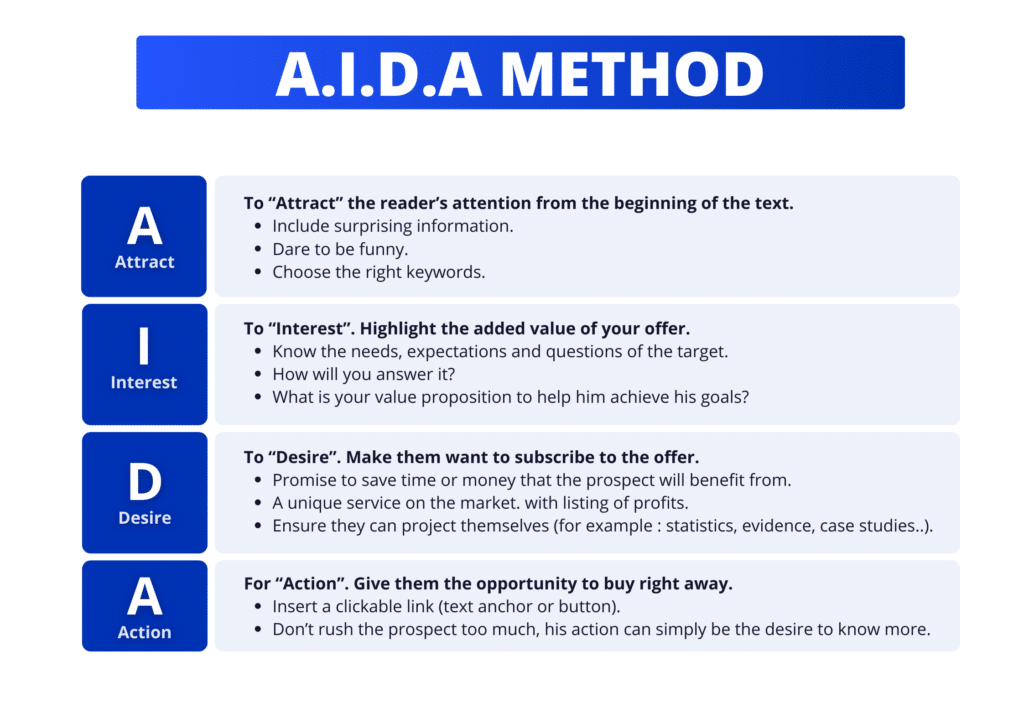
First, you grab attention. Then you build interest by highlighting a relevant problem. Next, you create desire by showing how your solution helps. Finally, you guide the prospect toward action, booking a call, replying, and moving forward. 😉
If your outreach isn’t converting, you’re probably skipping one of these steps. 😬
The SPANCO Framework
SPANCO maps the key stages of the sales process. 📊
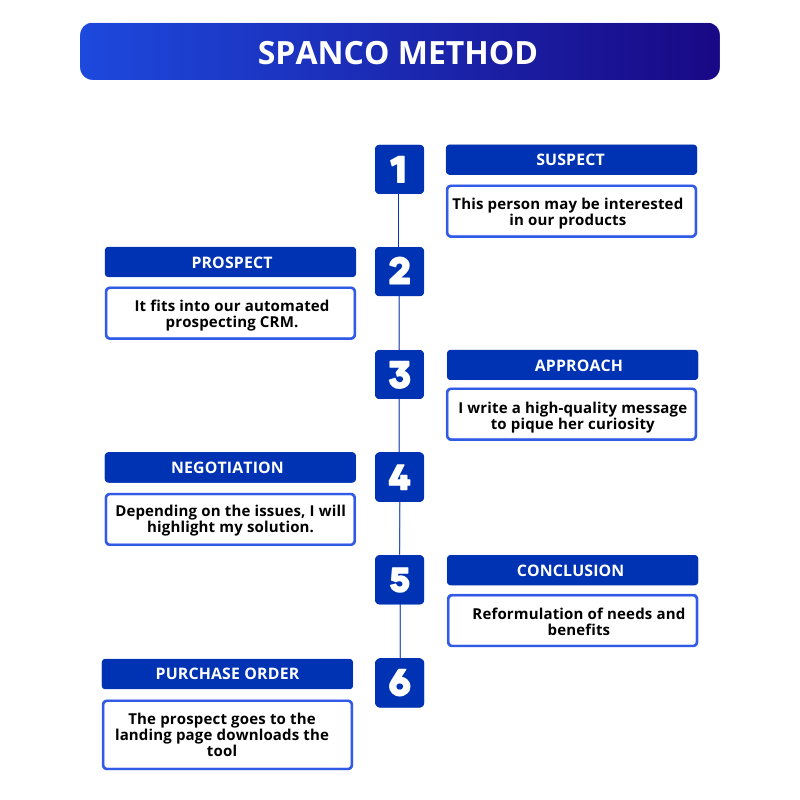
It reminds you that sales is a sequence, not a shortcut. You don’t jump straight to closing before qualifying. You don’t negotiate before fully understanding the need. Each step builds on the previous one. 🔄
When you respect the process, your conversions naturally improve. ⭐️
What Is a Sales Funnel in Prospecting?
If prospecting is the action, the sales funnel is the structure behind it. 🏗️
A sales funnel represents the journey your prospect takes, from first contact to paying customer. Without a funnel, your sales prospecting efforts stay scattered and reactive. With one, they become structured and intentional. 🎯
1. From Acquisition to Revenue
One of the most popular funnel models is AARRR (also known as Pirate Metrics 🏴☠️):
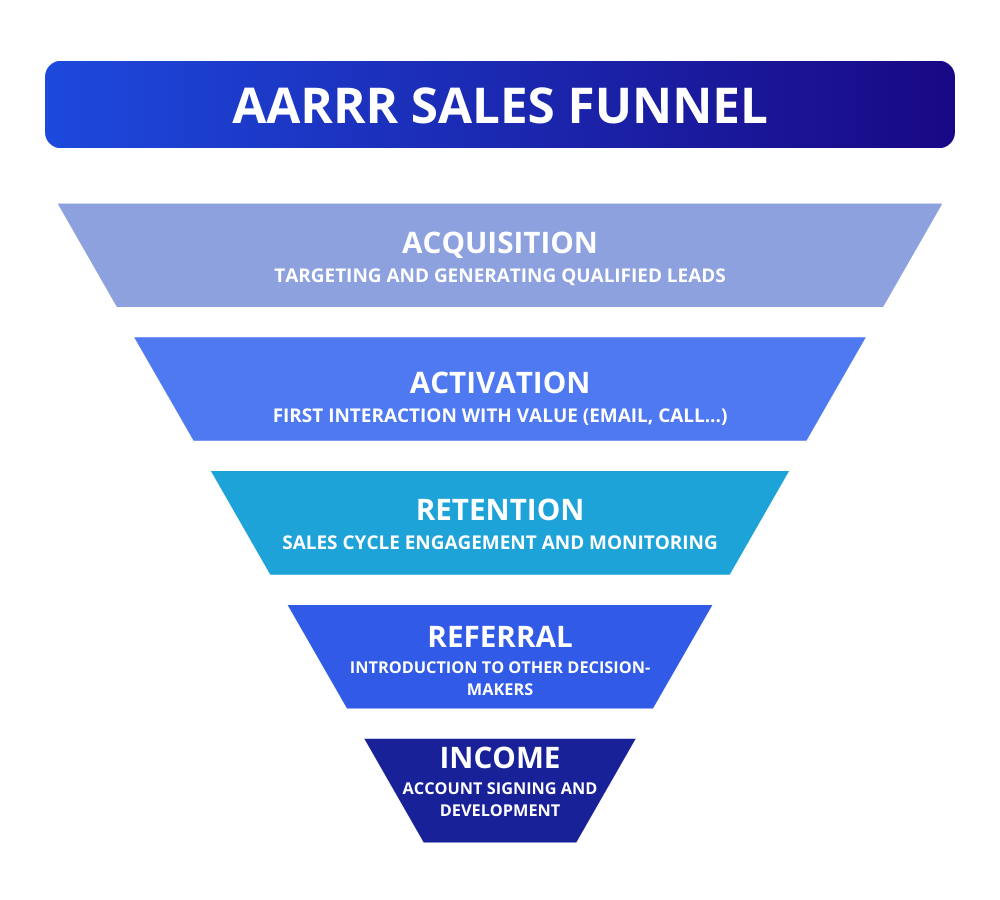
Each stage requires a different action and a different message 📩. You don’t speak the same way to someone who just discovered you as you do to someone who’s ready to buy. That’s why segmentation and pipeline visibility are critical. 📊
2. Conversion Funnel & Automation
In modern prospecting, your funnel shouldn’t rely on memory or scattered spreadsheets 😅. It should be structured and partially automated. 🤖
For example, a prospect connects with you on LinkedIn, receives a follow-up message, and if there’s no reply, an email is triggered automatically. Once they engage, they move to the next stage of your pipeline. 🔄
Tools like Waalaxy let you build cross-channel sequences while centralizing conversations inside your CRM. That means you’re not just sending messages, you’re guiding prospects through a controlled, intentional journey. Automation doesn’t replace human interaction, it ensures consistency. 😇
3. Optimization Is the Real Game
A funnel is never static 📈. You constantly analyze what’s working and what’s not: response rates, conversion points, drop-offs, and bottlenecks. Then you adjust to sharper targeting, stronger hooks, and better follow-ups.
That’s how prospecting becomes predictable. When acquisition, follow-ups, CRM tracking, and optimization all work together, you don’t just generate leads, you generate scalable revenue. 💸
Let’s Recap about Sales Prospecting
Sales prospecting isn’t about sending more messages. it’s about building a system that turns conversations into customers. 🚀
When you understand your prospects, match your approach to their “temperature,” combine inbound and outbound strategies and structure everything inside a clear funnel, sales stops feeling random. It becomes intentional. Predictable. Scalable. 📈
Add the right tools, consistent follow-ups and continuous optimization, and prospecting transforms from a daily grind into a true growth engine. 🔥
This is professional prospecting combined with a strong promotions strategy structure plus visibility. That’s how you move from chasing leads… to generating revenue on repeat 💪
FAQ: Mastering Sales Prospecting
What is the synonym for prospecting?
Common synonyms for sales prospecting include:
- Lead generation. 🎯
- Client prospecting acquisition. 🤝
- Outreach. 📩
- Business development. 📈
- Market exploration. 🔎
In a sales context, prospecting specifically refers to identifying and contacting potential customers not just attracting attention, but starting real conversations. 💬
What’s your prospection def?
Sales prospecting is the process of identifying, contacting, and qualifying potential customers with the goal of converting them into paying clients. 💰
It includes researching your targets, initiating outreach, and guiding prospects through the early stages of your sales funnel. 📊
What is a prospecting action?
A sales prospecting action is any activity designed to initiate contact with a potential customer. 🚀
Examples include:
- Cold emails. 📩
- Sales calls. 📞
- LinkedIn messages. 💬
- Sales SMS. 📲
- Booking meetings. 📅
An effective prospecting strategy usually combines multiple actions across different channels to increase conversion chances.
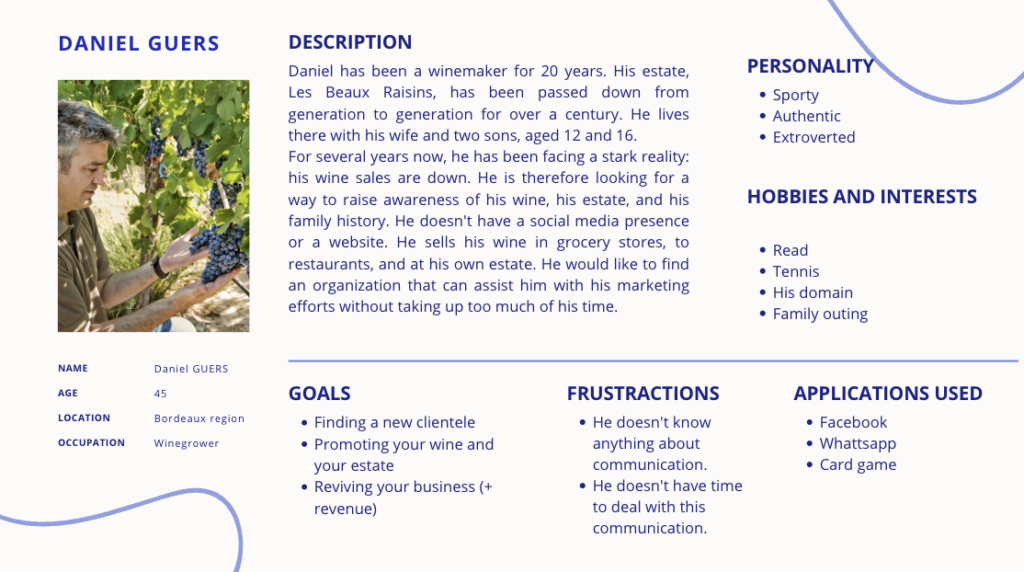
What is persona prospecting?
Persona-based prospecting means adapting your outreach strategy to specific customer profiles (personas) and aligning with each prospecting personality type. 👤
Instead of sending the same message to everyone, you:
- Personalize your messaging. 🎯
- Adjust your tone and value proposition. 🧠
- Adapt your funnel to their specific needs. 🔄
- Track conversion rates by persona. 📊
The result? Higher relevance and stronger response rates. 🕺🏻
What are the different types of prospecting?
There are three main types:
- 1. Direct prospecting (Outbound): You actively contact prospects through cold emails, phone calls, LinkedIn outreach or paid ads. 📢
- 2. Indirect prospecting (Inbound): Prospects come to you through content marketing, SEO, or brand visibility. 👀
- 3. Multi-channel prospecting: A strategic combination of inbound and outbound approaches. 🔀
The most effective strategy blends several channels without overwhelming your prospects. 💡
What is the purpose of prospecting?
The primary goal of prospecting is to generate new business opportunities and drive revenue growth. 💸
For a prospector, it’s about consistently opening doors, starting conversations, and creating momentum in the pipeline. It builds a steady flow of qualified leads, ensuring consistent performance and long-term customer relationships. 🤝
What are the main steps of the prospecting process?
The typical sales prospecting process includes:
- Defining your buyer persona. 🎯
- Building a targeted prospect list. 📋
- Initiating outreach. 📩
- Following up. 🔁
- Qualifying prospects and moving them into your sales funnel. 📊
Consistency and personalization are critical at every step.
What is the difference between a prospect and a lead?
A lead is a contact who has shown interest in your product or service 👀
A prospect is a qualified lead who matches your ideal customer profile and has a higher probability of becoming a customer. 💼
{ “@context”: “https://schema.org”, “@type”: “FAQPage”, “mainEntity”: [ { “@type”: “Question”, “name”: “What is the synonym for prospecting?”, “acceptedAnswer”: { “@type”: “Answer”, “text”: “Common synonyms for prospecting include lead generation, client acquisition, outreach, business development, and market exploration. In a sales context, prospecting refers specifically to identifying and contacting potential customers.” } }, { “@type”: “Question”, “name”: “How do you define sales prospecting?”, “acceptedAnswer”: { “@type”: “Answer”, “text”: “Sales prospecting is the process of identifying, contacting, and qualifying potential customers with the goal of converting them into clients. It involves researching targets, initiating outreach (email, phone, LinkedIn, etc.), and guiding prospects through the early stages of the sales funnel.” } }, { “@type”: “Question”, “name”: “What is a prospecting action?”, “acceptedAnswer”: { “@type”: “Answer”, “text”: “A prospecting action is any activity aimed at initiating contact with a potential customer. Examples include cold emails, sales calls, LinkedIn messages, sales SMS, and booking meetings. An effective prospecting strategy usually combines multiple actions across different channels to increase conversion chances.” } }, { “@type”: “Question”, “name”: “What is persona prospecting?”, “acceptedAnswer”: { “@type”: “Answer”, “text”: “Persona-based prospecting means adapting your strategy to specific customer profiles. Instead of using the same message for everyone, you personalize messaging, adjust your tone and value proposition, adapt your sales funnel, and track conversion rates by persona. This improves relevance and increases response rates.” } }, { “@type”: “Question”, “name”: “What are the different types of prospecting?”, “acceptedAnswer”: { “@type”: “Answer”, “text”: “There are three main types of prospecting: direct prospecting (outbound), where you actively contact prospects; indirect prospecting (inbound), where prospects come to you through content or advertising; and multi-channel prospecting, which combines outbound and inbound strategies. The most effective approach often mixes several channels without overwhelming prospects.” } }, { “@type”: “Question”, “name”: “What is the purpose of prospecting?”, “acceptedAnswer”: { “@type”: “Answer”, “text”: “The main goal of prospecting is to generate new business opportunities and grow revenue. It helps build a steady pipeline of qualified leads, ensuring consistent company growth and long-term customer relationships.” } }, { “@type”: “Question”, “name”: “What are the main steps of the prospecting process?”, “acceptedAnswer”: { “@type”: “Answer”, “text”: “The prospecting process typically includes defining your ideal customer profile, building a targeted prospect list, initiating outreach, following up, and qualifying prospects within the sales funnel. Consistency and personalization are key at every step.” } }, { “@type”: “Question”, “name”: “What is the difference between a prospect and a lead?”, “acceptedAnswer”: { “@type”: “Answer”, “text”: “A lead is a contact who has shown interest in your product or service. A prospect is a qualified lead who matches your ideal customer profile and has a higher probability of becoming a customer.” } } ] }Now you know everything about “What Is Prospecting”? 🧚🏻♀️
 Elodie
03/03/2026
Elodie
03/03/2026