

Sales follow up emails are far from obsolete. Quite the contrary, they are often what makes the difference between an opportunity that dies in the inbox… and a reply that unlocks the next step.
That’s exactly what we’re going to work on together. 😇
We’ll look at why and how to send sales follow-up emails, with 17 of the best sales follow-up email templates you can adapt and a simple method to write your own (and automate them if needed).
Here’s the plan:
- What is a professional sales follow up email?
- Why use sales follow up emails?
- 17 sales follow up email examples (job application, quote, unpaid invoice, customer, partnership, etc.).
- Best practices for sales follow up emails.
- How to write a follow up email after no response for sales (and use AI to help you).
Let’s dive in, we’ve got work to do. 🥖
What is a professional sales follow up email?
A professional sales follow up email is an email you send to someone you’ve already contacted (prospect, customer, recruiter, partner, supplier, colleague, etc.) who still hasn’t taken the expected action: replying, signing a document, paying an invoice, approving a contract, giving feedback, and so on.
It comes at a key moment in the funnel: after the first touchpoint (cold email) or after an action from the person (download, sign-up, purchase, trial, etc.).
A sales follow up email can be:
- Transactional: due date reminder, unpaid invoice, order confirmation, file tracking.
- Commercial/marketing: follow up on a proposal, demo, free trial, meeting, or job application.
- Relational: staying in touch, restarting a conversation, and nurturing a relationship over time.
Its purpose is not always “sell right now.” A good sales follow up email is mainly there to:
- Bring the topic back on your contact’s radar.
- Reduce friction (make the next step simple and clear),
- Show your seriousness, reliability, and interest.
When written well, a sales follow up email:
- Increases your response rates,
- Strengthens relationships,
- Improves how professional you look,
- And in the best case, it builds customer loyalty.
The key: not sounding too pushy.
Why use sales follow up emails?
Many people send one message… then give up. Yet the majority of replies arrive after a follow up.
Sales follow up emails are useful because they allow you to:
- Recover lost opportunities: An unread or forgotten email, or one marked “deal with later,” can become a priority again thanks to a short, clear sales follow up email.
- Show how serious you are: A well-written sales follow up email proves you’re organized, committed, and consistent.
- Speed up decisions: Reminder about a quote, proposal, file, job application… A structured sales follow up email often unlocks a decision that’s been dragging on.
- Improve your conversion rates: Between “I’ll think about it” and “yes,” there is very often… a well-timed sales follow up email.
- Nurture relationships over time: Especially in B2B, following up is not just transactional; it’s also about staying in the picture without being intrusive.
👉 In short: not sending sales follow up emails means leaving money and opportunities on the table.
17 Free Sales Follow-Up Email Templates for Every Situation
There are many ways to follow up, but try to always keep:
- A short/clear/precise subject line and body
- A tone adapted to the person (polite, respectful, professional) 🖋️
- A clear call to action (what you expect)
- Personalisation based on the company or person
- No spelling or grammar mistakes (quick check before sending)
You can adapt all the examples of the best follow-up emails for sales, below, to your own context.
1. Follow-up email for job application after no response
You sent your resume and cover letter for a job offer… But you haven’t heard back?
Sending a polite sales follow up email shows you’re motivated, proactive, serious, and respectful.
SUBJECT: Follow up on application for the position of [Job title]
Hello {{firstName}},
I’m writing to follow up on my application sent on [date] for the position of [job title] at {{company}}.
I am still very interested in the opportunity to join your team and contribute to [mention a challenge or mission related to the role]. I just wanted to make sure that my application (resume and cover letter) has reached you and to find out whether a recruitment timeline has already been set.
I’m confident that my [skills] would be a strong asset, and I would really appreciate the opportunity to discuss this with you in an interview.
Of course, I remain available should you need any further information or additional documents.
Thank you for your time and consideration.
[Professional signature with full name and phone number]
When you send a first sales follow up message to a recruiter, the goal is simply to:
- Check they received your application.
- Reiterate your interest.
- Maybe try to secure an interview.
👉 Keep in mind (whether it’s an internship, apprenticeship, fixed-term, or permanent contract):
- Wait 7–10 days before following up,
- Remind them of the date and position.
- Summarize in one sentence what you can bring.
💡 For an unsolicited application, since you’re not responding to a specific job offer, your sales follow up email will need a slightly different angle (more context, more value, less pressure).
2. Email template follow up after interview
After a job interview, decision timelines can vary a lot, and a professional sales follow up email can really make a difference.
Your after interview follow up email should:
- Say thank you.
- Show that you understood the position and can see yourself in the role.
- Ask where they are in the process.
Subject: Following our interview on [date] – Application for [job title]
Hello {{firstName}},
First of all, thank you again for the interview we had on [date] regarding the position of [job title]. Our conversation gave me a clearer view of the role, especially regarding [mention a specific point: team, tasks, context, etc.], and it has reinforced my desire to join {{company}}.
I wanted to know if a decision timeline has already been set and whether you might need any additional information from me (references, portfolio, tests, etc.).
I remain at your disposal for any further information and would be delighted to continue the recruitment process with you.
Best regards,
[Professional signature]
Key points to make in this sales follow up email after interview example work:
- Wait 5–10 days after the interview before sending it.
- Refer back to a specific point from the conversation (challenge, team, values, etc.) and summarize what you can bring in one sentence.
- Ask a simple question: timeline, next steps, any missing information.
- Keep the tone positive and non-pressing, even if it feels long: it should read like a professional thank-you email that makes them want to continue the conversation.
3. Email template follow up after meeting
You managed to get a meeting with a prospect, client, or partner? Congrats! 🙌🏼
After a first meeting, the idea is to maintain momentum with a sales follow up email that clarifies the next steps.
Subject: Following our conversation on [date] – [Project name / topic]
Hello {{firstName}},
Thank you again for the meeting [yesterday / last week] about [project / need]. Our conversation helped me understand your challenges around [summarize in 1 sentence: “acquiring new leads,” “optimizing internal processes,” etc.].
As agreed, I suggest that we [remind them of the next step: send a recap, a proposal, a timeline, etc.].
Please let me know if this plan still fits your current priorities or if certain points need to be adjusted.
If you’re available, I can also offer you a 20-minute slot this week to validate the next step together.
I look forward to continuing the discussion.
[Professional signature]
In a business context, remember to:
- Do not wait too long before contacting them again.
- Summarize the need in one sentence.
- Check whether the project is still a priority and restate the next step.
- Keep showing enthusiasm and a collaborative attitude.
- Propose a short meeting to validate progress.
4. Sales follow up email for unpaid invoices
Not the most fun one, but maybe you still have an overdue or unpaid invoice hanging around? 💀
Subject: Reminder for invoice no. [number] – Due date passed
Dear {{lastName}},
Unless we are mistaken, invoice no. [number], issued on [date] for an amount of [amount] €, still appears to be unpaid as of today.
We would be grateful if you could arrange payment as soon as possible. If payment has already been made, please ignore this message.
Should you have any difficulties or questions, please do not hesitate to contact me so we can work out a suitable solution together.
Kind regards,
[Signature + billing details]
Things we recommend including in this kind of sales follow up email:
- Stay firm but polite and factual.
- Provide as much information as possible about the unpaid invoice (date, invoice number, amount due).
- Specify any late fees or legal/collection steps if relevant.
- Attach your bank details 💳 or link to the payment platform.
- Offer to talk if there are issues.
5. Sales follow up email for unanswered job applications
Writing a sales follow up email after your application remains unanswered can feel tricky, but here’s a template and the key elements. 👇
Subject: Follow up on my application—Reminder from [date]
Hello {{firstName}},
I’m following up on my application for the position of [job title], sent on [date], and my follow up on [date].
I understand that your recruitment process can take time, but I wanted to know whether a decision or next step has already been considered.
I remain very motivated by the idea of joining {{company}}, especially to contribute to [mention a specific goal related to the role], and of course I’m available if you need any additional information (references, achievements, availability, etc.).
Thank you in advance for your reply—even a brief one—so that I can plan accordingly.
Best regards,
[Professional signature]
Why this sales follow up email template works:
- You remind them that you’ve already followed up (wait at least 2 weeks between follow-ups),
- You restate the job title.
- You clearly ask for an update.
- You show you’re still motivated and reiterate your interest.
- You make it easy to reply with a “brief answer,” without necessarily getting a professional meeting.
- You remain available for extra information.
6. To a supplier
Waiting for an order confirmation, delivery date, or logistics info? Time for a sales follow up email to your supplier. 💸
Subject: Follow up regarding order no. [order number]
Hello [Supplier name],
I hope you’re doing well.
I would like to follow up on my previous email, regarding our order no. [number], placed on [date].
We haven’t yet received confirmation of product availability or an estimated delivery date. This information is important for us to organize our production/deliveries accordingly.
Could you please confirm the status of this order or let me know if any adjustments are necessary?
Thank you in advance for your reply and your help.
Kind regards,
[Professional signature]
We recommend that you:
- Refer to previous email exchanges and remind them of the full context.
- Mention the order number and explain why the information is important (production, planning, organization).
- Show you’re available and, if needed, suggest a deadline for a response.
- Thank them for their time and attention with a polite closing to end your email.
7. To a colleague
For a sales follow up email to a colleague, there’s no standard timing or subject line—it depends on your relationship. 👇🏼
Subject: Follow up about file [Name / file number]
Hello {{firstName}},
I’m following up about the file [name / no.] we discussed [yesterday / last week]. Have you had time to take a look at it and think about potential next steps?
On my side, I’ve already started working on [mention 1–2 points], and I’d need your feedback to move forward confidently. If you’re available, we could schedule a short 15-minute meeting early next week.
Thanks in advance for your feedback.
[Signature]
[Your name]
Keep in mind: 💡
- Your colleague must clearly understand what you’re referring to.
- Pull in the key elements from your last conversation.
- Adapt “you” vs. a more formal tone depending on company culture and hierarchy.
- If the relationship is not friendly, you can start your professional reminder email with “I’m following up with you regarding…” instead of something casual.
8. After requesting a document/signature
How to follow up on a proposal, contract, or purchase order after some time? Here’s a very simple sales follow up email template for your target 🎯.
Subject: Follow up regarding [type of document/contract]
Hello {{lastName}},
I’m following up regarding the proposal/contract [name] sent on [date] concerning [project/service].
I wanted to check that you received it and find out whether any points need to be clarified before approval. If you’d like, I can suggest a brief call to answer your questions and finalize the details.
You can reply by email or reach me on [phone number].
Best regards,
[Signature]
As with all your other sales follow up emails:
- The recipient must instantly understand why you’re contacting them.
- Remind them of the contract agreement, details: name and date sent,
- Offer a quick call to make approval easier.
9. To a customer (reactivation or event)
You can send a follow up prospecting email to:
- Promote a new offer,
- Share a discount,
- Invite them to a LinkedIn Live, webinar, launch event, etc.
Here’s a copy-paste-ready sample sales follow up email template to reactivate a dormant customer and improve reply rates:
Subject: We’re saving you a seat. 🎟️
Hello {{firstName}},
It’s been a while since we last spoke, and I wanted to share something that might interest you: we’re organizing a [webinar / live event / workshop] on [date].
In 45 minutes, you’ll walk away with [2–3 concrete benefits]. If this is a relevant topic for you, you can register here: [link].
And if you prefer, I can also send you the replay after the event.
I look forward to hearing from you.
[Signature + company]
In any case: ⬇️
- Add real value (useful content, tools, and methods).
- Explain what the person will actually gain.
- Offer your help to clarify any questions 🤔.
- Be mindful of the tone—it can be more friendly, with emojis, if your brand voice allows it.
10. After sending a quote or sales proposal (no response)
The classic quote follow up email: check that everything has been received, reassure the prospect, and propose a conversation.
🔗 Give your prospect a bit of time to gather info and weigh pros and cons (wait a few days before your sales follow up email).
But you also need to gently push them to sign the quote without harassing them. 🤫 Your job is to find the right balance.
[SUBJECT] Follow up on quote no. [quote number] regarding [product or service name]
Hello Mr./Mrs. {{firstName}},
I’m getting back to you regarding your [project name] project. I sent you a quote on [date] and wanted to check if you received it.
I’d be happy to suggest a phone call at your convenience so I can answer any questions you might have.
Please don’t hesitate to contact me if you need any further information.
Kind regards,
[Your first and last name]
In this sales follow up email, it’s essential to: ⬇️
- Mention the quote number and the added value of the project.
- Include the name of the project/solution/service,
- Confirm your desire to solve a real problem.
- Offer a call,
- Indicate a deadline and/or reference a previous communication if relevant (end of offer, schedule, etc.).
11. In a sales prospecting sequence
Your first outbound message went unanswered?
You might need several sales follow up emails to warm up your prospect.
A short, value-centred sales follow up email can break the deadlock. 👇
Subject: Still interested in talking about [issue]?
Hello {{firstName}},
I contacted you on [date] about [issue/solution], probably at a busy time for you.
Since you manage [role / responsibility], I imagine the topic is still relevant: we help companies like {{company}} to [specific result: “generate X% more leads,” “reduce the time spent on…,” etc.].
Would you be open to a 15-minute chat to see if this could be helpful for you, now or later? If not, just let me know and I won’t follow up again.
Best regards,
[Signature]
When you reach out to a prospect:
- Write as you speak, so they know there’s a human behind the email.
- Make your prospect want to read to the end or reply (that’s the hardest part).
- Don’t harass them with daily emails, especially when you’re trying to sell 🤑.
- Offer a short follow up email format sales (15 minutes) and always leave an exit option—it reassures and boosts reply rates.
12. After a partnership request
When a partnership proposal goes unanswered, a tactful sales follow up email is essential: you want to maintain interest without adding pressure.
Subject: Partnership proposal – still relevant?
Hello {{firstName}},
I reached out on [date] to suggest a partnership around [type of partnership: co-marketing, webinar, joint content, etc.].
I’m still convinced there’s great potential between {{company}} and [your company], especially in terms of [mention 1 concrete benefit for them].
If you’re still interested but feel the format should be simplified or adjusted, I’d be happy to discuss options. Otherwise, just let me know, and I’ll simply note that this isn’t the right time.
Thank you for your feedback.
[Signature]
A partnership is based on mutual benefit. To maximize your chances:
- Emphasize the value for them, not you.
- Show you’re flexible on the format (co-creation, light version, simple share, etc.).
- Always leave a way out (as with prospects).
- Keep a collaborative, non-pushy tone: you’re proposing an opportunity, not forcing a sale.
13. After a demo or trial
After a demo or trial—the moment when the prospect really tests your solution—a quick, supportive sales follow up email is crucial.
Subject: Following your trial of [product]
Hello {{firstName}},
Thank you for taking the time to test [product/solution] over the last few days. I’d love to hear your feedback: what did you like, and what was missing?
If you’d like, I can also show you how [key feature] can help you [specific benefit linked to their context].
Would you like to schedule a quick call to answer your questions and see whether we can move forward, or would you prefer to extend the trial for a few more days?
I look forward to hearing from you.
[Signature]
To help a prospect move forward after a trial:
- Ask open-ended questions to get honest feedback (and reopen the conversation).
- Suggest a simple action: a quick call, advanced demo, or extended trial.
- Mention a feature directly tied to their need to create a trigger.
- Watch the timing: ideally 24–72 hours after the trial.
14. After leaving a voicemail
A sales follow up email after sales call or after a voicemail is essential to:
- Leave a written trace,
- Summarize your intention.
- Make it easy to respond without calling back.
Subject: A quick follow up to my voice message
Hello {{firstName}},
I left you a voicemail this morning about it. I’m also emailing you so you have the information in writing.
In short, I wanted to discuss [summarize in one sentence what you’re proposing / asking].
If that works for you, just let me know.
– Whether you prefer a 10–15 minute call,
– Or whether you’d like me to send you a short summary by email.
Thank you for your reply.
[Signature]
To maximize your chances of getting a response:
- Summarize what you’re asking in one sentence.
- Avoid repeating your voicemail word for word.
- Offer two options (call or email) to reduce friction.
- Keep the voicemail itself light and respectful—if badly done or not followed up, it can feel intrusive.
15. After several attempts to contact
When several sales follow up emails remain unanswered, send a follow-up email to close the loop… while leaving a good impression.
Subject: I promise, this is my last follow-up. 🙂
Hello {{firstName}},
I’ve emailed you several times over the last few weeks about it, without wanting to be intrusive.
Since I haven’t heard back, I imagine it’s not a priority for you right now.
So I suggest we leave it there for the time being. If it becomes relevant again, I’d of course be happy to discuss it and show you how we can help you with [benefit].
In any case, thank you for taking the time to read my messages, and I wish you all the best with your projects.
Best regards,
[Signature]
This final sales follow up email must be perfectly balanced:
- Show that you respect their time and priorities.
- Feel like a door left ajar, not an ultimatum,
- Add a sentence that shows you understand their situation.
- Stay kind: a silent prospect today may come back months later.
16. With a benefit attached (offer, bonus, content)
Offering a bonus or resource is a great way to reactivate a dormant contact.
This kind of sales follow up email works especially well when you’ve already spoken, but the decision is taking time.
Subject: A little bonus if you’ve got 2 minutes
Hello {{firstName}},
I’m following up regarding [proposal / project], and to thank you for the attention you’ve already given it, I wanted to share a small bonus:
We’ve prepared a [guide / template / resource] that helps you [specific result]. You can download it for free here: [link].
If after reading it you feel it could fit into your current projects, I’d be happy to talk it through with you.
Happy reading,
[Signature]
To make this approach effective:
- Offer real value, not a random generic resource (lead nurturing)
- Explain how the bonus can help them right now.
- Offer value, not just a pushed discount (avoid overly transactional vibes).
- Add a simple CTA: “If that helps, let’s talk about it.”
17. To reconnect after a while
Following up after several months lets you reactivate opportunities without sounding pushy.
This kind of sales follow up email is especially useful for networking, long-term prospecting, and customer retention.
Subject: It’s been a while since we last spoke. 🙂
Hello {{firstName}},
I realized that our last conversation dates back to [month / year], and I wanted to check in. How are things going on your side?
On our side, we’ve [launched a new feature / updated X / published content] that might interest you: [short explanation + link if relevant].
If I can help you in any way or answer any questions, I’d be happy to.
I look forward to hearing from you.
[Signature]
To make this email feel natural rather than opportunistic:
- Refer to a shared context (project, event, topic),
- Provide a small relevant resource: content, update, useful info,
- Don’t ask for anything right away—let them come back if they want.
- Keep a warm, human, personalized tone.
🏁 That was the last sales follow up email sample!
Of course, you’re free to adapt them to your situation. And to help you do that, let’s see how to make your sales follow up emails REALLY effective.
Best practices for sales follow up emails
To write a professional follow up email, a good template is not enough. What really makes the difference is timing, personalization, and follow-through.
Always start from:
- Your persona,
- Your communication/marketing strategy,
- The initial situation.
That way, you know how to move forward when an email goes unanswered.
Here’s a list of things to think about regarding the structure of your follow-up email:
| Mail subject line | Follow up [X] / Quote [no.] / About your application… |
| Copywriting | Personalized greeting + hook that grabs attention |
| Reminder of important elements | Invoice number, interview date, project name… |
| Call-to-action | Make a clear follow up request (include link, attachment, etc.). |
| Salutation | Sincerely / Best regards / Kind regards… |
| Email signature | Your name, job title, company, contact details |
When and how to send a follow up email?
There’s no “perfect” timing that works for everyone (it depends on your target), but here are some benchmarks:
- Prospecting: usually follow up 2–5 days after the first email.
- Recruitment: Wait 7–15 days after sending the application or after the interview (definitely not the next day).
- Invoices/contracts: follow the planned deadlines (often on the due date, then a few days later).
In all cases, to improve client retention:
- Personalise the opening (first name, context, reference to the last exchange),
- Remind them in one sentence what it’s about.
- End with a single clear action (reply, give feedback, book a slot, sign, etc.).
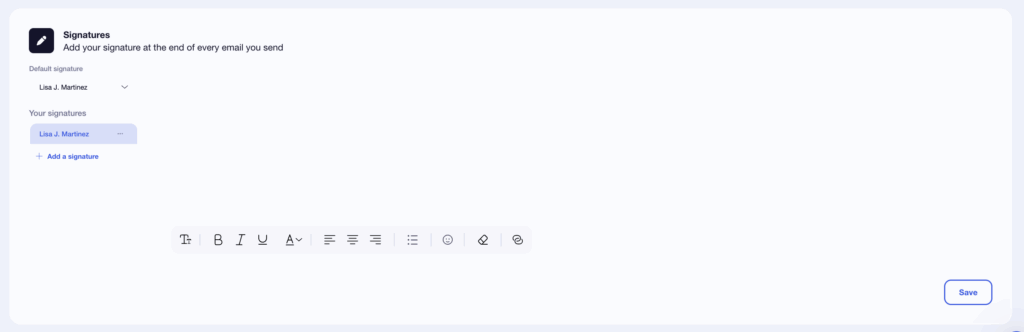
- Polish your signature: first name, name, job title, company, contact info, and possibly a link to your website or LinkedIn profile.
Tools like Waalaxy help you create a clean, consistent signature in your outreach emails and reuse it automatically in your sequences.
How long should you wait between each follow up?
Some general guidelines (to adapt to your context and email sequence):
- Day 2 (D+2) → first sales follow up email
- Day 4 (D+4) → second follow up
- Day 6 (D+6) → third follow up
- Day 10 (D+10) → fourth follow up
After that, you can still add further follow ups (D+1, D+3, etc.), but remember to let your target breathe.
The idea is not to harass them—it’s to stay present without becoming overwhelming.
The importance of tracking prospects: measure your results
Following up “by feel” is better than nothing.
But if you want to improve, you need to track your numbers:
- Open rate of your sales follow up emails,
- Click-through rate (if you include links),
- Reply rate,
- Conversion rate (meetings booked, quotes signed, invoices paid, etc.).
By tracking these indicators, you can:
- Identify the subject line that works best.
- Spot sequences that are too aggressive… or too timid.
- Gradually improve your sales follow up email templates after no response.
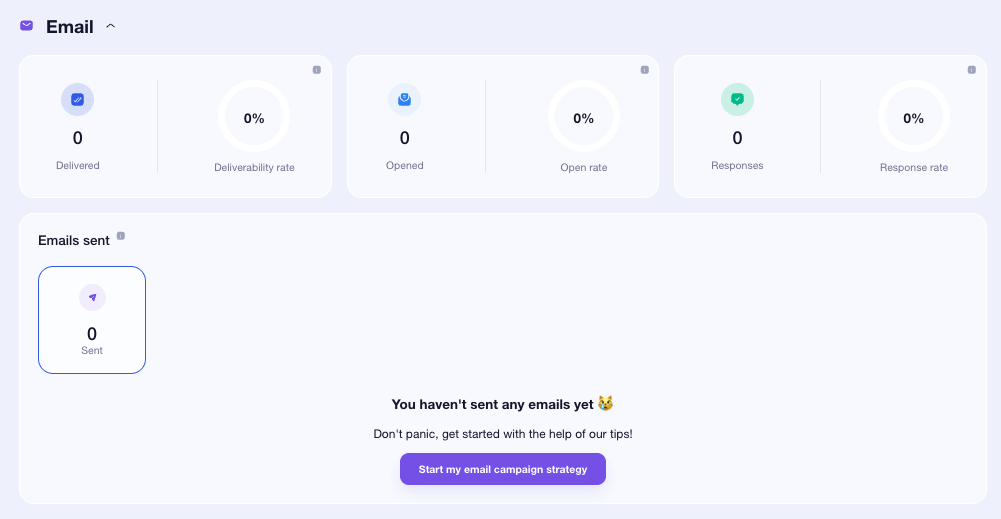
With a tool like Waalaxy, you can track the performance of your campaigns (LinkedIn + email) in a dashboard and A/B test different messages to see what generates the most replies.
Mistakes to avoid in your sales follow up emails
To recap, try to avoid as much as possible:
- Aggressive, impatient, or guilt-inducing emails,
- 20-line blocks of text with no paragraphs,
- Follow-ups that are too frequent (every day, for example),
- “I’m following up to see if you saw my email.” with no context or added value,
- Repeated spelling mistakes,
- Vague subject lines like “Follow up,” “Check in,” and “Reminder.”
6 Best Tips To Write An Effective Follow-Up Email
How do you write a follow up email? So that you don’t miss out on any opportunity (or almost), let’s look at a few practical tips that will make a big difference when you send your next email.
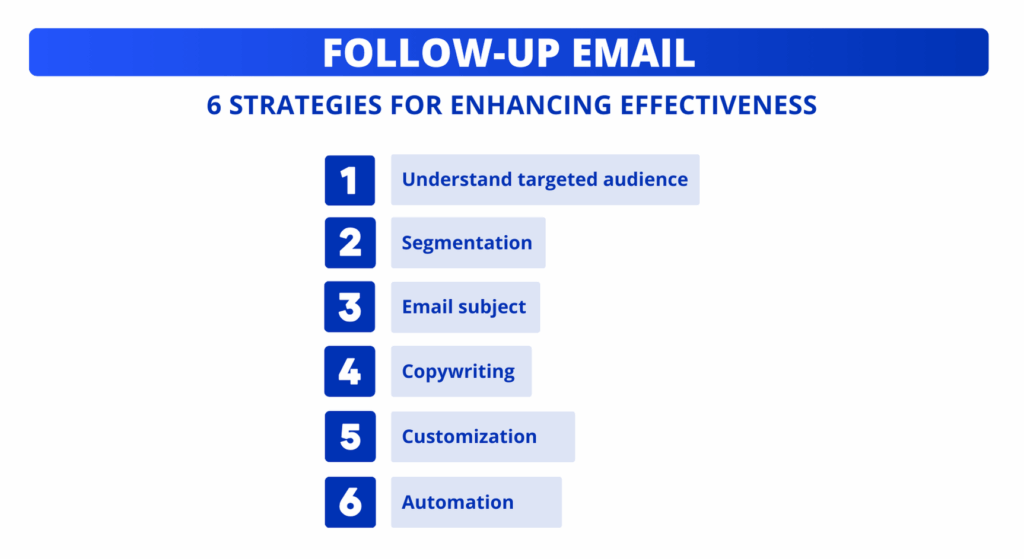
The word “target” is particularly important here: you need to know your target inside out to take the right actions. 🤌
#1 Know your target
Everything starts here. It’s the most important step in your digital strategy. 💻
You need to know:
- Who you’re talking to,
- Who you’re selling to,
- How you’re positioning your offer.
You won’t follow up with every profile in the same way.
The more your message matches the reality of your target, the more it will be read… and acted on.
Beforehand, you’ll need to create your buyer persona (your ideal customer profile) to know:
- What their context is,
- What they need to make a decision,
- What their potential objections are (budget, timing, workload, risk, etc.).
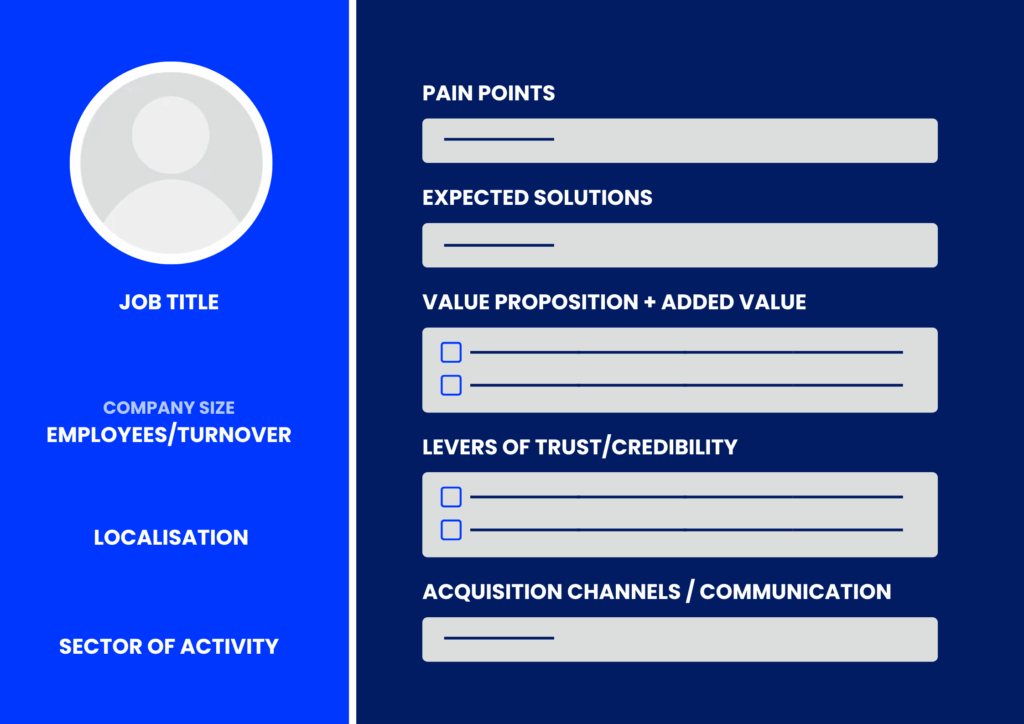
Once you have your persona, you can move on to segmentation.
#2 Segmenting
If you send the same sales follow up emails to everyone, you lose relevance.
Marketing segmentation means creating subgroups based on:
- Type of target (cold prospect, inactive customer, loyal customer, candidate, etc.),
- Stage in the funnel (first contact, proposal sent, demo done, etc.),
- Potential value (small project vs. large strategic account).
Based on these differences, you refine your marketing targeting and adapt:
- The tone,
- The length,
- The offer you highlight.
⚡ The right sales follow up email for the right segment = higher conversion.
#3 Follow-Up Email Subject Line
If the subject line doesn’t catch the eye, your email will never be opened.
It should be:
- Short (50–60 characters max),
- Precise and evocative: clear reminder, continuity, benefit, personalised element,
- Not “spammy” (avoid things like “urgent,” “100% free,” and “incredible offer”),
- Aligned with the email content (no clickbait) and your first-line catchphrase (which should talk to them and make them want to click). 🖲️


#4 Copywriting
Persuasion is an art. With good copywriting, a solid sales follow up email can be read in just a few seconds.
A simple structure:
- Hook / reminder of the context In one sentence, remind them who you are and what this is about.
- Value/interest Why you’re following up and what they stand to gain (clarity, decision, benefit, resource, solution).
- CTA (Call To Action) What you specifically want them to do (reply, choose between A and B, book a slot, click a link, etc.).
Ideally, no more than 150 words for a standard sales follow up email:
- Longer = more effort to read,
- Shorter = more chances they’ll read to the end.
You won’t nail it overnight, but you can set up A/B testing on several versions of the same email to see what works best.
#5 Personalization
Personalization makes the recipient feel special—and that’s what drives replies and repeat business.
But it’s not just about using {{firstName}} or {{lastName}}.
Show that you’ve understood:
- The context: “following Tuesday’s demo,” “after sending your application,” “as mentioned during our call”…
- The specific challenges: “to meet your 15 October deadline,” “taking your budget constraints into account”…
- The relevant attachments, emojis, colours, links, etc.
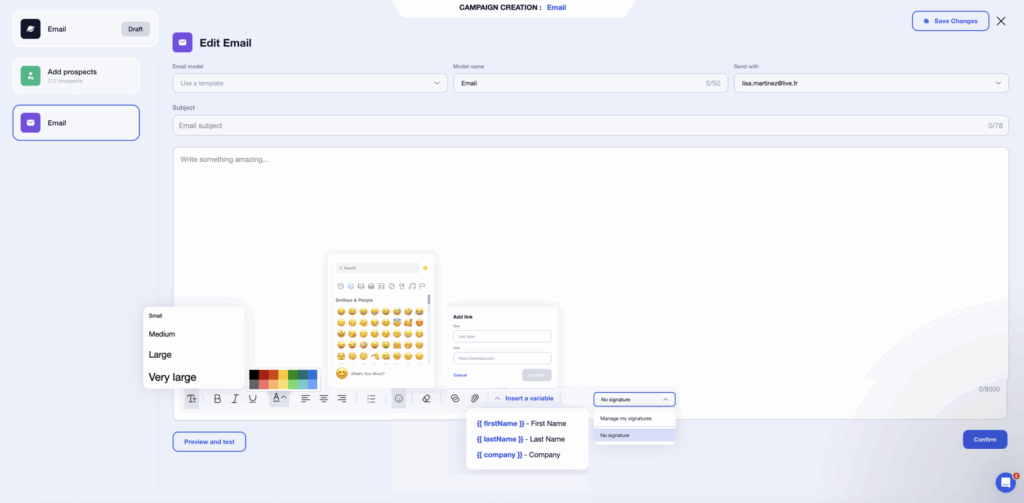
Also adapt the tone of your business proposal in your sales follow up email:
- “You” in a professional, respectful tone for clients or recruiters,
- Something more informal for close colleagues or partners.
A sales follow up email should feel like it was written for that person, not copied for a list.
#6 Automation
If you follow up regularly, doing everything manually quickly becomes impossible.
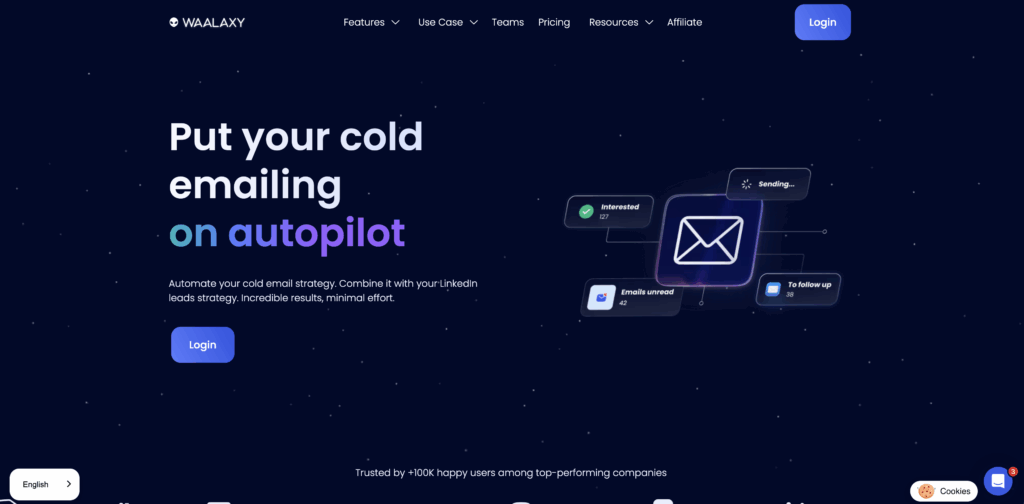
Thankfully, automation tools like Waalaxy help you save time on thousands of emails:
- You create a simple sequence: 1st email + 1 personalised sales follow up email if there’s no reply,
- Or you tag the prospects to follow up in your lists, then launch a “Follow up” campaign on that segment.
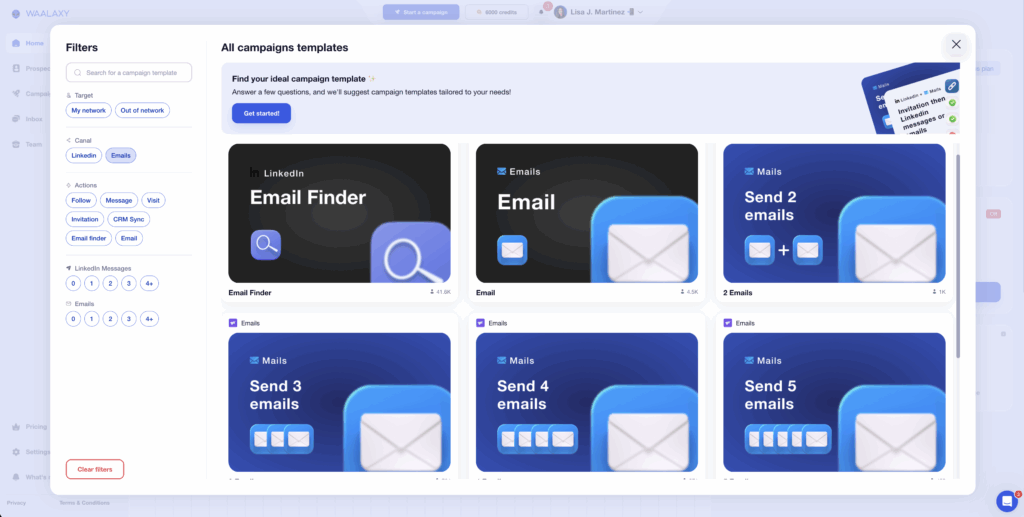
Typical scenarios:
- You already have your prospects’ email addresses; you import the list, write your best follow up email sales templates, schedule sending, and follow-ups.
- You’re starting from a B2B LinkedIn target → you use an Email Finder (like Waalaxy’s) to automatically enrich leads with their professional emails, then launch your sales follow up email sequences.
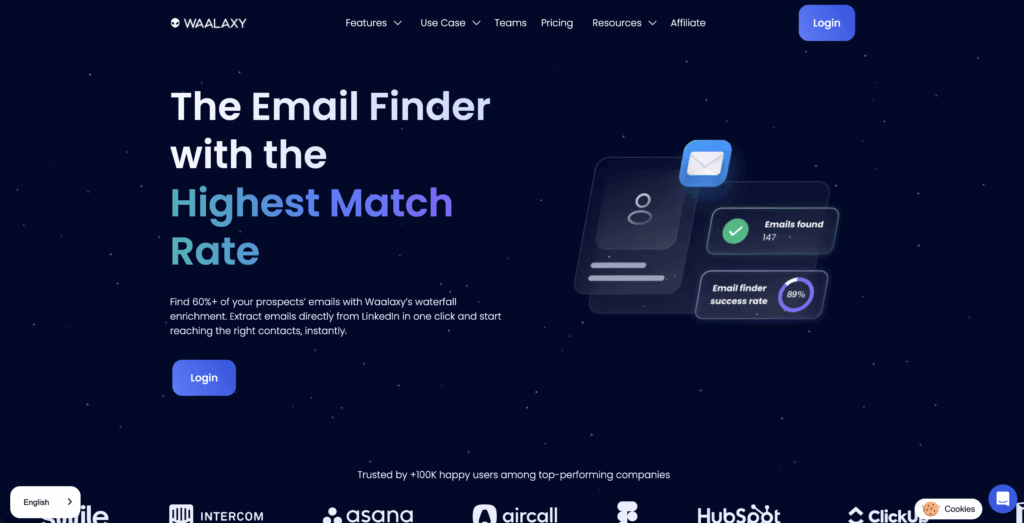
Writing good emails is time-consuming, so it’s better to automate as much as you can. It allows you to:
- Stick to your follow up schedule.
- Avoid forgetting prospects.
- Personalize messages at scale.
- Test different versions (subject A vs. subject B, CTA wording, etc.).
Yes, there’s a bit of setup at the beginning—but afterwards, it’s mostly upside (especially if everything is linked to a CRM).
Conclusion: What Is a Follow-Up Email?
To wrap things up: following up with a client (or prospect, or recruiter) is not about “bothering” them—it’s about helping them decide.
The key to a polite follow-up email sample for a request is to use these sales follow up email templates and apply the success principles:
- Remind them of the context without blaming them.
- Respect waiting times before you follow up again.
- Show that you understand they’re busy.
- Bring value (clarification, solution, bonus, simplification),
- Suggest a simple next step (reply, choose an option, pick a time, ask for help, etc.).
- Accept that the answer might be “no.”
By combining:
- Genuine personalisation,
- A bit of copywriting,
- And a minimum of smart automation (with tools like Waalaxy),
…You turn the best follow up sales emails examples into a very concrete growth lever.
Result? More replies, more meetings, more deals… Without feeling like you’re spamming. 🚀
Frequently Asked Questions (FAQ)
When it comes to email campaigns, there are a few extra things to keep in mind. ✍️
How to start a sales follow up email?
How do you start an email? Your goal: the person should understand in 2 seconds:
- What it’s about,
- And why you’re contacting them again.
Always start with:
- A personalized greeting:
- “Hello {{firstName}}, ”
- “Dear {{lastName}}, ”
- A very short reminder of the context and purpose of the follow up:
- “I’m following up regarding [your quote sent on…].”
- “Following our meeting on [date]…”
- “I’m writing to you about [subject].”
How to end a professional sales follow up email?
We don’t talk about it enough, but the end of an email should:
- Subtly remind the recipient what you’re expecting.
- Remain polite and professional.
Of course, it depends on who you’re speaking to and how formal you need to be, but for a professional goodbye closing, here are some safe bets:
For example:
“Kind regards,”
“Best regards,”
“Sincerely,”
“I remain available for any further information.”
“Looking forward to your reply,”
“Thank you in advance for your response.”
How do I recall/undo a sales follow up email?
Made a mistake in your sales follow up email and it’s already gone? 😱 Don’t panic!
👇🏼 Here’s how to recall or undo an email on the main e-mail address providers used in France:
- Gmail: Open the sent message and click “Undo” in the notification that appears at the bottom left shortly after sending.
- Outlook: Go to “Sent Items,” open the email, then select “Actions” → “Recall This Message.”
You can choose to delete unread copies or replace them. - Apple Mail: This feature is not directly available in the classic versions.
How do you write a follow up email with artificial intelligence?
AI doesn’t replace your knowledge of the customer—but it can become your writing assistant to save time and improve quality.
To get good results, you should:
- Provide context: who you are, who your contact is, what you’ve already sent, and what you expect.
- Specify the desired tone: formal, warm, direct, more sales-oriented, or more neutral.
- Ask it to generate several versions (e.g., 3 different subject lines, 2 versions of a paragraph, and a short and a long version) so you can test different follow up email templates for sales.
You can then:
- Use your best-performing sales follow up email templates in your automation sequences (for example, in Waalaxy).
- Adjust details (names, dates, specific references),
- Keep your own signature and style.
🏁 And that’s it—now you know everything you need to know about sales follow up emails.
All that’s left is to pick sample sales email follow up, adapt it to your context… and hit send. 👽
 Laura
05/12/2025
Laura
05/12/2025