

- Key Takeaways
- Why B2B Lead Generation Matters More Than Ever in 2026
- What Is the B2B Lead Generation Process?
- 15 Proven B2B Lead Generation Strategies for Success in 2026
- LinkedIn Study: What Actually Improves B2B Lead Generation Results?
- Common B2B Lead Generation Mistakes
- Conclusion: Mastering B2B Lead Generation in 2026
- Frequently Asked Questions (FAQ) About B2B Lead Generation
B2B lead generation strategies has evolved dramatically over the last few years. Buyers are more informed, sales cycles are longer, and competition for attention is tougher than ever. Today, generating B2B leads is no longer about sending generic cold emails or scraping massive lead lists.
Modern B2B buyers research solutions independently before speaking to a sales rep. They compare competitors, read reviews, consume educational content, and evaluate brands across multiple touchpoints before making a decision.😎
That means companies now need a smarter and more structured lead generation strategy. The most effective B2B lead generation strategies now combine acquisition, nurturing, and personalization. The businesses generating the best B2B sales leads in 2026 are those combining SEO, LinkedIn prospecting, lead nurturing, content marketing, automation, and personalization into one scalable acquisition system. 🔥
In this guide, you’ll discover 15 proven B2B lead generation strategies, actionable lead gen tactics, and real LinkedIn insights to help your sales and marketing teams generate more high-quality leads consistently. 🚀
Key Takeaways
- B2B lead generation is the process of attracting and converting potential buyers into qualified opportunities.
- The best B2B lead generation strategies combine inbound marketing, LinkedIn outreach, automation, SEO, and lead nurturing.
- Companies that align their sales and marketing teams generate better lead quality and improve long-term lead generation success.
Why B2B Lead Generation Matters More Than Ever in 2026
The B2B sales landscape has changed completely. Buyers no longer rely on sales reps to discover products or services. Instead, they search online, compare alternatives, and educate themselves before ever booking a demo.
This shift explains why B2B lead generation matters more than ever. Modern buyers now complete most of their research independently before speaking with sales teams, which means brands lacking online visibility are often excluded long before outreach even begins. 🔥
Today, effective B2B lead generation is about much more than collecting emails. Businesses need to attract high-quality leads, build trust, and move prospects through the sales funnel efficiently. Modern B2B lead generation strategies focus heavily on trust and long-term relationship building.
That’s why modern B2B companies invest heavily in SEO, content marketing, LinkedIn prospecting, lead generation software, CRM automation, and lead nurturing campaigns. According to multiple studies, LinkedIn generates a massive share of global B2B sales leads, which explains why so many companies prioritize LinkedIn in their lead gen strategy.
The businesses seeing the biggest lead generation success are not necessarily the ones sending the most outreach messages. They are the ones creating the best buying experience from first interaction to conversion.
What Is the B2B Lead Generation Process?
B2B lead generation is the process of attracting potential buyers and converting them into qualified business opportunities.
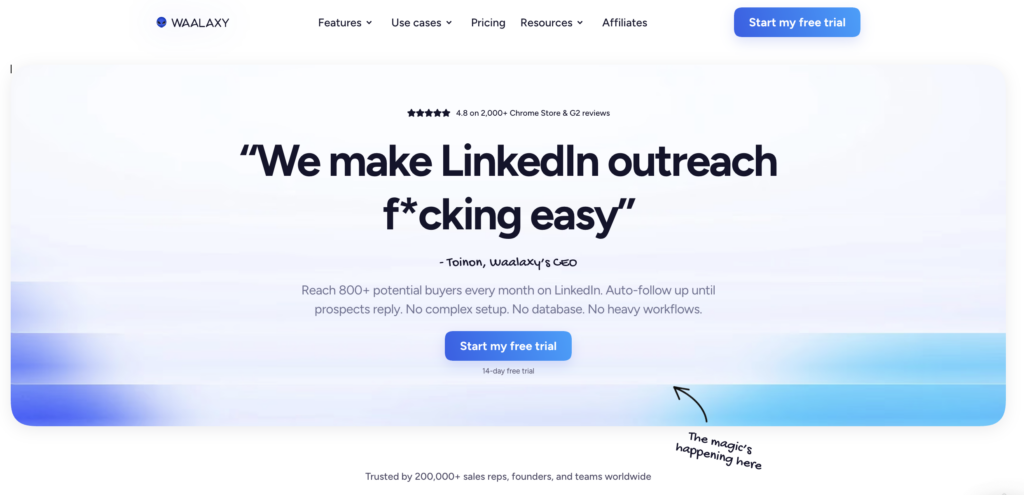
A successful B2B lead generation process usually includes several stages. The best B2B lead generation strategies combine inbound and outbound acquisition channels. First, businesses generate visibility through SEO, LinkedIn, webinars, email campaigns, or paid ads. Then, they capture contact information through lead magnets, demos, newsletters, or landing pages.
From there, the goal becomes qualifying leads and determining whether they fit the company’s ideal customer profile. This is where lead scoring and CRM systems become essential. Some leads become marketing qualified leads because they engage repeatedly with content, while others become sales qualified leads once they demonstrate clear buying intent.
The most effective lead gen strategies combine:
- lead nurturing,
- personalization,
- automation,
- and strong collaboration between marketing and sales teams.
For example, a SaaS company may generate B2B leads through SEO content and LinkedIn outreach before guiding prospects toward a free trial or live demo. Agencies may instead rely on case studies, webinars, and outbound prospecting to generate consistent B2B sales leads. 🔥
Effective lead generation is not about contacting everyone. It’s about attracting quality leads and moving them through the sales funnel efficiently.
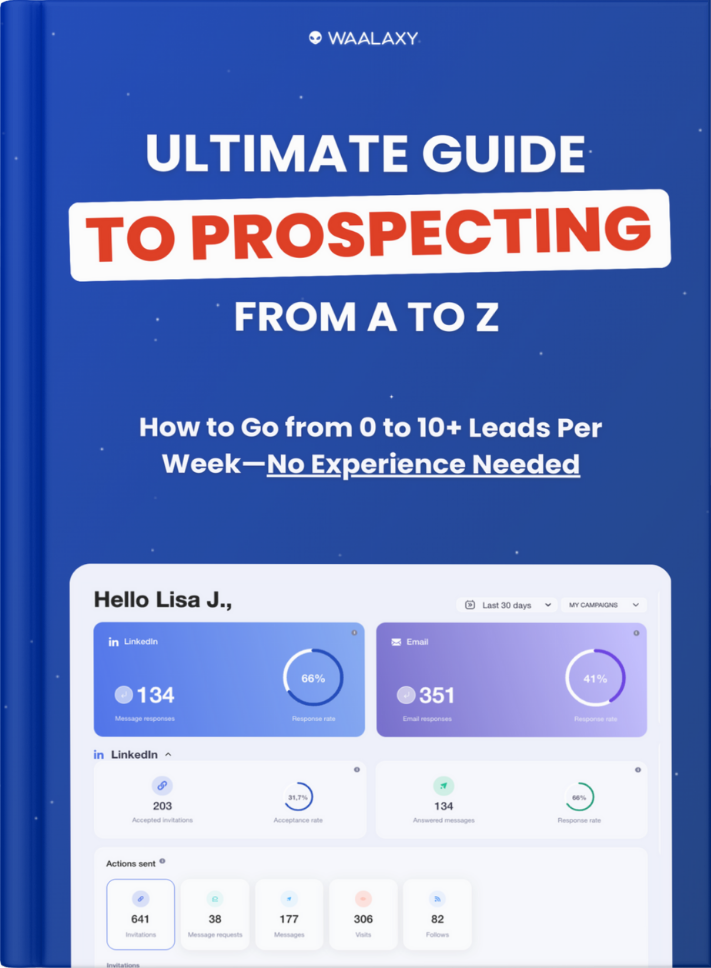
15 Proven B2B Lead Generation Strategies for Success in 2026
1. Optimize Your LinkedIn Profile for B2B Lead Generation
Your LinkedIn profile is one of the most important elements of your B2B lead generation strategy. Before replying to your outreach, most prospects will check your profile to evaluate your credibility, your positioning, and your expertise. In many cases, your profile acts as a landing page for your personal brand. Strong LinkedIn positioning is now a core part of modern B2B lead generation strategies.
A weak or generic profile can significantly reduce your response rates, even if your prospecting campaigns are well targeted. On the other hand, a clear and optimized profile helps generate trust immediately and increases the chances of converting a potential lead into a sales opportunity.
Your headline should explain exactly who you help and what problem you solve. Your summary should focus on outcomes, not just job titles. Prospects want to understand how your product or service can help them achieve their goals or solve a specific pain point.
Adding social proof also improves lead quality. Testimonials, case studies, client logos, and measurable results help reassure B2B buyers before the first conversation even begins.
Many companies focus heavily on outreach while completely ignoring profile optimization. Yet improving your LinkedIn profile is often one of the fastest ways to increase acceptance rates and generate more B2B sales leads.
2. Use LinkedIn Prospecting To Generate B2B Leads
LinkedIn remains one of the best B2B lead generation strategies because it gives businesses direct access to decision-makers. Many successful B2B lead generation strategies rely heavily on LinkedIn prospecting. Unlike traditional outbound channels, LinkedIn allows sales teams to build relationships before making a sales pitch.
One of the biggest advantages of LinkedIn prospecting is targeting precision. You can filter potential leads based on company size, industry, job title, geography, activity level, or even recent company growth. This helps businesses generate B2B leads that are much more qualified than generic lead lists purchased online. These B2B lead generation strategies work especially well when targeting is based on real buying signals.
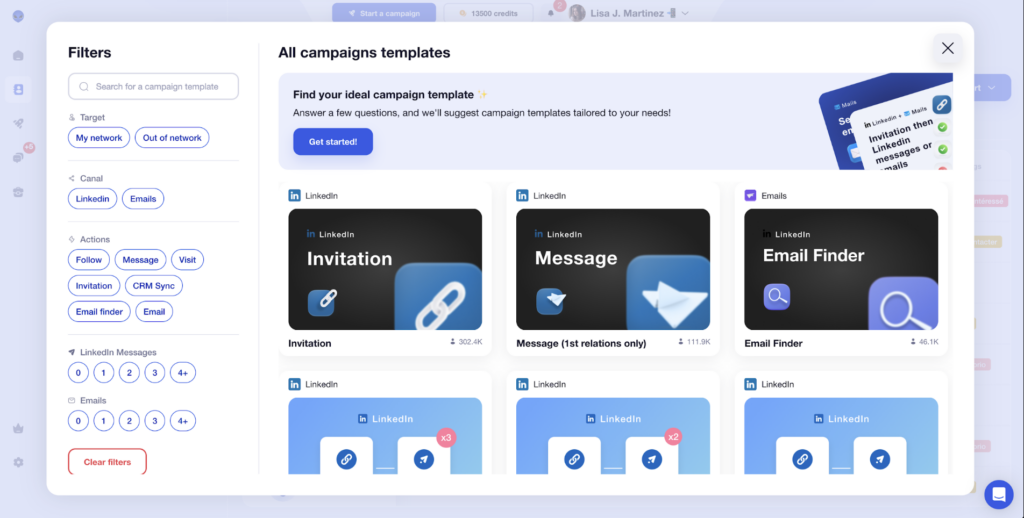
However, many companies still fail because they rely on mass automated outreach without personalization. Modern B2B buyers instantly recognize generic prospecting messages. The most effective lead gen strategies focus on relevance, personalization, and timing.
For example, engaging with a prospect’s content before sending a connection request often increases response rates. Mentioning a company announcement, a hiring trend, or a recent post can also make your outreach feel far more natural. 🔥
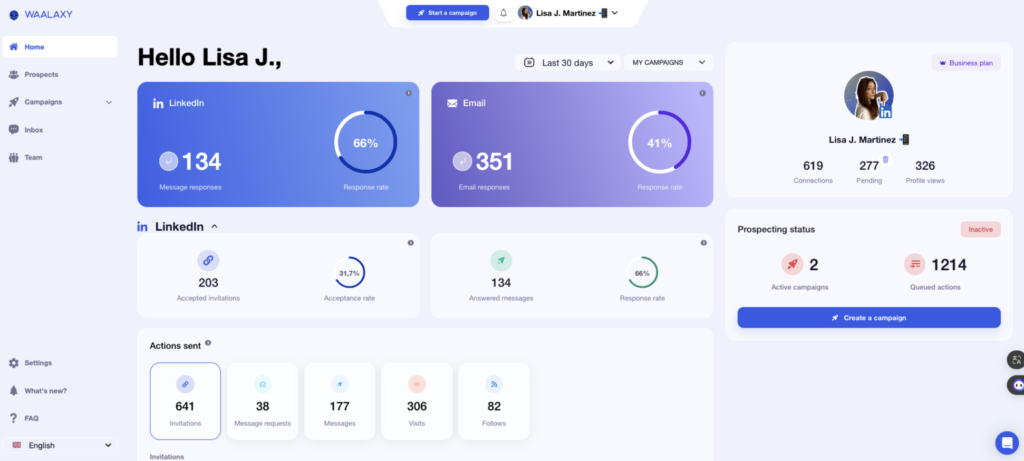
Tools like Waalaxy help automate LinkedIn prospecting campaigns while keeping outreach personalized and scalable. This allows sales and marketing teams to save time while maintaining a human approach.
The goal of LinkedIn lead generation is not to contact thousands of people. It’s to start meaningful conversations with the right prospects.
3. Create SEO Content That Generates High-Quality B2B Leads
SEO remains one of the most effective long-term B2B lead generation tactics because it allows businesses to generate inbound leads continuously. Unlike paid advertising, a well-positioned article can attract qualified traffic for months or even years after publication.
The best-performing B2B companies create educational content answering specific buyer questions and targeting high-intent searches. Queries like “best B2B lead generation strategies,” “lead generation software,” or “how to generate B2B leads” often attract users actively researching solutions.
Content marketing also helps build trust before the first sales conversation happens. By publishing tutorials, case studies, comparison pages, or strategic guides, businesses demonstrate expertise while improving their visibility on Google.
Another major advantage of SEO is scalability. One strong article can generate hundreds of leads over time without additional advertising costs. This makes SEO one of the most cost-effective lead generation strategies. That is why SEO remains one of the most durable B2B lead generation strategies for long-term growth.
Companies that consistently publish high-quality SEO content usually generate more inbound leads and reduce their dependency on outbound prospecting over time.
4. Build High-Converting Lead Magnets for Better Lead Generation Success
Lead magnets remain one of the most effective ways to generate B2B leads because they exchange value for contact information. Instead of asking prospects to book a demo immediately, businesses first provide something useful in exchange for an email address or sign-up. Lead magnets remain one of the most scalable B2B lead generation strategies for capturing qualified contacts.
The most effective lead magnets solve a very specific problem for a clearly defined audience. Generic ebooks rarely convert well anymore. Buyers expect actionable resources that save time or improve performance quickly.
Popular examples include:
- templates,
- industry reports,
- webinars,
- calculators,
- checklists,
- and benchmarking studies.
A strong lead magnet improves lead quality because it naturally attracts prospects genuinely interested in your product or service. It also supports lead nurturing campaigns by helping businesses stay connected with prospects over time. 🔥
Great lead magnets don’t just generate leads. They pre-qualify buyers before the sales conversation even begins.
5. Improve Lead Response Time to Qualify Leads Faster
Lead response time has a massive impact on lead generation success. Many businesses spend heavily on generating traffic and capturing leads but lose opportunities because follow-ups happen too slowly.
When a lead fills out a form, downloads a guide, or requests information, interest is at its highest point. Waiting several hours or days before replying dramatically reduces conversion rates.
Fast response times create momentum and improve trust. Prospects feel that your company is organized, responsive, and genuinely interested in helping them.
This is why many successful B2B companies now automate parts of their follow-up process through CRM workflows, instant email sequences, or prospecting automation tools.
Improving lead response time is often one of the simplest ways to increase conversions without generating additional traffic.
6. Use Lead Scoring to Prioritize B2B Sales Leads
Not every lead is equally valuable. Some prospects are simply exploring solutions, while others are already comparing vendors and preparing to buy.
Lead scoring helps sales and marketing teams prioritize opportunities based on behavior, engagement, and buying signals. Data-driven qualification is becoming central to advanced B2B lead generation strategies. For example, a lead attending webinars, visiting pricing pages, and downloading multiple resources likely has stronger intent than someone reading a single article.
A strong lead scoring system improves sales efficiency because sales reps spend more time on qualified opportunities instead of cold or irrelevant leads. It also improves alignment between marketing and sales teams by defining exactly what makes a lead sales-ready.
The goal is not simply generating more leads. It’s identifying the leads most likely to convert into revenue.
7. Align Your Sales Team and Marketing Team for Better B2B Sales
One of the biggest reasons companies struggle with lead generation is poor communication between marketing and sales teams.
Marketing often focuses on generating traffic and new leads, while sales focuses on closing deals. Without alignment, businesses frequently generate low-quality leads that sales teams cannot convert. Aligned teams are essential for turning B2B lead generation strategies into real revenue.
The most successful B2B companies 🔥 create shared KPIs between departments and collaborate closely on:
- targeting,
- messaging,
- and qualification criteria.
8. Publish Case Studies and Social Proof
Trust plays a massive role in B2B sales. Buyers want proof before committing to a solution.
That’s why case studies, testimonials, and client success stories remain some of the most effective lead generation tools available.
A strong case study demonstrates your expertise, your process, and measurable results.
Social proof often shortens the sales cycle because it reduces perceived risk.
9. Launch Webinars and Educational Content to Generate B2B Leads
Educational content performs extremely well in B2B lead generation because buyers actively seek solutions to their problems before purchasing.
Webinars, live demos, workshops, and tutorials help businesses attract highly engaged prospects while positioning themselves as industry experts. Companies using educational content alongside structured LinkedIn outreach strategies often generate more qualified B2B leads while building trust earlier in the buying journey.
Prospects attending a webinar are often far more qualified than cold outbound leads because they already show active interest.
10. Use Email Nurturing Campaigns
Most B2B buyers do not convert immediately. Many companies now rely on automated follow-up sequences and multichannel prospecting strategies to maintain consistent communication throughout the buying journey.
This is why lead nurturing matters so much. Email campaigns allow businesses to stay visible over time by sharing educational resources, customer stories, product updates and industry insights.
Successful lead nurturing builds familiarity and trust before the buying decision happens.
11. Personalize Outreach to Improve B2B Lead Generation Success
Generic outreach no longer works in modern B2B sales.
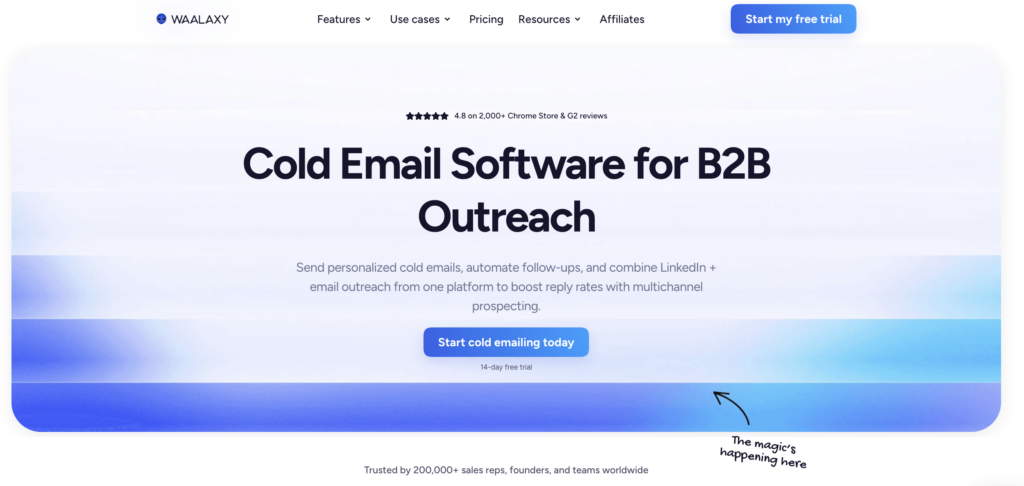
Whether using LinkedIn or email prospecting, personalization dramatically improves response rates, lead quality and meeting bookings. Many sales teams now use automated prospecting sequences to personalize outreach at scale while maintaining consistent follow-ups across the sales cycle.
Even small personalized details about a prospect’s company, role, or challenges can make a major difference.
12. Use B2B Lead Generation Software Without Losing Personalization
Automation is essential for scaling lead generation efforts, but it should never replace strategy or personalization.
Many businesses make the mistake of automating bad outreach processes. A poor message remains poor even when automated.
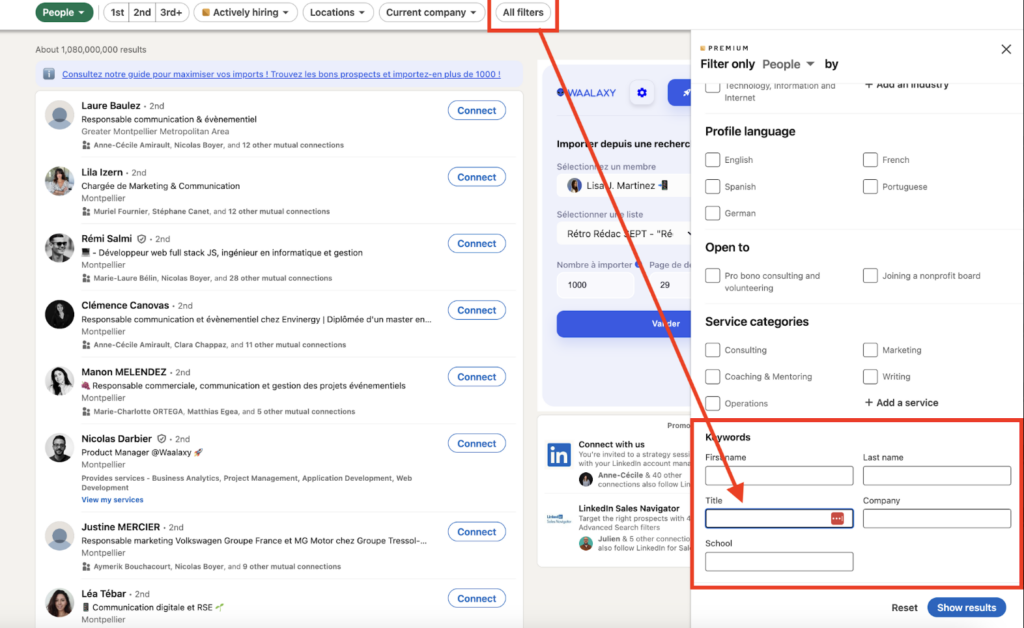
The best B2B lead generation software amplifies effective strategies instead of replacing human thinking. Modern B2B teams often rely on automated prospecting sequences to combine scalability, personalization, and consistent lead nurturing across multiple channels.
Automation works best when combined with strong targeting and quality messaging. 🔥
13. Retarget Website Visitors With Smart B2B Lead Generation Tactics
Most visitors leave a website without converting on their first visit. Retargeting campaigns are among the most profitable B2B lead generation strategies for improving conversion rates.
Retargeting campaigns help businesses reconnect with these visitors through:
- LinkedIn Ads,
- Google Ads,
- or email nurturing.
This strategy works especially well for high-ticket B2B offers where prospects require multiple touchpoints before purchasing. For complex sales cycles, retargeting strengthens B2B lead generation strategies by keeping prospects engaged.
14. Create Comparison Pages and Competitor Content
Comparison pages are excellent for generating B2B sales leads because they attract prospects already evaluating solutions.
Pages like:
- “Best B2B lead generation tools,”
- “Software A vs Software B,”
- or “Top lead generation companies”
often attract high-intent traffic ready to buy. 🔥
15. Build a Multi-Channel Lead Generation Strategy
The best B2B lead generation strategies combine multiple acquisition channels rather than relying on one source of traffic.
Businesses generating consistent results usually combine SEO, LinkedIn outreach, email prospecting,
content marketing, and retargeting.
This approach multiplies touchpoints with potential customers and improves long-term lead generation efforts. The most resilient B2B lead generation strategies never depend on a single channel.
LinkedIn Study: What Actually Improves B2B Lead Generation Results?
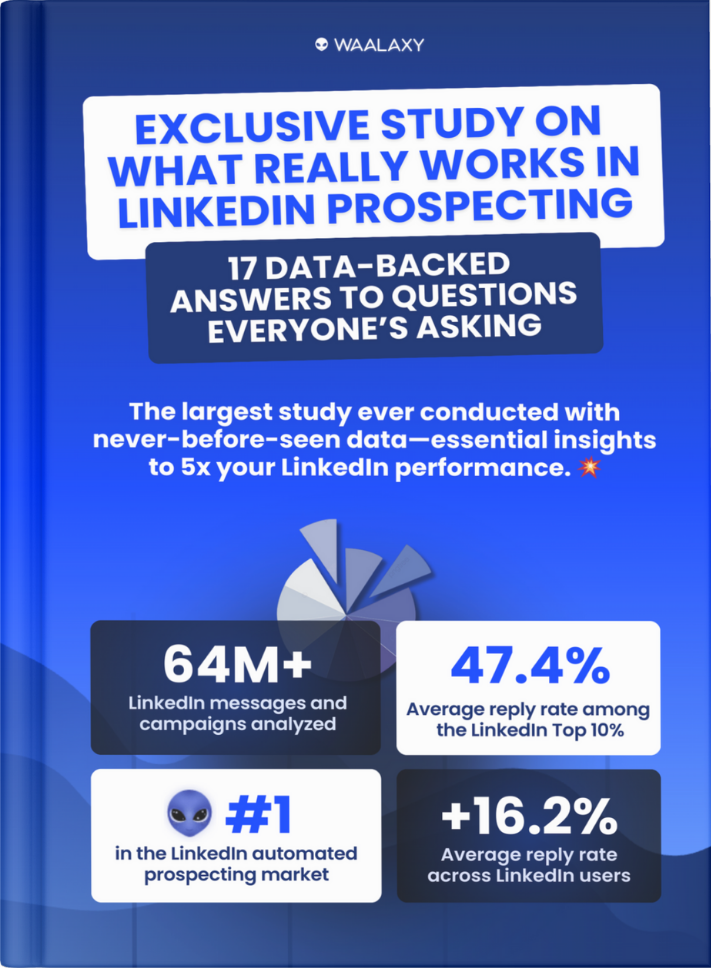
We analyzed thousands of LinkedIn prospecting interactions using Waalaxy campaigns to identify which lead gen strategies actually improve performance.
Short Messages Generate Better Acceptance Rates
Connection requests under 150 characters consistently outperformed longer messages. Short, direct outreach generated significantly better response rates than long sales pitches. Many high-performing campaigns rely on short and highly personalized LinkedIn prospecting messages designed to spark conversations instead of pushing immediate sales.
Prospects make quick decisions. Clear and concise messaging performs best. 🔥
Some Job Titles Convert Better Than Others
Interestingly, profiles using titles like “Sales,” “Business Developer,” or “SEO Copywriter” often generated better acceptance rates than CEO or Founder profiles.
This suggests that approachable profiles may feel more relatable and less intimidating during outreach campaigns.
Requests Without Notes Often Perform Better
One surprising insight from the study was that LinkedIn connection requests sent without notes often generated higher acceptance rates than requests with long personalized notes.
However, personalized notes may still improve downstream conversion quality depending on the campaign objective.
Common B2B Lead Generation Mistakes
Many businesses struggle with lead generation because they:
- target the wrong audience,
- rely too heavily on automation,
- publish generic content,
- or fail to nurture leads properly.
Another major mistake is focusing purely on lead volume instead of lead quality.
Generating fewer but higher-quality leads almost always produces better B2B sales results than mass outreach campaigns.
Conclusion: Mastering B2B Lead Generation in 2026
Mastering B2B lead generation requires much more than sending cold emails or running generic campaigns. The companies generating the best B2B sales leads combine SEO, LinkedIn prospecting, automation, personalization, and lead nurturing into one consistent system.
The most effective lead generation strategies are those that create trust, educate buyers, and guide prospects naturally through the sales funnel. The strongest B2B lead generation strategies combine visibility, personalization, automation, and consistency across every touchpoint.
Businesses that focus on lead quality, strong positioning, and multi-channel acquisition will continue outperforming competitors in the evolving B2B sales landscape.
Frequently Asked Questions (FAQ) About B2B Lead Generation
What is the best way to generate B2B leads?
The best way to generate B2B leads is by combining SEO, LinkedIn prospecting, personalized outreach, and lead nurturing into one scalable acquisition system.
What makes a good B2B lead generation strategy?
A strong lead generation strategy focuses on targeting the right audience, creating valuable content, improving lead quality, and aligning sales and marketing teams.
What are the best B2B lead generation tools?
Popular B2B lead generation tools include LinkedIn Sales Navigator, HubSpot, Apollo, Lemlist, Clay, and Waalaxy. 🔥
Now you know more about b2b lead generation strategies, and how to improve your reach on LinkedIn by using simple optimizations to your process. 👌💙
 Camila
28/05/2026
Camila
28/05/2026