

Sales prospecting is essential if you want to win new customers and grow your business. But between finding prospects, sending outreach messages, and following up, it can eat up a lot of your time fast. 😅
Luckily, there are tools that can help you save time and organize your prospecting process. In this article, we’ll walk you through 15 B2B sales prospecting tools to help you find leads, automate your outreach, and create more opportunities. ✨
The 15 best sales prospecting tools
Sales prospecting is no longer just about making calls or sending emails by hand. You can now automate a big part of the process, find qualified prospects faster, and make better use of your time. ⏱️
Here are 15 of the best sales prospecting tools to help you find leads, automate your campaigns, and improve your sales results. 🔎
1. LinkedIn and email B2B sales prospecting tool: Waalaxy
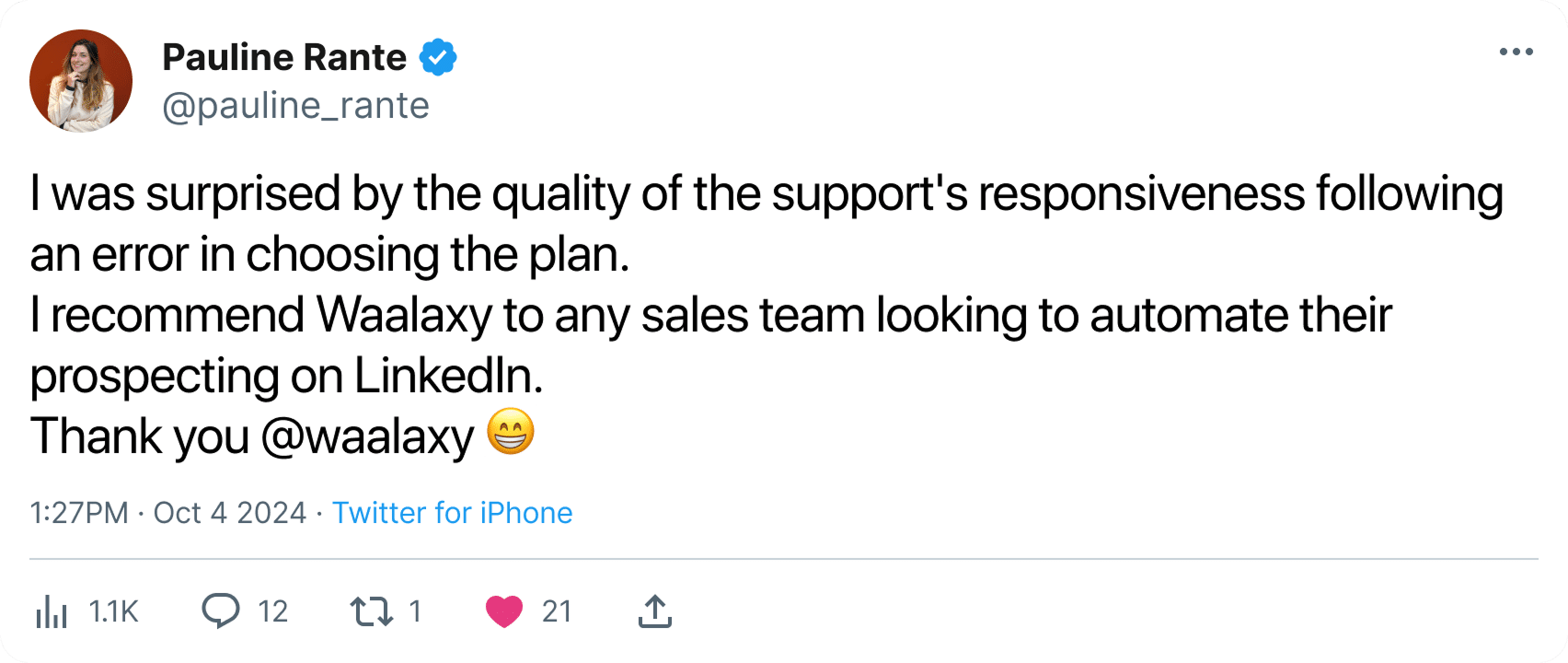
You can’t discuss modern sales prospecting without mentioning LinkedIn and email automation. And that’s exactly where Waalaxy comes in. It’s one of the best sales prospecting software available.
Waalaxy is a multichannel prospecting tool designed to automate your LinkedIn and email campaigns so you can generate B2B leads more efficiently. 😎
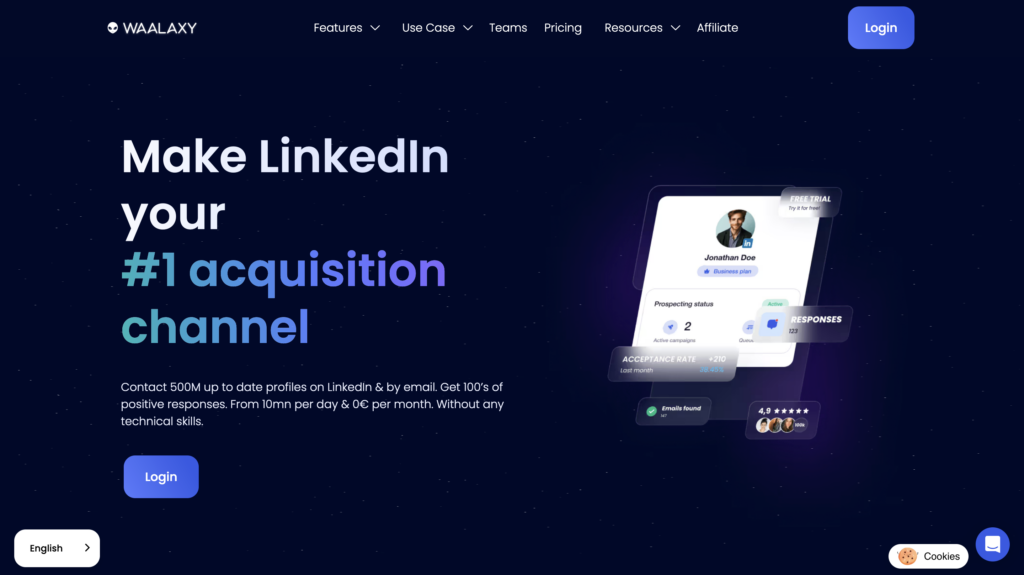
With Waalaxy, you can:
- 🤖 LinkedIn + email automation: Waalaxy automates your outreach, from connection requests and messages to follow-ups and multichannel email sequences. Ready-to-use sequences make it easy to get started, and Waami, Waalaxy’s built-in AI, helps you craft effective outreach messages.
- 🔁 Predefined sequences: Choose a scenario based on your goal, and Waalaxy automatically manages the timing, sending conditions, and pauses so you stay within LinkedIn’s limits.
- 📥 Unified inbox: All your LinkedIn replies appear in one place, making it easy to track conversations, organize messages with tags, and prioritize the most promising prospects.
- 🧠 AI and interest scoring: Waalaxy analyzes interactions to identify the most engaged prospects and highlight your hottest leads.
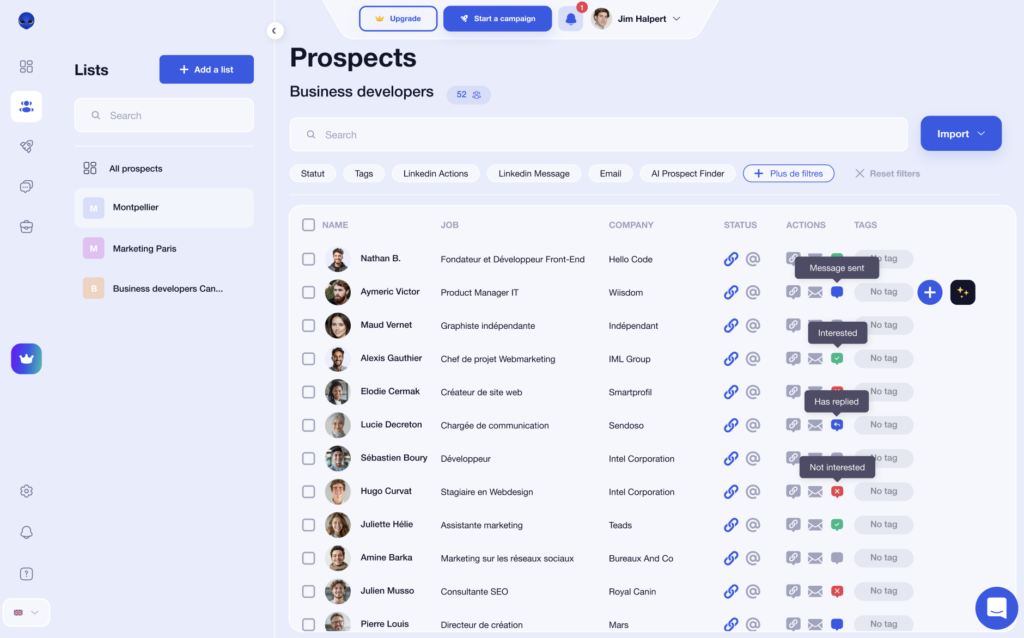
- 📌 Automatic lead import: Pull leads directly from LinkedIn, whether they come from post comments, profile visits, or Sales Navigator searches, without any manual entry.
- 👥 Team collaboration: Share templates, coordinate campaigns, and manage multiple users from a single workspace.
- 🔗 CRM integrations: Connect Waalaxy with CRMs like HubSpot or Pipedrive to automatically keep your sales pipeline up to date.
Waalaxy pricing: How much does it cost?
Monthly
Quarterly
Yearly
Without Inbox
With Inbox
Add-on

2. LinkedIn sales prospecting tool: LinkedIn Sales Navigator
LinkedIn is one of the largest professional networks in the world, making it a powerful place to identify prospects and grow your network. 🔗
LinkedIn Sales Navigator is LinkedIn’s premium tool designed to help salespeople find and target the right prospects with advanced features.
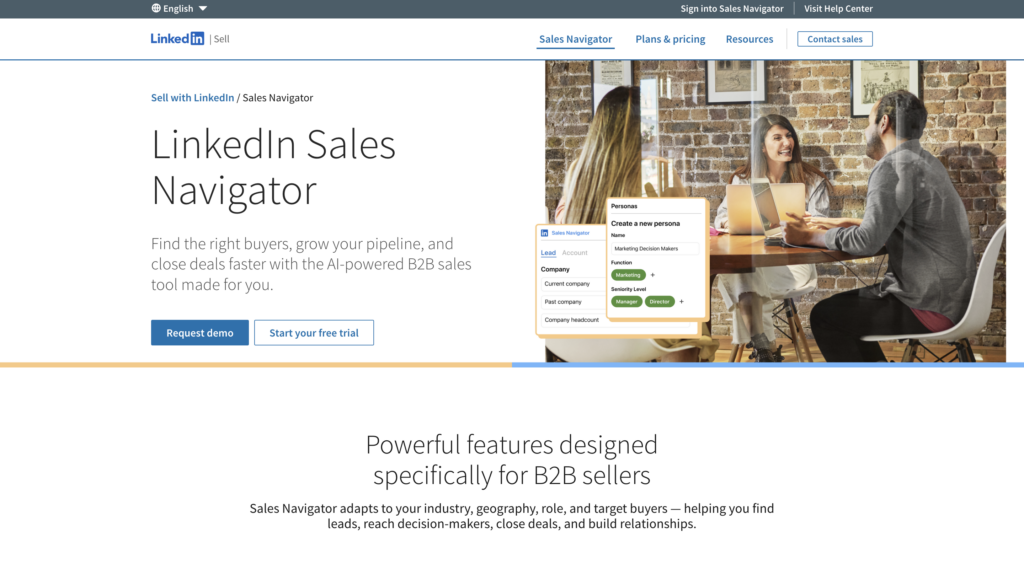
With LinkedIn Sales Navigator, you can 👇🏻:
- 🎯 Target companies and decision-makers with precision.
- 😎 Run advanced prospect searches using powerful filters to narrow down your ideal audience.
- 🕸️ Expand your professional network. and connect with the right people.
Teams using LinkedIn Sales Navigator see an average of a +17% increase in their sales pipeline. ✨
LinkedIn Sales Navigator offers several subscription plans to suit your needs:
- 🥇 Sales Navigator Core: approximately $99.99/month (or ~$79.99/month with annual billing).
- 🥈 Sales Navigator Advanced (Team): approximately $145/month for sales teams.
- 🥉 Sales Navigator Advanced Plus (Enterprise): price on request, intended for large companies with advanced CRM integrations.
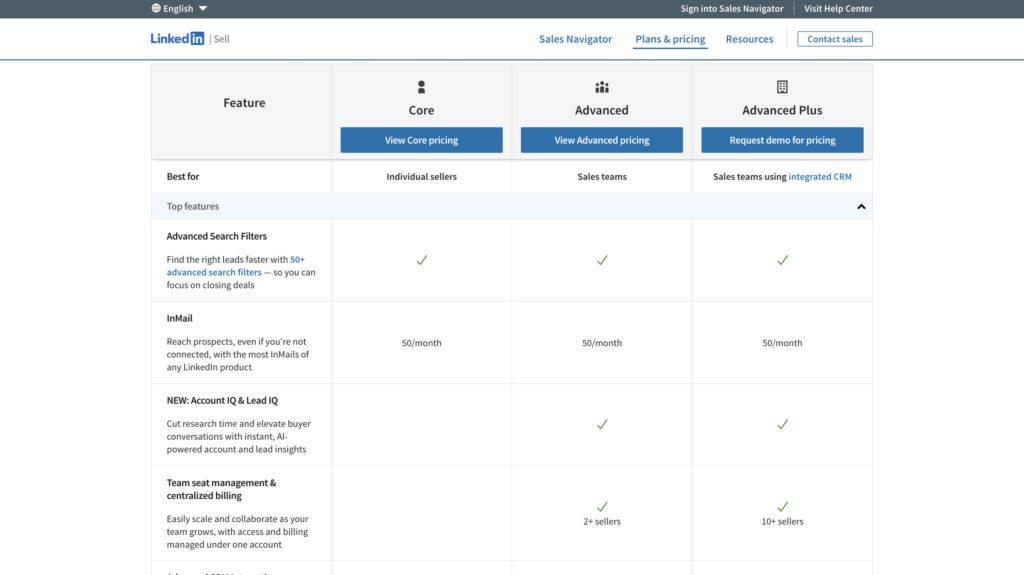
LinkedIn also offers a free trial, so you can try the tool before committing.
3. B2B sales prospecting tool with database: Lusha
Finding the right contacts and their details can take a lot of time when you prospect manually. To save time, some platforms combine B2B databases, contact enrichment, and prospecting tools in one place. 👀
Lusha is a platform that helps you identify companies, find decision-makers, and access their professional contact details so you can reach the right people faster. 🏃🏻♀️
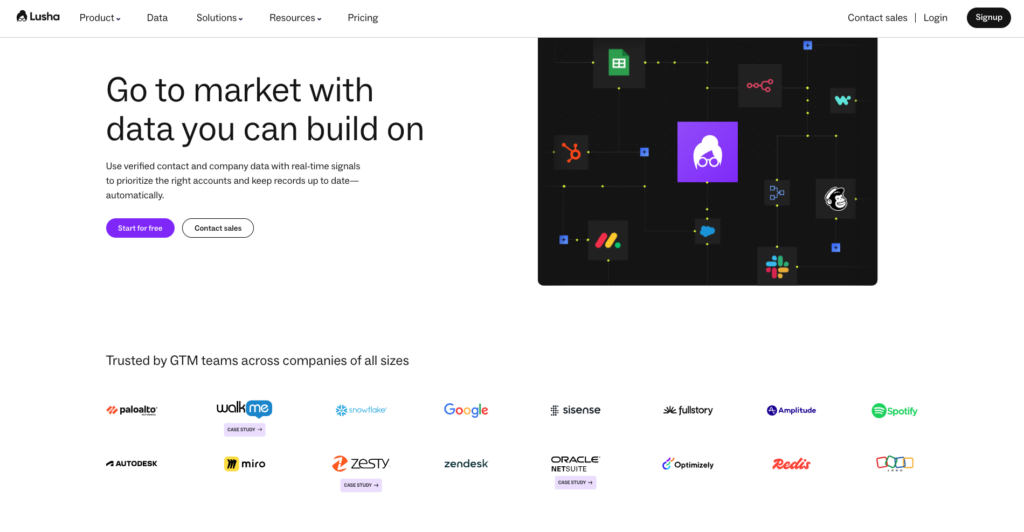
With Lusha, you can:
- 📊 Access a B2B database of companies and decision-makers.
- 📞 Find professional email addresses and phone numbers.
- 🔎 Search and filter prospects by criteria such as job title, company, or industry.
- 📈 Enrich and update your prospect database using tools (Email Finder, etc.).
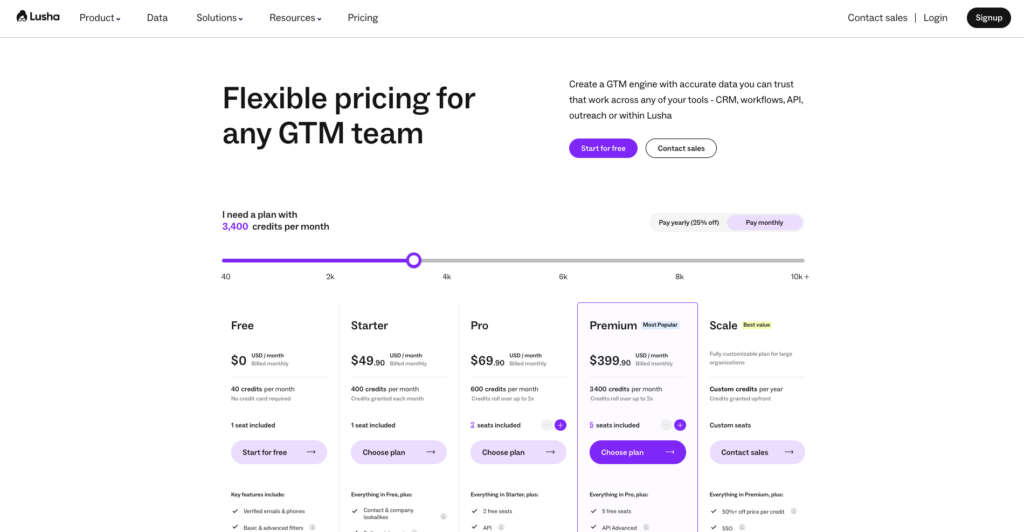
And in terms of pricing, here’s what you get:
4. Cold emailing B2B sales prospecting tool: Mailshake
Cold emailing is a powerful way to reach new prospects and generate sales opportunities.
Mailshake is a platform designed to automate cold email campaigns while keeping your messages highly personalized. ✨
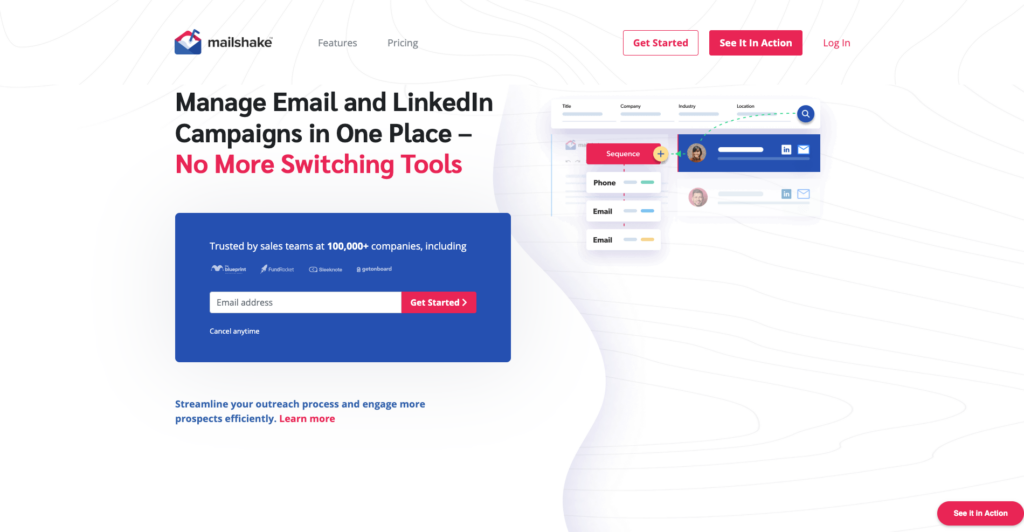
With Mailshake, you can:
- ✉️ Send cold email campaigns.
- 🔁 Automate email sequences and follow-ups.
- 📊 Track key metrics like open rates, click-through rates, and replies.
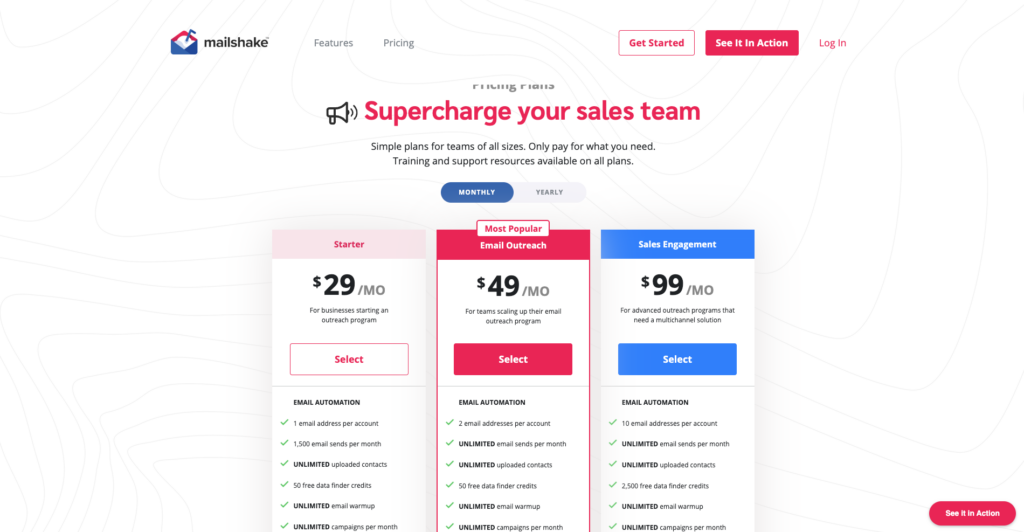
💰 Mailshake pricing starts at $29/month.
5. CRM sales prospecting tool: HubSpot
HubSpot is one of the most popular CRM platforms on the market. If you want to track prospects effectively and stay organized in your sales process, using a CRM is essential.
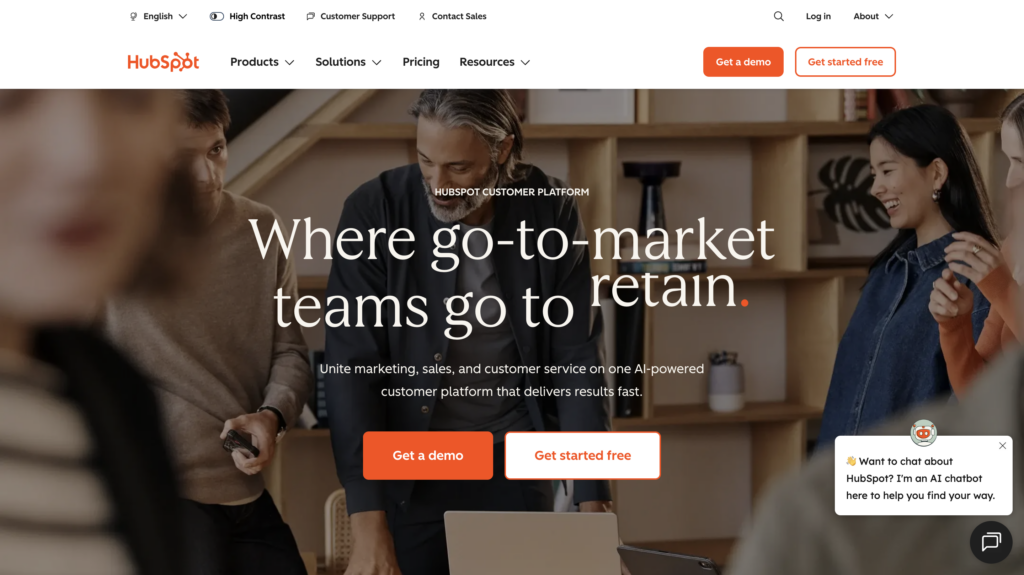
With HubSpot, you can:
- 📋 Manage your prospects with a sales CRM.
- ⚙️ Set up sales automation workflows.
- 💕 Track every interaction with your prospects (emails, calls, meetings).
- 🔌 Connect other tools such as Waalaxy.
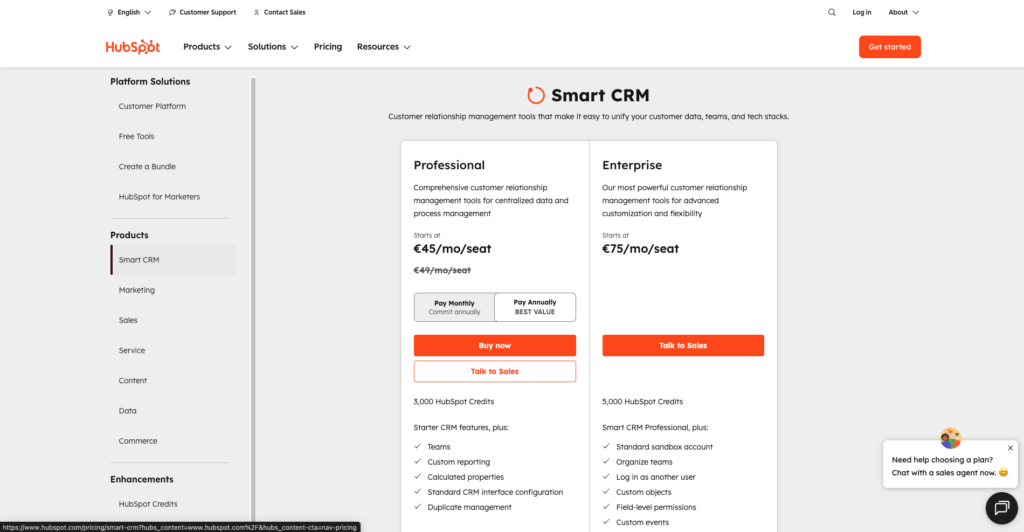
HubSpot offers several products, but here are the pricing options for its Smart CRM:
6. B2B sales prospecting tool to manage your pipeline: Pipedrive
Pipedrive is a CRM designed to help sales teams identify prospects and manage their sales process more easily. It provides a clear, visual view of your sales pipeline. 😎
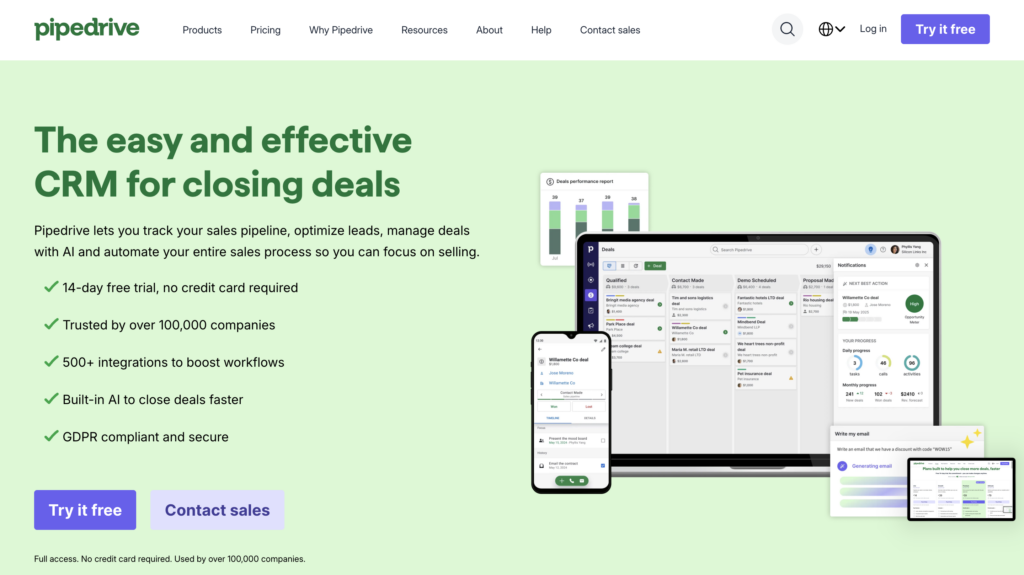
Pipedrive’s features include:
- 📊 Manage your pipeline with a visual sales dashboard.
- 🤝 Track deals and monitor your prospects’ progress through the pipeline.
- 📅 Schedule and manage sales activities such as follow-ups, meetings, and calls.
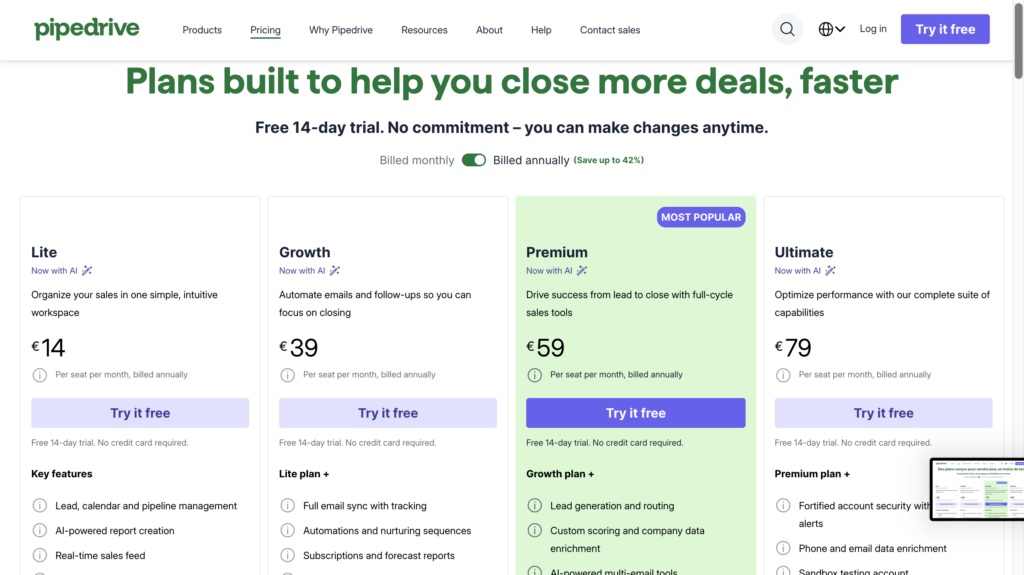
Pipedrive offers a free trial, followed by several subscription plans depending on your needs.
7. Advanced CRM sales prospecting tool: Salesforce
Salesforce is one of the most widely used CRMs in the world for managing customer relationships and improving sales performance. 📈
Unlike HubSpot, Salesforce offers deeper customization and a massive ecosystem of integrations, making it particularly well suited for large companies. 👀
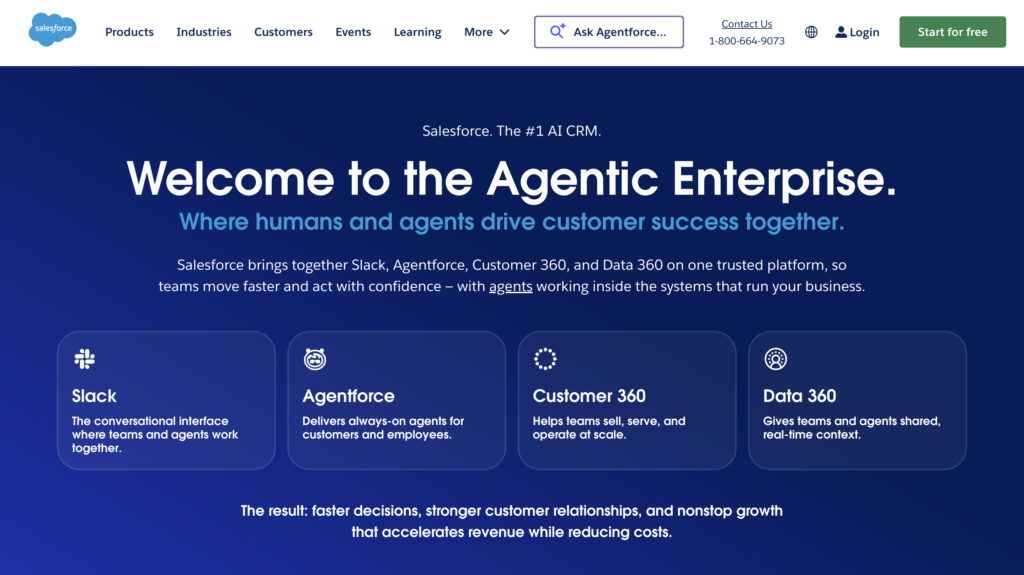
Salesforce offers:
- 🤖 Built-in AI (Salesforce Einstein) for predictive analytics and lead scoring.
- ⚙️ Advanced automation to manage complex sales workflows.
- 🧩 AppExchange, a marketplace with thousands of integrations and apps.
- 📊 Advanced reporting and forecasting to analyze sales performance.
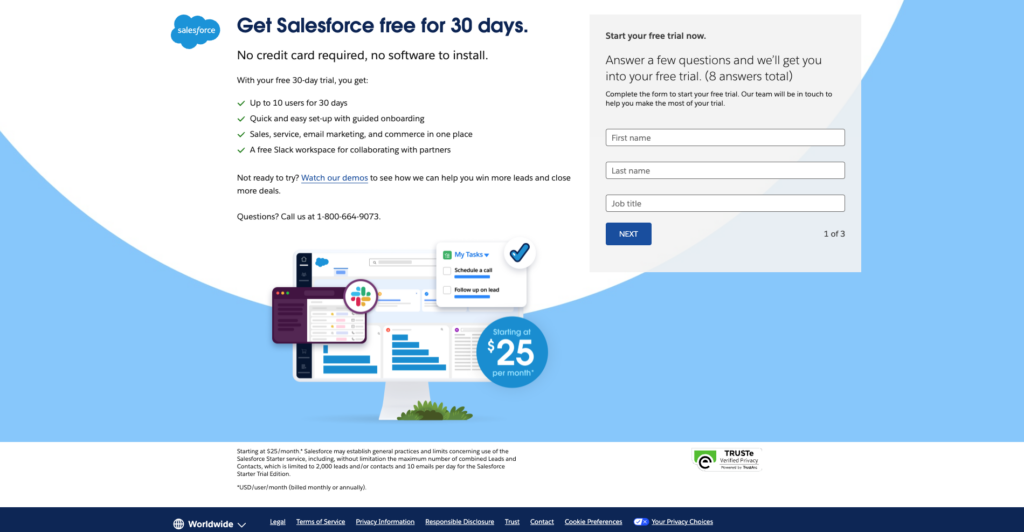
Salesforce offers free trials for some products, but most advanced features are available through paid plans and enterprise subscriptions. 🥲
8. Telephone sales prospecting tool: Call tool
Phone prospecting remains an important way to connect directly with prospects and quickly qualify sales opportunities. 🤳🏻
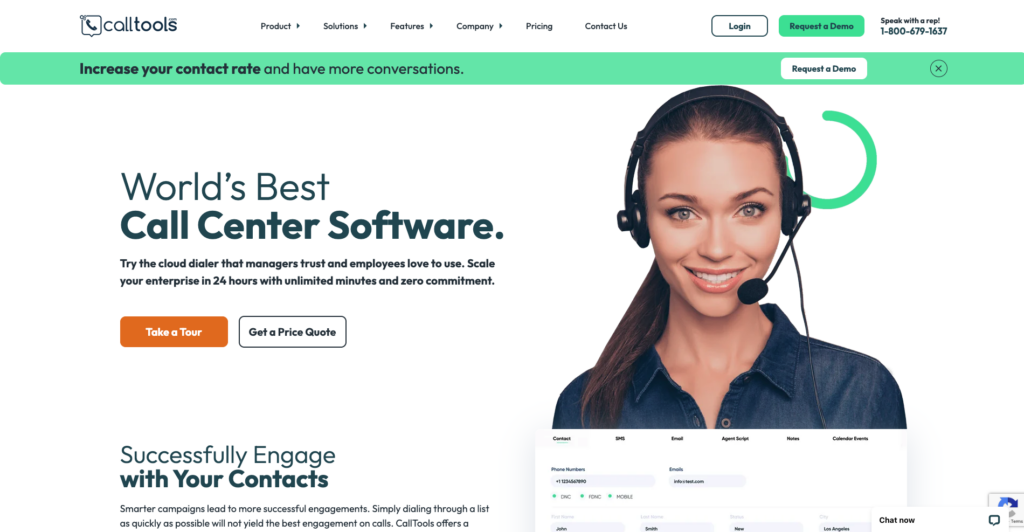
CallTools is a cloud-based call center solution designed for sales teams that want to automate and optimize their calling campaigns.
Nearly 49% of buyers still prefer to be contacted by phone for initial contact. 😇
This tool allows you to:
- 📞 Carry out telephone prospecting campaigns.
- ☁️ Use cloud telephony tailored to sales teams.
- 📊 Analyze call performance and team productivity.
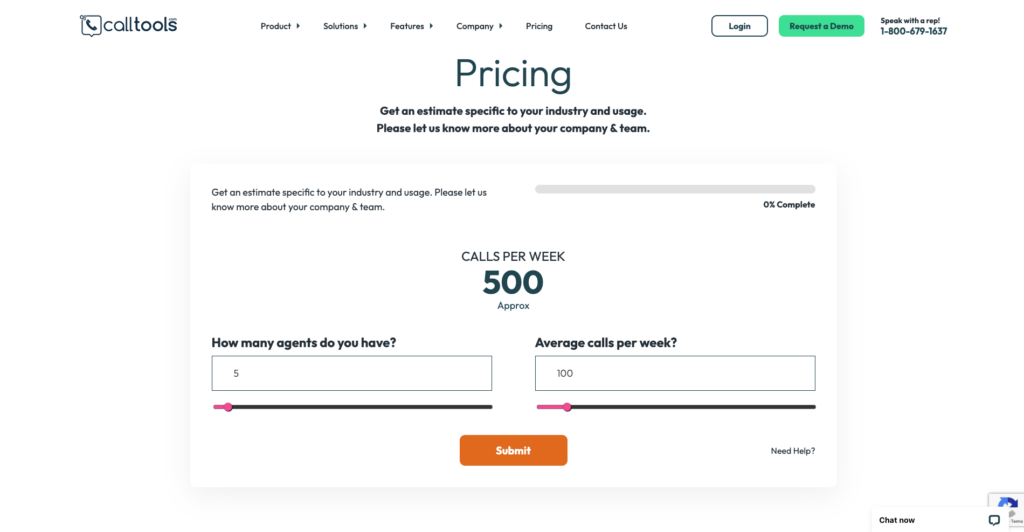
Pricing varies depending on the features and team size, and you can estimate the cost directly on the website. 💰
9. Email marketing prospecting tool: Mailchimp
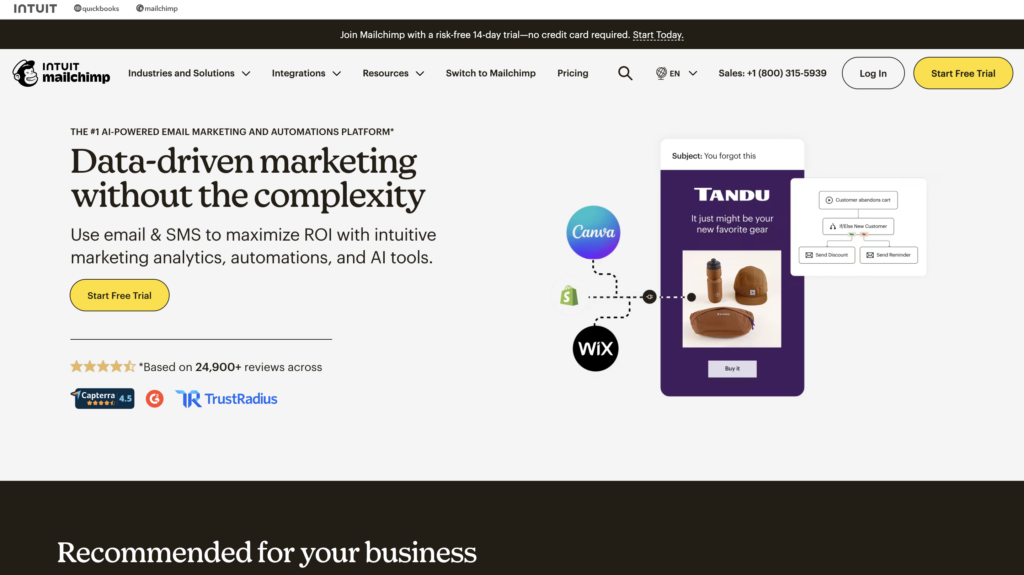
Mailchimp is one of the most popular platforms for creating and sending email marketing campaigns.
More importantly, it helps you automate newsletters and maintain contact with your prospects and customers. ✨
With Mailchimp, you can:
- 📧 Send newsletters and email campaigns.
- ⚙️ Set up marketing automation.
- 🌱 Nurture prospects.
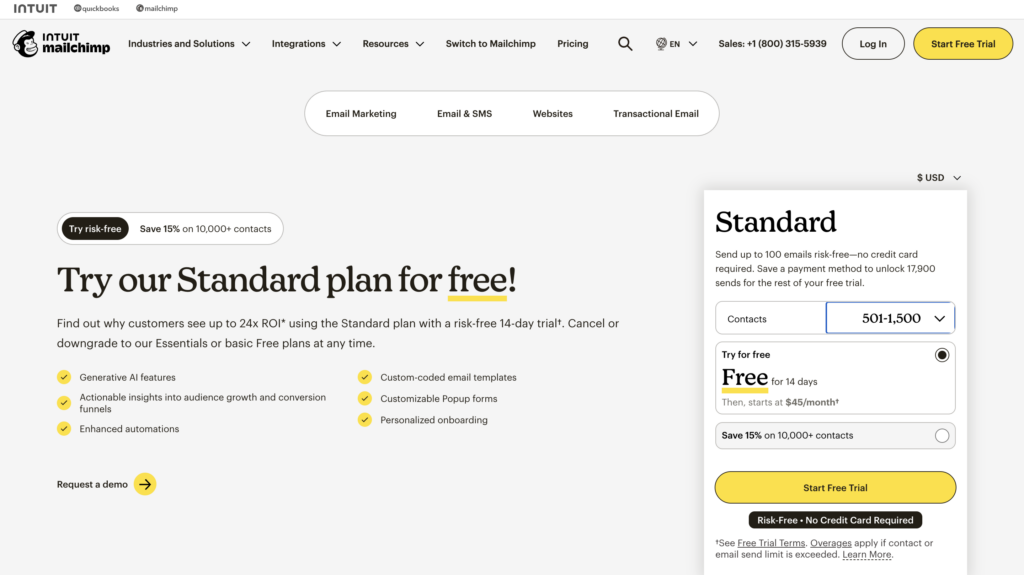
Mailchimp offers several plans depending on the number of contacts in your database. You can also try the platform free for 14 days without a credit card. 💳
10. Data scraping B2B sales prospecting tool: SalesIntel
In a sales prospecting strategy, it’s important to identify companies that are already showing buying intent so you can focus your efforts on the most promising leads. 😇
SalesIntel is a pipeline generation platform that uses AI and intent data to detect accounts that may already be interested in your products or services. 📉
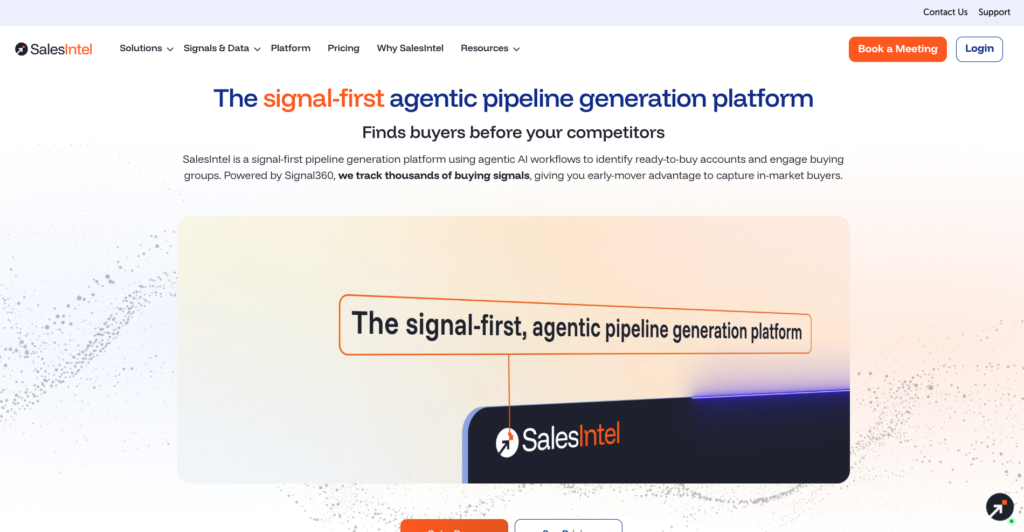
With SalesIntel, you can:
- 📊 Identify companies ready to buy using intent signals powered by Signal360 technology.
- 👥 Identify buying committees involved in purchasing decisions.
- 🤖 Use AI to build and optimize outreach campaigns.
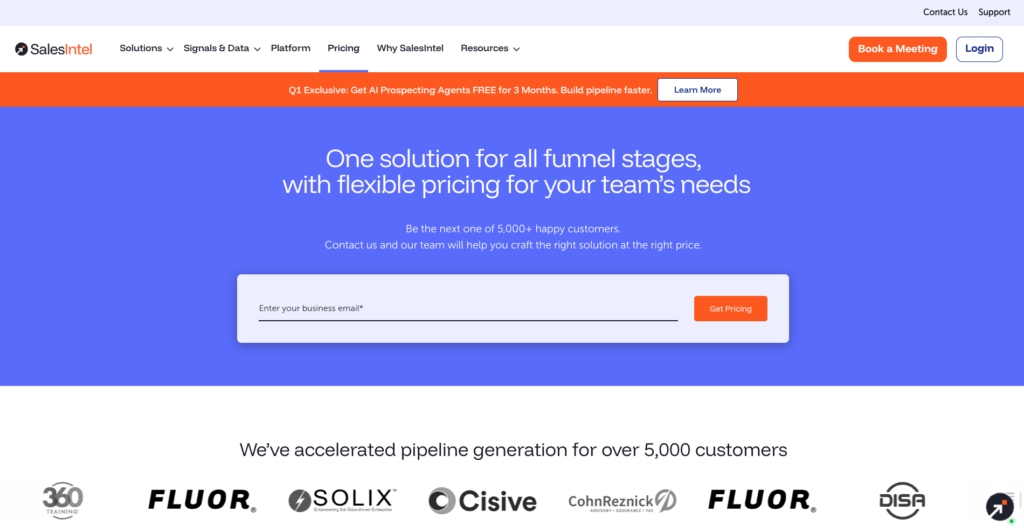
Pricing is available on request, so you’ll need to contact the SalesIntel team directly through their website. 😌
11. B2B sales prospecting tool for finding LinkedIn contact details: Uplead
Finding qualified prospects is often one of the hardest parts of sales prospecting. 🌐
UpLead is a B2B data platform that allows you to search for companies and decision-makers using multiple filters so you can build a qualified prospect list. 😌
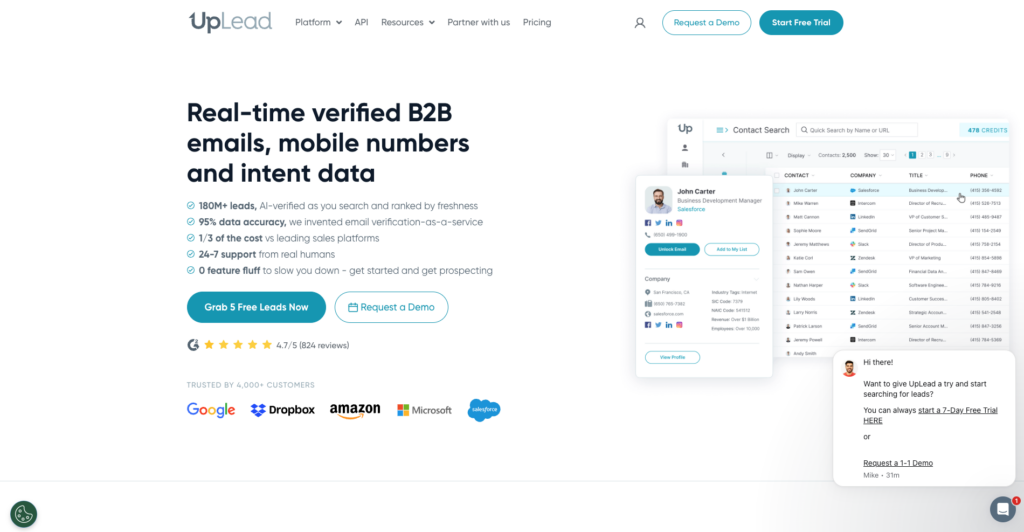
Its main features include:
- 📞 Find verified professional contact details.
- 🔗 Enrich prospect data using LinkedIn information.
- 📧 Verify and enrich professional email addresses.
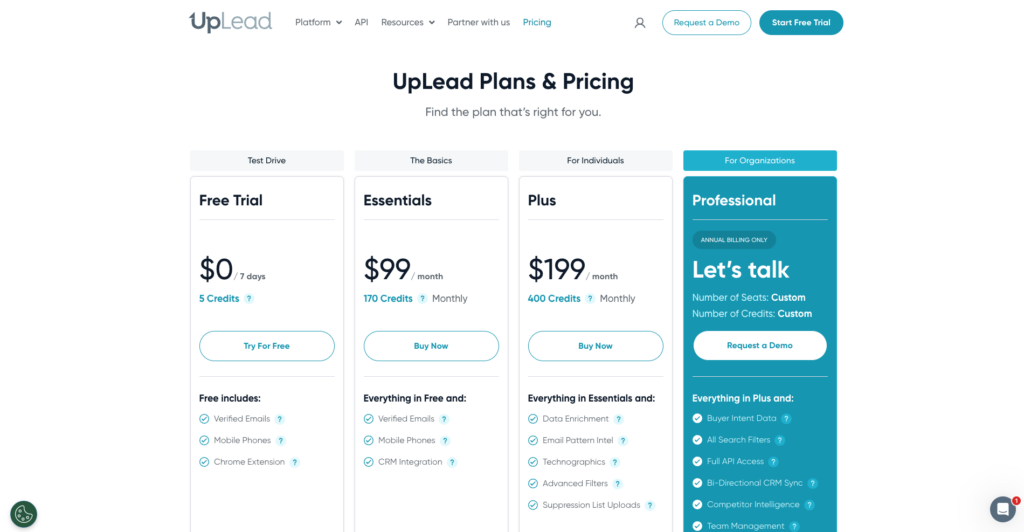
UpLead offers several plans based on credit usage. You can also try the platform free for one week. 📆
12. B2B sales prospecting tool to find your customers: SparkToro
SparkToro is an audience research tool that helps you discover where your target audience spends time online so you can improve your prospecting and marketing strategy. ✨
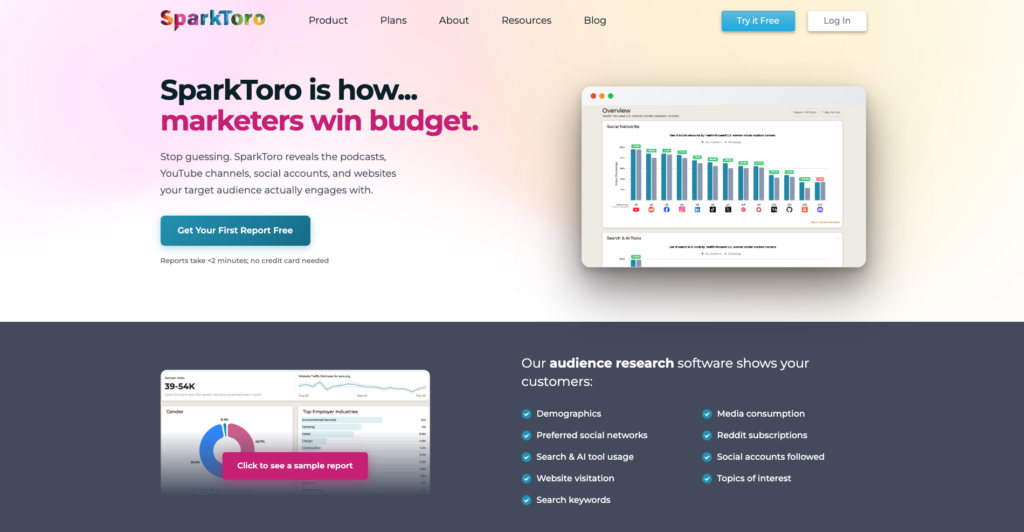
SparkToro is used to:
- 📊 Discover the websites, social media accounts, and influencers followed by your target audience.
- 👩🏻🎨 Build a more realistic buyer persona.
- 🎯 Refine your prospecting and content strategy.
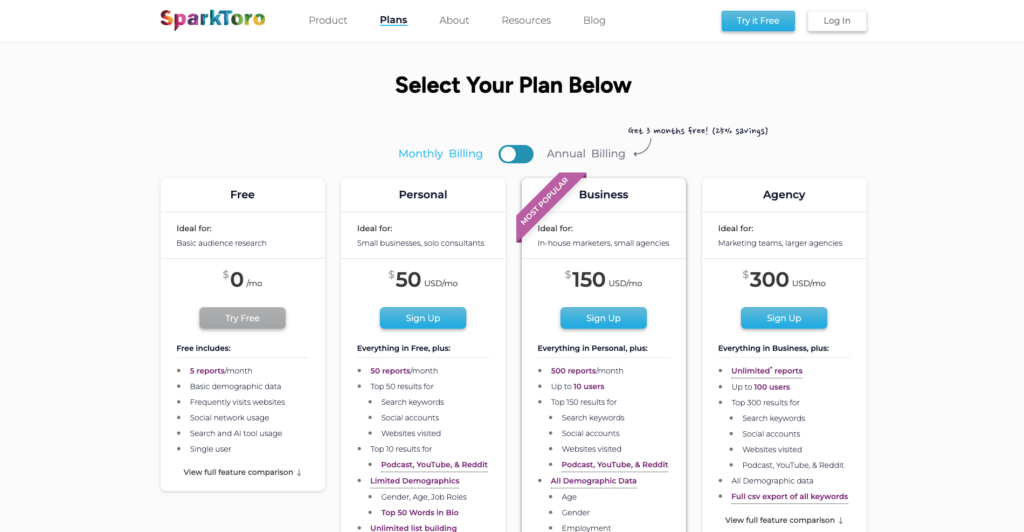
Here are the different pricing plans: 👇🏻
13. B2B sales prospecting tool for personalizing your messages: Humanlinker
Humanlinker is a tool that analyzes your prospects’ profiles to help you tailor your outreach and personalize your messages. 👀
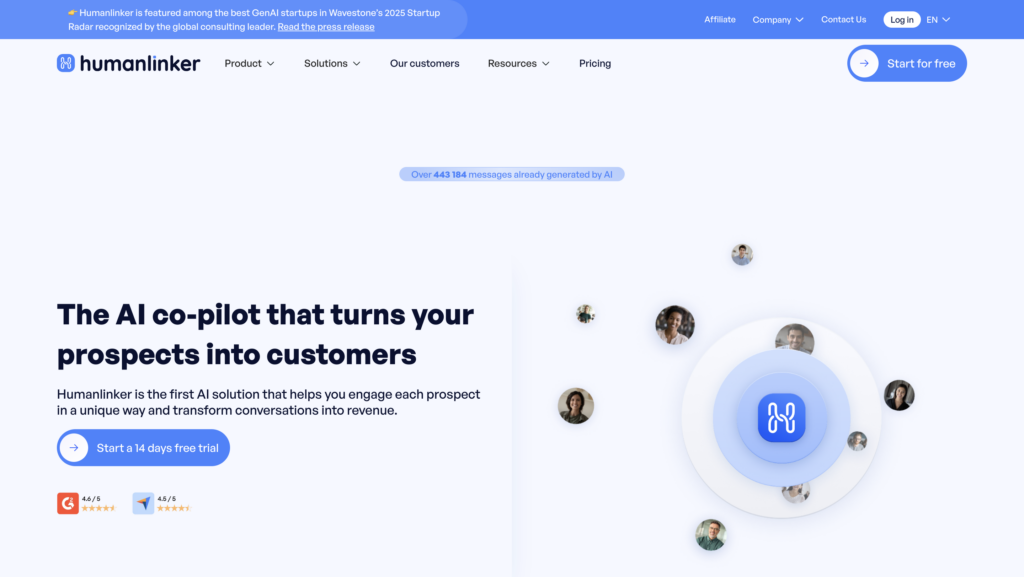
The main features of Humanlinker include:
- 🧠 Analyze prospect profiles and behavioral signals.
- ✍️ Personalize your outreach messages.
- 🤖 Use artificial intelligence recommendations to better understand your leads.
- 📕 Prepare for sales meetings with insights about your prospects.
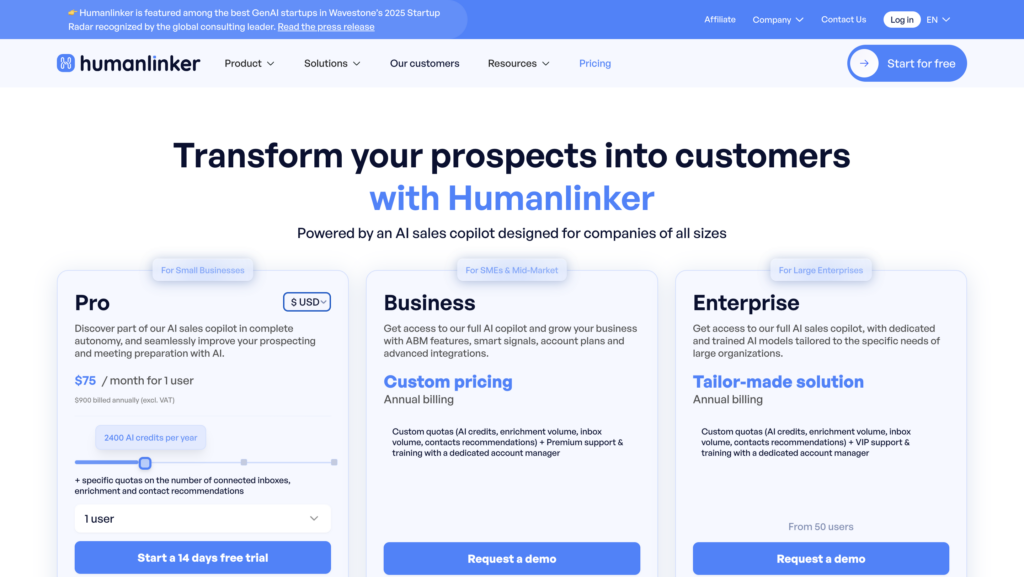
Humanlinker offers credit-based pricing as well as custom plans. 🤓
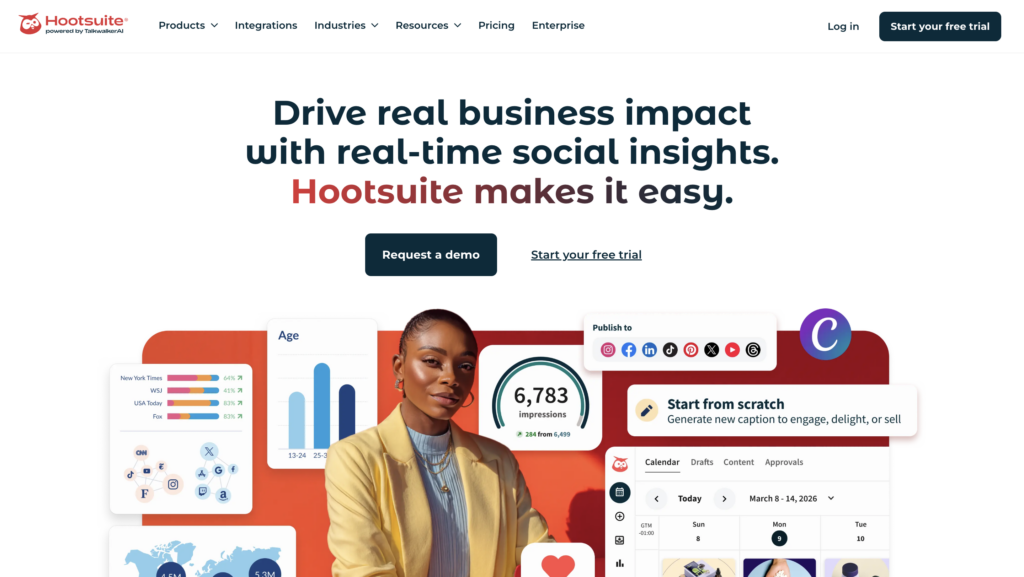
14. Social selling sales prospecting tool: Hootsuite
Hootsuite helps you improve your prospecting strategy by managing and analyzing your social networks activity in one place. 🕺🏻
With this tool, you can:
- 📱 Manage multiple social networks from a single dashboard.
- 📅 Schedule and analyze social media posts.
- 📊 Access detailed analytics reports.
- 🤝 Build and execute a social selling strategy.
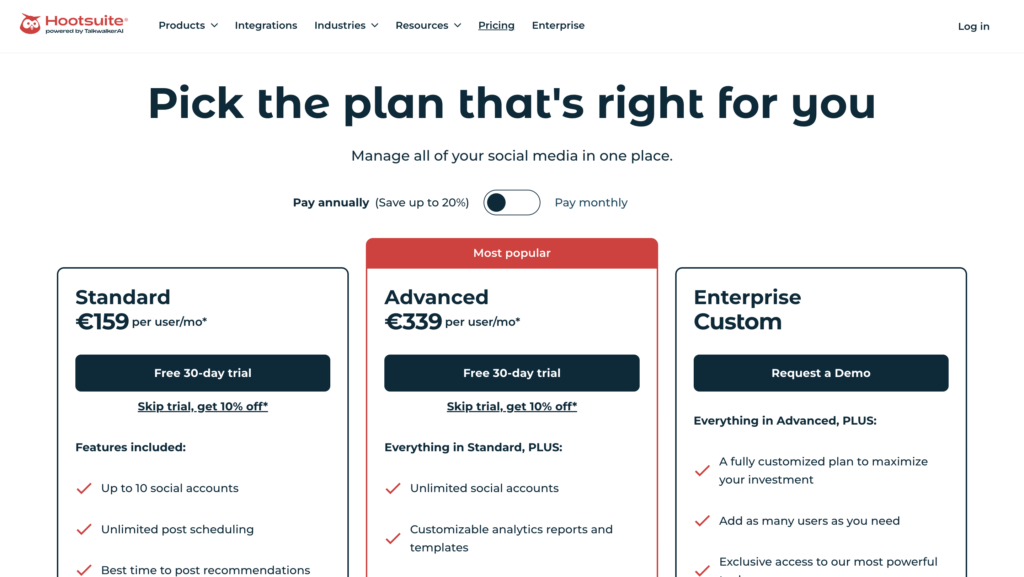
Hootsuite is a premium tool, with plans starting at $199/month. 🥲
15. B2B sales prospecting tool to identify website visitors: Leadinfo
Many companies visit your website without leaving their contact information.
Leadinfo identifies these companies using IP addresses and turns anonymous website traffic into sales opportunities. 😎
On average, only 2–5% of B2B website visitors fill out a contact form. That means more than 90% of your traffic remains anonymous without visitor tracking tools. 🫠
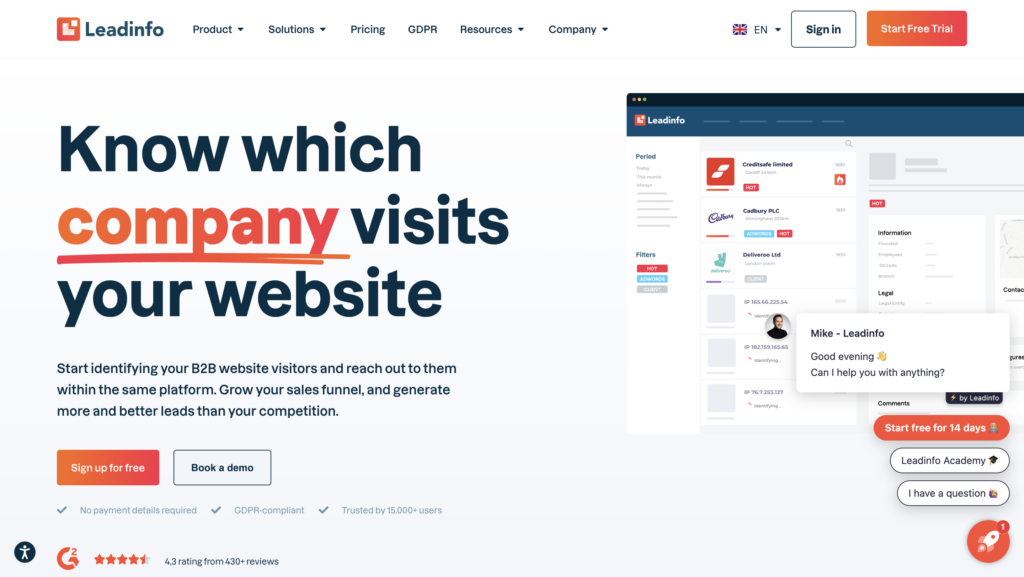
With Leadinfo, you can:
- 🌐 See which companies are visiting your website or landing page.
- 📊 Analyze which pages they view and what content interests them most.
- 🔔 Get alerts when targeted companies visit your website.
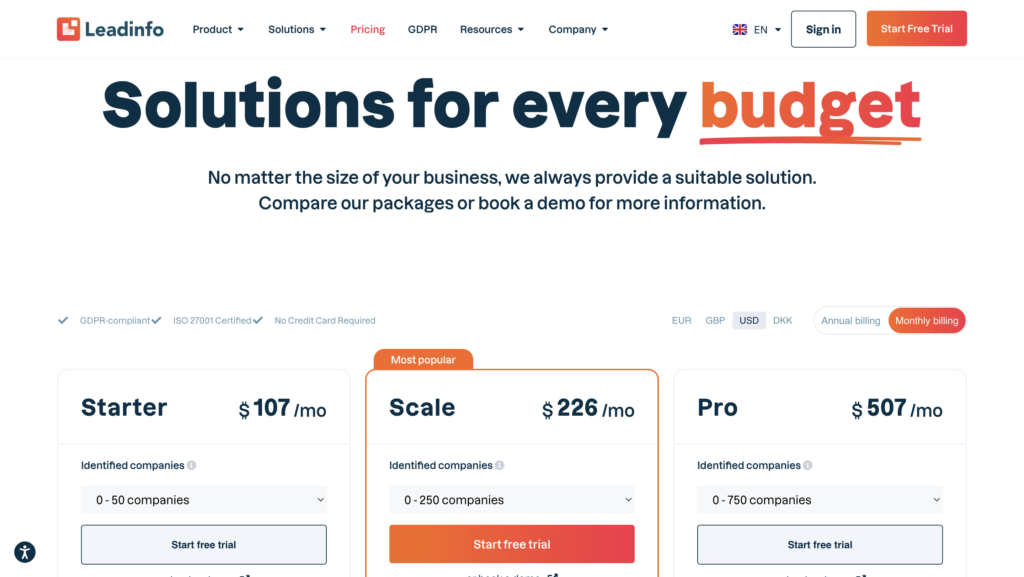
The price depends mainly on the volume of traffic you want to track. 🥸
Why use B2B sales prospecting tools?
Help organize and optimize your sales activities. They simplify lead generation, automate outreach, and make it easier to manage your sales process:
- 🎯 Generate qualified leads: With targeting, segmentation, and automation features, these tools help you identify and reach the most relevant prospects, increasing your chances of creating new sales opportunities.
- ⚡ Improve sales productivity: Prospecting tools automate repetitive tasks like finding leads, sending outreach messages, and following up on emails. This allows sales teams to focus on what really matters: building relationships and closing deals.
- 📊 Centralize customer data: All important information about leads and customers can be stored in one place—contact details, interaction history, campaigns sent, and responses received.
- 🤝 Have a more effective team: By structuring prospecting and sharing data among sales team members, these tools improve collaboration.
5 Tips for Successful B2B Sales Prospecting
B2B sales prospecting can quickly become time-consuming, especially if your process isn’t well organized. ⏰
But with the right approach, you can generate sales opportunities consistently. Here are five simple tips to improve your prospecting results. 📊
1. Set sales goals
Before you start prospecting, you need to know exactly what you’re trying to achieve. Without clear goals, it’s difficult to measure the effectiveness of your efforts or improve your strategy. 🧩
For example, you might set goals such as:
- The number of prospects to contact each week. 📞
- The number of appointments to generate. 📅
- The number of sales opportunities to create. 💼
With clear goals, your prospecting becomes more organized, more measurable, and more effective.
2. Do targeted prospecting
The most effective prospecting always starts with precise targeting. 😌
Instead of messaging hundreds of random contacts, take the time to define your ICP (Ideal Customer Profile). This helps you identify the companies and decision-makers who are most likely to need your solution. 👩🏻💻
3. Personalize your prospecting messages
A generic message sent to hundreds of prospects rarely works. Decision-makers already receive a lot of solicitations and they quickly identify messages that are too automated. 🤖
To capture their attention, try adding a touch of personalization to your prospecting message. Mentioning the prospect’s company, referring to news in their industry, or responding to a LinkedIn post can be enough to make your message more human. 👩🏻🎨
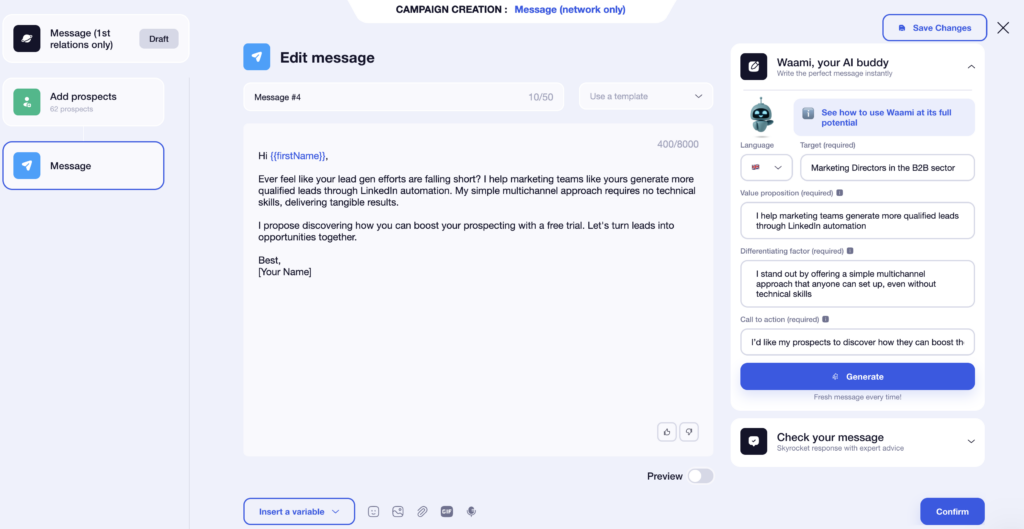
4. Use an automation tool
Manual prospecting can quickly become time-consuming, especially when you need to contact a large number of prospects. 🥲
Automation tools allow you to structure your prospecting and save valuable time on repetitive tasks.
For example, you can automate actions like sending connection requests, scheduling messages, or managing follow-ups. 📨
The goal isn’t to replace human interaction, but to free up time so you can focus on what really matters. 🤩
5. Implement a multi-channel prospecting strategy
Today, the most effective prospecting strategies rely on a multichannel approach. Instead of relying on just one channel, you can increase your touchpoints and build a more natural relationship with your prospects.
You can combine:
- LinkedIn to establish initial contact. 🌐
- Email to send a more detailed message. 📧
- A phone call or meeting to talk directly. 🕺🏻
Increasing the number of interactions raises the visibility of your message and maximizes your chances of booking a meeting. 📈
What are the different types of sales prospecting?
In general, there are two main types of sales prospecting.
📞 Traditional prospecting includes the most common offline methods used by sales teams, such as:
- Telephone prospecting.
- Door-to-door sales.
- Trade shows.
- Mass email campaigns.
💻 Digital prospecting, on the other hand, relies on digital sales tools and online channels to identify and contact prospects. It includes:
- Social media.
- B2B sales prospecting software.
- Content marketing.
- Inbound marketing.
Today, most companies use a hybrid approach, combining these two methods to generate more business opportunities. 😎
In practice, many salespeople use Sales Navigator to find prospects and tools like Waalaxy to automate outreach. 📈
- 🔍 LinkedIn Sales Navigator to search for and target prospects.
- ⚙️ PhantomBuster to automate certain LinkedIn actions.
- 📇 Kaspr to find prospects’ professional contact details.
Let’s recap the best sales prospecting tools!
B2B sales prospecting tools can completely change how you find new customers. By organizing your prospecting and automating repetitive tasks, you save time and focus on what matters most: building relationships with prospects and closing deals. 💸
Among these solutions, Waalaxy is one of the most widely used tools for LinkedIn prospecting today.
It automates invitations, messages, and follow-ups while running multichannel campaigns that combine LinkedIn and email. 😎
With the right tools and regular prospecting, you can generate more sales opportunities and grow your sales pipeline more easily. 🥳
Frequently asked questions
{ “@context”: “https://schema.org/”, “@type”: “FAQPage”, “mainEntity”: [ { “@type”: “Question”, “name”: “How do I find B2B prospects?”, “acceptedAnswer”: { “@type”: “Answer”, “text”: “Finding B2B prospects becomes much easier once you follow a clear method and target precisely.
To identify companies and decision-makers who may be interested in your solution, you can:
- Use LinkedIn to find profiles that match your target audience.
- Use B2B prospecting tools to access verified business databases.
- Launch targeted email campaigns based on your ICP and intent signals.
- Analyze your website visitors to spot interested companies.
- Participate in trade shows and professional events to build qualified conversations.
The key is defining your ideal customer profile (ICP). The more precise your targeting, the more effective your prospecting will be.
” } }, { “@type”: “Question”, “name”: “What are the best sales prospecting tools?”, “acceptedAnswer”: { “@type”: “Answer”, “text”: “There is no single perfect prospecting tool. The best choice depends on your strategy, channels, team size, and goals.
Waalaxy is a popular option for LinkedIn prospecting because it helps you automate invitations and messages, while also running multichannel campaigns that combine LinkedIn and email. It’s a solid way to grow your network and generate opportunities without losing structure.
Depending on your setup, you can also complement this with integrations, enrichment tools, or a CRM to centralize data and track follow-ups.
” } }, { “@type”: “Question”, “name”: “What is the most effective prospecting technique?”, “acceptedAnswer”: { “@type”: “Answer”, “text”: “The most effective prospecting technique today is often multi-channel prospecting. It increases the number of touchpoints by using multiple channels (LinkedIn, email, phone, content, and more).
To manage these interactions properly, teams often use a prospecting management tool to centralize conversations, follow-ups, and sales activities.
Instead of sending a single message, you build a coherent sequence across channels. This creates a more natural relationship with prospects and significantly increases your chances of getting a response.
” } }, { “@type”: “Question”, “name”: “What is the difference between sales prospecting and lead generation?”, “acceptedAnswer”: { “@type”: “Answer”, “text”: “These two concepts are often confused, but they refer to different approaches.
Sales prospecting is an outbound, proactive approach: you actively reach out to prospects (LinkedIn, email outreach, cold calling, etc.).
Lead generation is an inbound, attraction-based approach: you bring prospects to you through marketing actions such as SEO, content marketing, or social media.
In short: prospecting is proactive outreach, while lead generation is based on attracting demand.
” } }, { “@type”: “Question”, “name”: “The 8 steps of sales prospecting”, “acceptedAnswer”: { “@type”: “Answer”, “text”: “Sales prospecting usually follows a structured process that moves the relationship from first contact to closing the deal, and then to long-term loyalty. Here are the eight key steps:
- Find prospects: identify companies and decision-makers that match your ICP.
- Make yourself known: introduce your company and your solution to your target audience.
- Make contact: start a conversation via LinkedIn, email, phone, or another channel.
- Schedule a meeting: go deeper to understand needs and qualify the opportunity.
- Propose a solution: present your offer and show how it solves the prospect’s problems.
- Follow up: run structured follow-ups after a first exchange or proposal.
- Close the deal: finalize the agreement and convert the prospect into a customer.
- Build loyalty: maintain the relationship to drive satisfaction, referrals, and future opportunities.
How do I find B2B prospects?
Finding B2B prospects may seem complicated at first… but with the right methods, it becomes much easier. 😉
To identify companies and decision-makers who may be interested in your solution, you can, for example:
- 🔎 Use LinkedIn to find profiles that match your target audience.
- 📊 Use B2B sales prospecting solutions to access B2B databases.
- 📧 Launch targeted email campaigns.
- 🌐 Analyze your website visitors to identify interested companies.
- 🎤 Participate in trade shows or professional events.
The most important thing is to define your ideal customer profile (ICP). The more precise your targeting, the more effective your prospecting will be. 🎯
What are the best sales prospecting tools?
There’s no single perfect business prospecting tool, it all depends on your strategy and your goals. 🤝
Among the most widely used solutions, Waalaxy is especially popular for LinkedIn prospecting.
It lets you automate invitations and messages while running multichannel campaigns that combine LinkedIn and email, making it easier to reach prospects and generate new opportunities. It’s a good way to grow your network and generate leads more easily. 🧘🏻♀️
Other tools can also complement your prospecting, such as integrations or CRMs.
What is the most effective prospecting technique?
The most effective prospecting technique today is often multi-channel prospecting. It involves increasing the number of points of contact with a prospect by using multiple channels.
To manage these interactions effectively, companies often use a prospecting management tool that centralizes conversations, follow-ups, and sales activities. 🕺🏻
Instead of sending just one message, you can combine several actions, as mentioned earlier. ⬆️
This approach helps build a more natural relationship with prospects, improves sales engagement, and significantly increases your chances of getting a response. 🍀
What is the difference between sales prospecting and lead generation?
These two concepts are often confused, but they correspond to two different approaches.
Sales prospecting involves actively seeking out prospects to offer them a solution, for example, via LinkedIn, emailing, or cold calling. 🤓
Lead generation, on the other hand, aims to attract prospects to your company through marketing activities such as SEO, content marketing, or social media. 🕺🏻
Sales prospecting is a proactive approach. 📈
Lead generation is based on an attraction strategy. 🤝
The 8 steps of sales prospecting
Sales prospecting usually follows a structured process made up of several stages. Each stage moves the relationship forward, from the first contact with a prospect to closing the deal and building long-term customer loyalty. 🙌🏻
Here are the eight key steps of the sales prospecting process:
- 🔎 Find prospects: Identify the companies and decision-makers that match your ideal customer profile (ICP).
- 👋 Make yourself known: Introduce your company and your solution to your prospects.
- 💬 Make contact: Initiate an initial conversation via LinkedIn, email, phone, or another channel.
- 📅 Schedule a meeting: Have a more in-depth discussion to understand the prospect’s needs.
- 💡 Propose a solution: Present your offer by showing how it addresses the prospect’s issues.
- 🔁 Follow up: Follow up after an initial discussion or sales proposal.
- 🤝 Close the deal: Finalize the agreement and turn the prospect into a customer.
- ⭐ Build loyalty: Maintain the customer relationship to develop satisfaction, recommendations, and future opportunities.
Now you know everything about the best sales prospecting tools! 🧚🏻♀️
 Sasha
13/03/2026
Sasha
13/03/2026