

- What is a lead management system?
- Why are 80% of leads never exploited?
- A Lead Management System is much more than just a tool
- The 8 steps of a lead management system to stop losing leads
- What is the difference between CRM and lead management system?
- How to activate your leads effectively?
- Which is the best lead management system?
- Lead management system: Best practices, mistakes to avoid and essential KPIs
- Let’s recap Lead Management Systems
- FAQ on Lead Management System
80% of generated leads are never used. 📉
Not because they’re bad but because they enter a poorly structured system.
So the real problem isn’t lead generation.
It’s what happens next: vague qualification, zero activation, and CRMs used as glorified storage. 😔
In this article, you’ll learn how to build an effective lead management system, which steps actually matter, and how to activate your leads at the right moment before they slip through the cracks. 😎
What is a lead management system?
A lead management system isn’t just “managing contacts.” 😅 It’s the set of actions that actually move a lead forward from the first signal of interest to a real opportunity, and eventually, a customer.
- Where the lead come from?
- What they’re really interested in?
- When they’re ready to be contacted?
- Who should reach out ?
A solid lead management system helps you avoid two very common mistakes:
- Sending leads to Sales too early.🫠
OR
- Letting promising leads sit untouched.
The goal isn’t speed or volume, it’s timing and relevance.
Key features of a good lead management system
To work properly, a lead management system relies on a few essential building blocks. 🏠 Not all of them are technical, but they need to work together smoothly. These typically include 👇🏻:
- Tracking and centralizing data, including intent signals.👀
- Lead scoring for prioritization.🏅
- Clear alerts, SLAs, and routing rules. ⚙️
- Intelligent workflows and automation.🤖
- Integrations with CRM and existing tools.🛠️
- Lu reporting to manage and adjust over time. 📊
Without these elements, visibility quickly breaks down and taking effective action becomes much harder.
Why are 80% of leads never exploited?
If that many leads fall through the cracks, it’s not a tools or volume problem.
It’s almost always a structure issue: vague rules, unclear ownership, and a system that doesn’t guide action.
The result? Leads pile up, teams shift responsibility, and real opportunities quietly disappear. 🫥
Too many leads, not enough process
When everything feels like a priority, nothing really is. Without a clear process, leads come in at scale but are handled inconsistently: a few today, some later when there’s time… or never. 😭
Without rules for qualification, scoring, or timing, teams end up :
- Spending too much time on immature leads.
- Ignoring the ones showing real buying signals.
On the Sales side, this quickly leads to a loss of confidence in the leads coming from Marketing. 😕
The false sense of security provided by CRMs
A CRM often gives the illusion that everything is under control. Leads are logged, tagged, and assigned a status, so it feels like things are moving. But storing leads isn’t the same as managing them.. A CRM tool records information. It doesn’t decide👇🏻:
- When to follow up.
- On which channel.
- With what message.
- Or which lead deserves real attention right now.
Without a real system behind it, the CRM turns into a lead graveyard. ⚰️
Cold and lukewarm leads: full of potential, poorly handled
Most leads are neither hot nor ready to buy. They are cold or warm… yet full of potential. The problem ? They’re often not nurtured properly, not activated at the right time, or not followed up on intelligently. 😅
The outcome is predictable: Sales teams waste time, opportunities are missed, and everyone ends up saying, “the leads are bad”, when in reality, the system is.😬
A Lead Management System is much more than just a tool
When people talk about lead management, most of them immediately think of software.
In reality, a Lead Management System (LMS) is much broader; it is a coherent set of processes, tools, rules, and metrics designed to keep leads moving forward, without getting lost along the way.
A lead management system covers every step of the lead sales cycle :
- Lead capture. 🕸️
- Qualification and scoring. 📝
- Lead nurturing.📚
- Lead activation.🛍️
- Handoff to Sales.📞
- Performance analysis.📊
The key difference between a system and a simple tool is this: the system decides what should happen next, while the tool simply executes.
This structure also helps Marketing and Sales align around shared rules and priorities, instead of working separately in silos. 👥
Limitations and benefits of Lead Management system
Before implementing a lead management strategy, here’s what you need to keep in mind 👇 :
| Limitations of LM | Benefits |
|---|---|
| Initial time needed to define the rules | Fewer forgotten leads |
| Necessary overhaul of marketing/sales processes | Better prioritization of leads |
| Scoring and workflow configuration | Sales focused on more mature leads |
| Need for alignment between teams | More readable and predictable pipeline |
| Progressive results (not immediate) | Shorter sales cycles |
| Requires regular monitoring and adjustments | More consistent prospect experience |
| Depends on data quality | Decisions based on data, not intuition |
The 8 steps of a lead management system to stop losing leads
What makes the difference between a system that works and one that leaks leads isn’t just the tools.
According to Smart Insights, an optimized lead management system can generate 93% higher sales performance than unstructured approaches.
It comes down to the right levers, activated at the right time, with clear rules behind them. Here are the 8 essential steps. 🤓
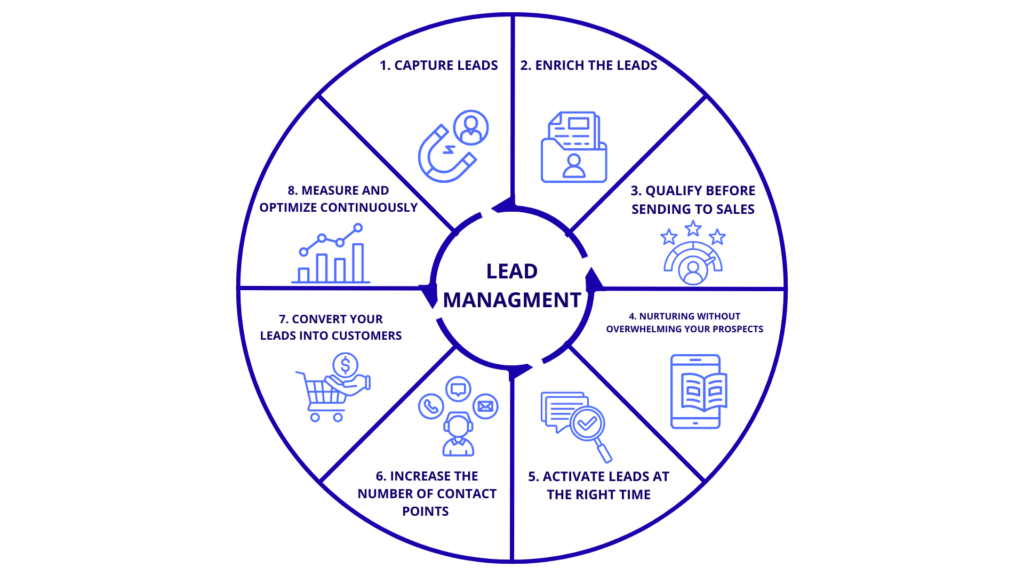
1. Capture actionable leads (not just emails)
Not all leads are created equal. The first lever is therefore to stop collecting “empty” leads : an email address without context helps neither Marketing nor Sales.
An actionable lead gives you just enough information to decide what should happen next:
- Where the lead came from ?
- Why they shared their contact details ?
- How strong their interest actually is ?
That means asking better questions at the right moment and adapting your capture method to the channel: forms, events, outbound, content, and more.
The smarter your capture, the smoother everything that follows.
Poor capture, on the other hand, creates friction all the way down the funnel. 😬
2. Enrich leads as soon as they enter the funnel
A raw lead is hard to act on. That’s why enrichment is a key lever and one that’s often underestimated. The goal isn’t to collect all possible data. It’s to gather useful information you can actually act on, such as:
- Company size. 🏠
- Industry. 🕵🏻♀️
- Role. 📚
- Professional contact. ☎️
- Behavioral signals (pages viewed, content consulted, downloaded, interactions). 💞
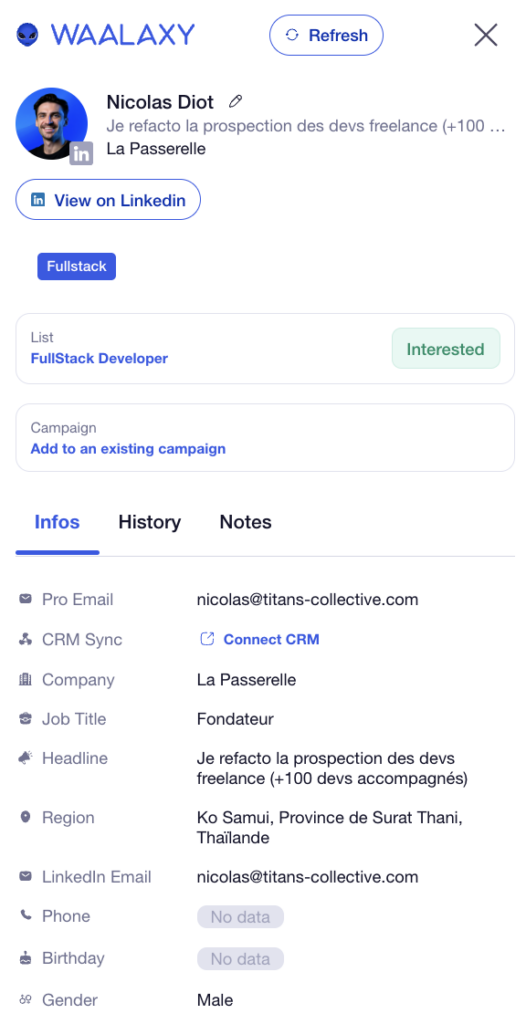
➡️ This enrichment helps avoid two common mistakes:
- Treating all leads the same way.
- Wasting time manually qualifying leads.
The sooner you enrich your leads, the faster you can decide: lead nurturing, activation, or transfer to Sales. Most importantly, it keeps you from working blindly. 👀
3. Qualify and score leads before sending them to Sales
Sending leads to Sales too early is one of the most common and costly mistakes. 💸 When qualification criteria are unclear, sales teams end up reaching out to prospects who aren’t ready or genuinely interested.
The result? Wasted time, frustration, and a growing loss of confidence in Marketing-generated leads.
Lead qualification doesn’t need to be perfect. It simply needs to define the minimum shared information required to decide whether a sales action makes sense right now, a follow-up, a call, or a wait.
When this framework is clear, the handoff between Marketing and Sales becomes smooth, predictable, and far more effective. 🤝
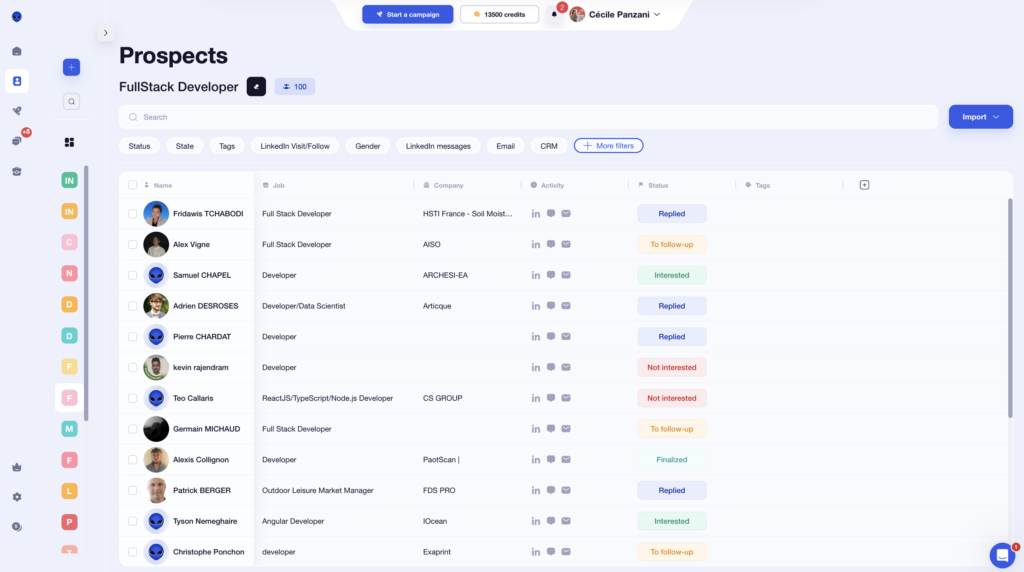
Without clear qualification, leads move around… but never actually move forward in your funnel. 🫠
You need to implement a truly useful lead scoring system. It’s often seen as overly technical and pushed aside, but in reality, good scoring is primarily a decision-making tool.
Overly complex scoring becomes unreadable. Overly simple scoring becomes useless. The goal is to find the right balance: prioritize leads based on their actual buying potential, combining both profile fit and intent signals. 👀
When scoring is understood and used correctly, it becomes a shared language between Marketing and Sales. When it’s ignored, it turns into nothing more than a dashboard metric. 📊
4. Nurture leads without overwhelming them
Nurturing isn’t about blasting mass emails. It’s about building contact gradually, especially with cold or lukewarm leads. 🔥 Effective nurturing is built on:
- Useful content (white papers, ebooks, feedback, resources).
- A consistent rhythm.
- A clear progression.
The goal isn’t to force a sale. It’s to stay top of mind until the timing is right. Too much nurturing turns into noise. Too little, and the lead forgets you completely. 😶
5. Activate leads at the right time
Not every lead becomes “hot” on its own. Activation means triggering interaction when intent signals appear. 🕺🏻
This could be 👇🏻:
- A personalized follow-up email.
- A private message.
- A proactive approach on a suitable channel.
This step is critical because it turns a passive lead into an active conversation.
Without activation, many leads stay stuck in limbo… until they disappear. 🫥
This is often where the difference between a stagnant pipeline and a moving one is made. 🏃🏻♀️
6. Multiply your points of contact
Relying on a single channel to activate leads rarely works today.
Prospects move from one channel to another — and they expect more natural, human interactions. 🧚🏻♀️
Multichannel outreach helps you stay visible without being intrusive, if it’s done intentionally. It’s not about sending more messages. It’s about sending the right message, on the right channel, at the right time.
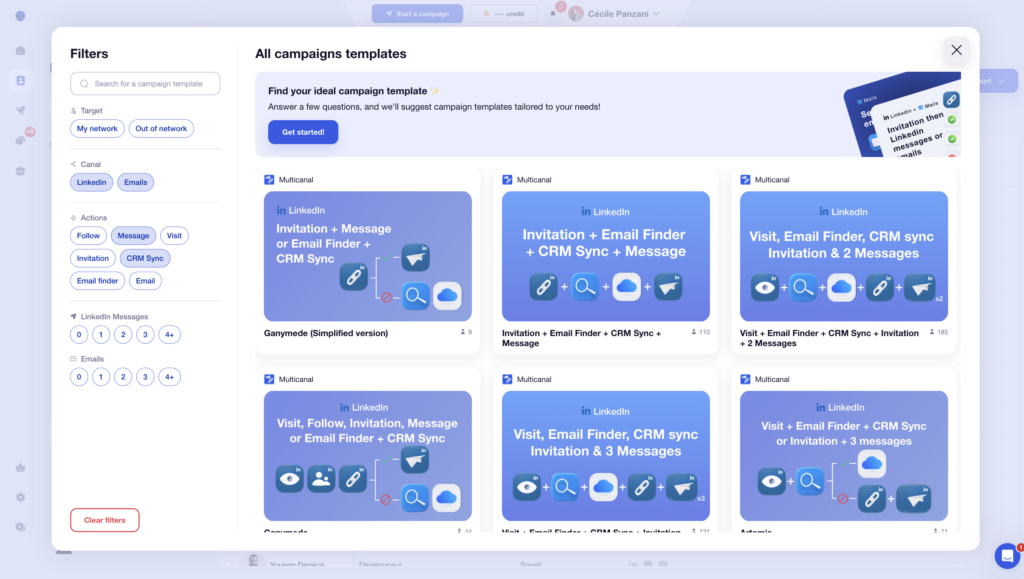
Done right, prospects feel like they’re part of a smooth, consistent conversation.
Done wrong, they feel chased or spammed. 😵💫
7. Convert your leads into customers
Turning a lead into a customer isn’t just about reaching out. It’s about creating the right conditions to trigger a buying decision. 🤓
That means 👇🏻:
- Clearly understanding the lead’s needs.
- Tailoring your message to their level of maturity.
- Acting at the right moment.
By adding value at every interaction, you guide the lead through their journey toward conversion. 🛍️
The goal is simple 👇🏻:
- Respond to a specific problem.
- Address customer objections.
- Guide the lead towards your solution.
When the right message meets the right need, the lead stops being just a contact …and becomes a customer. 🕺🏻
8.Measure and optimize continuously
A lead management system never runs on autopilot. Behaviors change, channels evolve, and sales cycles shift. Without regular measurement, performance quietly drops, often without anyone noticing. 📉
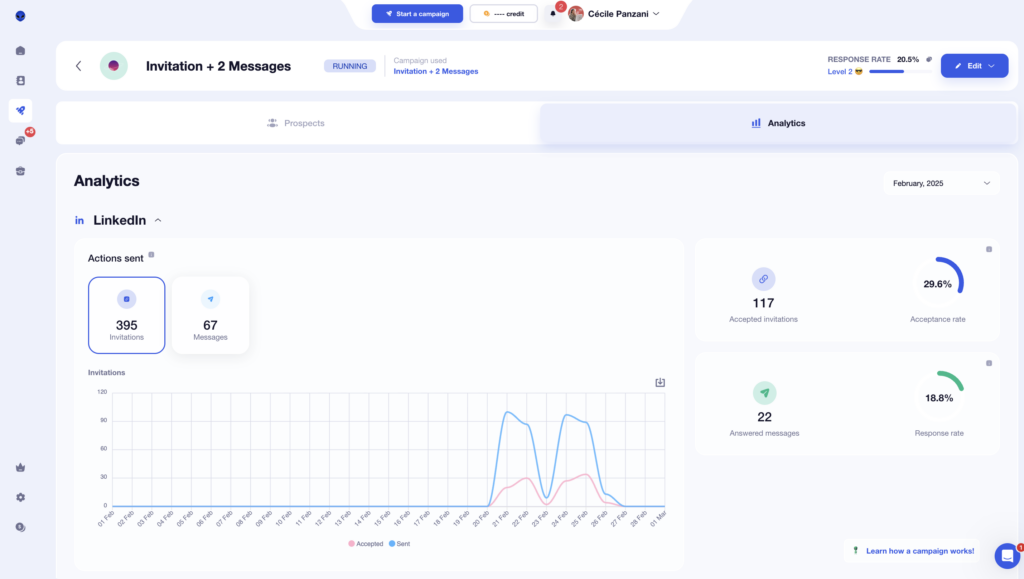
Measurement shows you where leads drop off, where they stall, and where they actually convert. That insight lets you adjust rules, messages, and priorities over time. 🏅
This is ongoing work but it’s essential. Without clear indicators, it’s easy to fall back on gut-feeling decisions. With the right KPIs, every optimization is based on facts, not impressions. 📊
What is the difference between CRM and lead management system?
Lead management system vs CRM vs Marketing automation are often confused or even used interchangeably. In reality, they don’t play the same role or have the same impact on the lead lifecycle. 👇🏻
| CRM | Marketing Automation | Lead Management System | |
|---|---|---|---|
| Main role | Centralize and track leads and opportunities | Automate nurturing and prospecting campaigns | Orchestrate the entire lead lifecycle |
| Key moment | After qualification | Before and during maturation | From first contact to conversion |
| Decision on timing | ❌ | ⚠️ Partially | ✅ |
| Multi-channel activation | ❌ | ❌ | ✅ |
| Lead prioritization | Limited | Basic | Advanced |
| MKT/Sales alignment | Low alone | Medium | Strong |
| Overall view of the lifecycle | ❌ | ❌ | ✅ |
CRM lead management stores. 🧳
Marketing automation automates. 🤖
Lead management system decides and coordinates. 🧠
How to activate your leads effectively?
Most companies generate leads, store them and then wait. That’s usually where everything gets stuck. 😬
Activation is the moment a lead actually becomes commercially relevant. Without it, even strong leads eventually fade away. The issue is that, without clear rules, these leads are often 👇🏻:
- Too “lukewarm” for Sales.
- Not a high enough priority for Marketing.
So they sit in limbo, with no specific action taken, until they’re forgotten. 😅
The real question is: how do you reactivate these leads without pushing too hard? 🕳️
Multichannel: why is a single channel no longer enough?
Relying on a single channel to activate leads rarely works today. An email can be ignored, a call can land at the wrong moment, a LinkedIn message can go unanswered, even though the lead is still relevant. 🧚🏻♀️
Multichannel outreach improves your chances of engagement without adding pressure. It’s about coordinating multiple touchpoints intelligently, not blasting everything at once. 🎻
Activating a lead isn’t about following up at random. It’s about responding to real signals. 👀 Personalization and good timing show prospects they’re not just another name in a list.
Without those two elements, even a relevant follow-up turns into spam. 👾
Which is the best lead management system?
In a Lead Management System, activation is the moment when everything comes into play. And for that, there are various “lead management software” programs.
1. Waalaxy – Activate leads without complexity
Waalaxy is a lead management system free ! It isn’t designed to store leads.
It’s built to make them take action. 🕺🏻
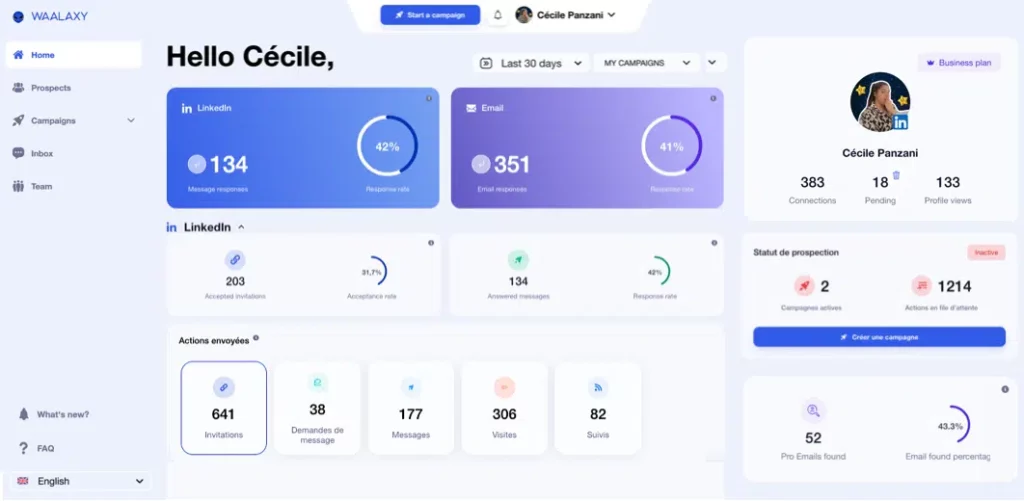
Waalaxy is a multichannel prospecting tool that automates outreach on LinkedIn and via email without technical complexity. 👽
No existing database. No heavy setup. It plugs easily into your current stack. 🧩
Unlike tools that focus solely on email, Waalaxy combines LinkedIn and email in ready-to-use multi-channel sequences. 🔀
This lets you activate leads at the right time, on the right channel, without juggling tools or disrupting your workflow. 😌
Within a lead management system, Waalaxy plays a very specific role. It helps you 👇🏻 :
- Turn passive or lukewarm leads into engaged leads. 🔥
- Trigger personalized actions based on real intent signals.
- Relieving sales teams of repetitive tasks.
Its integration with CRMs such as HubSpot or noCRM ensures seamless continuity between activation and sales follow-up. 🔗 Activated leads are automatically fed back, without manual re-entry, which limits friction and information loss. 🙌
With features like automatic LinkedIn prospect import, a unified inbox, and engagement-based interest scoring, Waalaxy helps teams focus on the leads that actually matter. 🧠📈
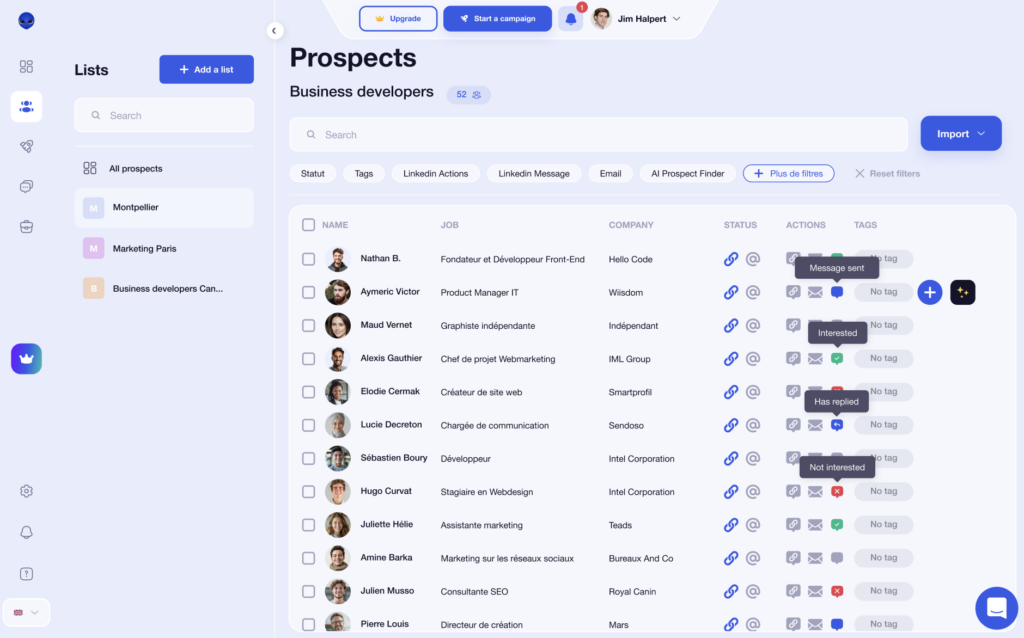
2. HubSpot / Salesforce – Centralize and structure leads
HubSpot or Salesforce act as the backbone of a lead management system. 🧠
Their primary role isn’t lead activation, it’s centralization and structure.
They centralize lead data, track interactions, manage pipelines, and support alignment between Marketing and Sales. Each lead has a clear history, a defined status, and an owner, which is critical for long-term visibility, reporting, and accountability. 🎯
That’s what makes CRMs essential but also why they work best when paired with activation tools that actually move leads forward.👀
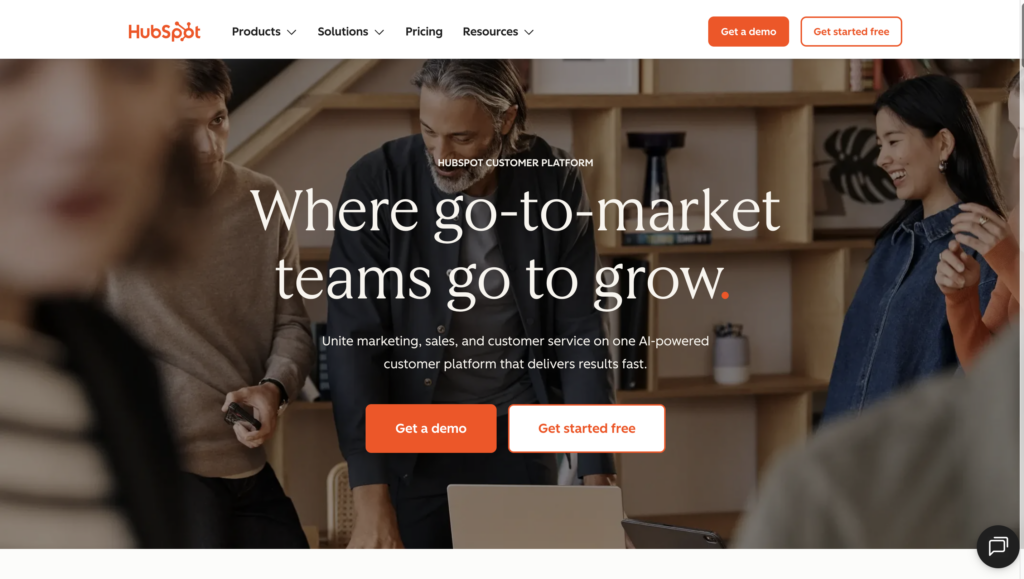
CRMs are rarely built to actively engage leads at scale. That’s why they work best when paired with lead activation tools : the CRM software organizes and qualifies, while other tools trigger actions that move leads forward in the sales funnel. 🌪️
3. Salesloft – Lead management system open source
Salesloft is a sales engagement platform designed for outbound activation at scale. It allows sales reps to run structured multichannel cadences that combine emails, calls, and social touches. 📞✉️
Compared to Waalaxy, Salesloft is typically used by larger, highly structured sales organizations with strong outbound sales motions. It excels at execution discipline, pipeline acceleration, and improving sales productivity. 📈
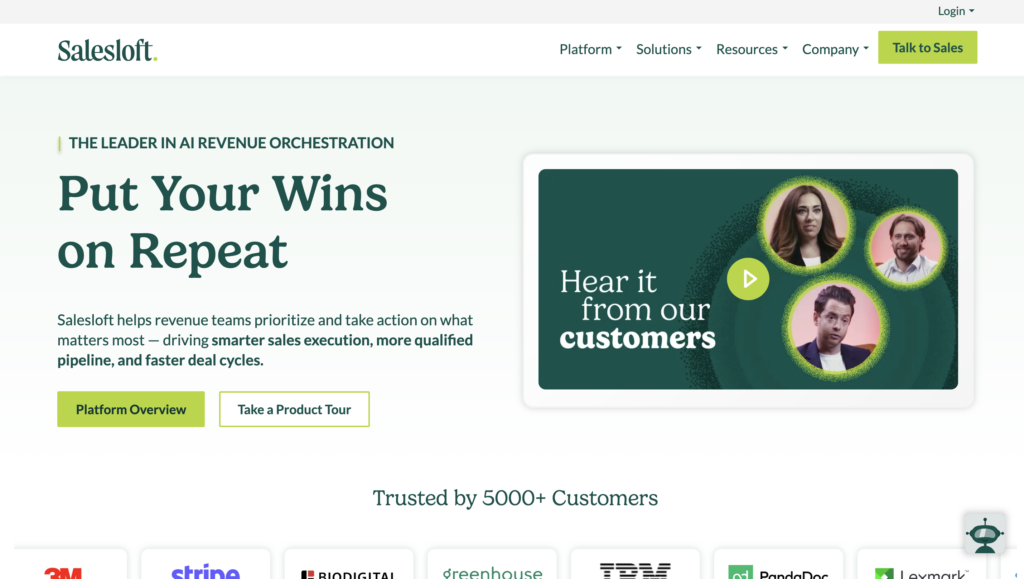
Salesloft doesn’t replace a CRM, it connects to it like Waalaxy. its purpose is to help sales teams consistently follow up, engage leads and move opportunities forward, especially once a lead is already considered sales-ready. 🕺🏻
4. ActiveCampaign – Automate nurturing over time
ActiveCampaign is a powerful lead nurturing and marketing campaigns automation tool. 🌱
Its role is to keep leads warm over time through automated email sequences triggered by behavior and engagement signals.
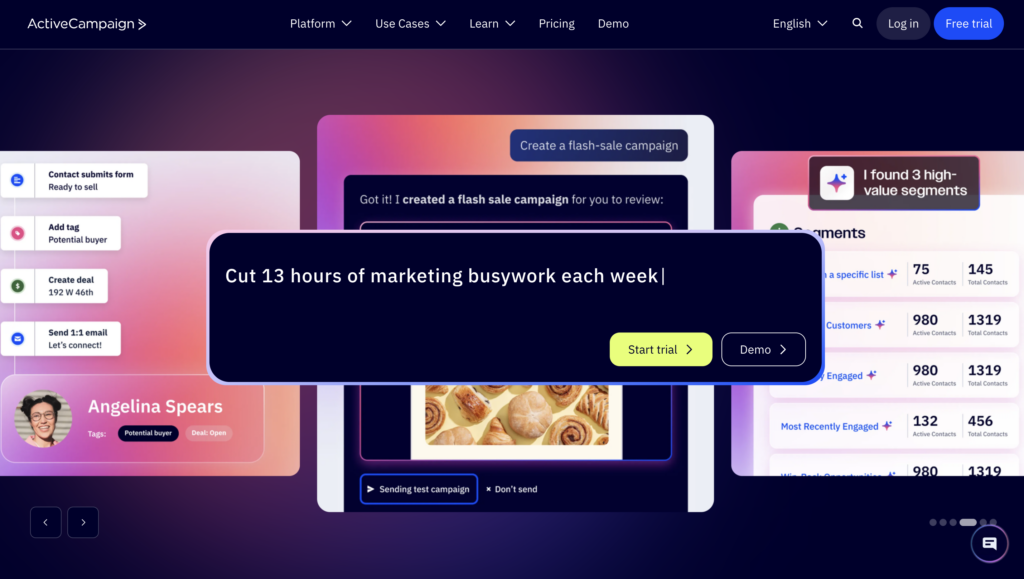
Unlike activation tools focused on direct outreach, ActiveCampaign focuses on relationship building. It allows you to:
- Deliver educational, value-driven content. 📚
- Progressively qualify leads based on how they engage. 💞
- Automate follow-ups without constant manual work. 🤓
ActiveCampaign is especially useful when leads aren’t ready to buy yet and need time, education, and trust before moving forward. ⌛️
Lead management system: Best practices, mistakes to avoid and essential KPIs
An effective lead management system isn’t just about tools.
More than anything, it’s about clear practices, avoided mistakes, and well-chosen indicators that drive long-term performance. 📊
Best practices and mistakes in lead management system
To clearly show what actually helps you move leads forward and what causes you to lose them, here’s a quick recap:
| Best practices ✅ | Mistakes to avoid ❌ |
|---|---|
| Define a clear and shared lead lifecycle | Sending all leads to Sales too early |
| Align Marketing and Sales on common rules | Let each team manage leads in their own way |
| Implement qualification before activation | Work on immature leads |
| Prioritize leads based on actual intent data | Treat all leads the same |
| Activate leads at the right time | Follow up randomly, without timing |
| Use multichannel consistently | Multiply messages without logic |
| Automate with context and rules | Automate without personalization |
| Measure performance at each stage | Managing solely based on intuition |
| Continuously adjust the system | Leave the process frozen in time |
KPIs to track for an effective lead management system
Good KPIs aren’t just there to look good on a dashboard. They help you make better decisions.
One of the most important is the activation rate: how many leads actually engage after entering your system. ⚡ This is often where the biggest leaks appear.
You should also track conversion rates between each stage of the funnel.
This helps you pinpoint exactly where leads drop off — and why.
Finally, metrics like processing time, pipeline velocity, and the quality of leads sent to Sales give you a clear, operational view of overall performance. 📈
It’s better to track a handful of meaningful KPIs than dozens of metrics no one ever uses. 😅
Let’s recap Lead Management Systems
If 80% of leads are never used, it’s not a generation problem. 📉 It’s a problem of structure, prioritization, and above all, activation.
An effective lead management system helps you stop stockpiling leads and start moving them forward: at the right time, with the right signals, and on the right channels. 🚀
It aligns Marketing and Sales around clear rules and replaces gut feeling with data.
The goal isn’t to add another lead management tool. It’s to build a coherent, scalable system. Because in the end, leads aren’t lost, they’re simply mismanaged.
FAQ on Lead Management System
What are the 4 types of CRM?
There are four main CRM types, each supporting a different part of customer and lead management:
- Operational CRM ⚙️ : Manages day-to-day sales, marketing, and support activities. It helps automate lead tracking, follow-ups, and pipeline management.
- Analytical CRM 📊 : Focuses on data and insights. It helps teams understand customer behavior, segment contacts, and make data-driven decisions.
- Collaborative CRM 🤝 : Improves communication and data sharing across teams like Sales, Marketing, and customer Support to deliver a consistent customer experience.
- Strategic CRM 🎯 : Focuses on long-term relationships. It uses customer insights to improve retention, loyalty, and lifetime value.
Together, these CRM types help teams manage leads more effectively, optimize sales processes, and build stronger customer relationships.
Does lead management system also work in B2C?
Yes, lead management absolutely works in B2C, but it needs to be adapted. 🔄
Volumes are usually higher, sales cycles are shorter, and automation plays a bigger role.
The core principles stay the same: capture, qualify, prioritize, and activate leads at the right time.
What changes is the pace, the acquisition channels, and the level of personalization. 🎨
What is the difference between lead management system and lead generation?
Lead generation is about attracting and capturing contacts, through forms, content, campaigns, outbound efforts, social media, and more.
Lead management starts after the lead is generated. It focuses on qualifying, prioritizing, nurturing, and activating leads so they actually move toward a sale.
You can generate plenty of leads without converting them effectively but without lead management, generation alone isn’t enough. 📉
Is a lead management system for small business really worth it?
Yes and in many cases, it’s essential. For small businesses, every lead matters. There’s less room for error, less time for follow-ups, and fewer resources to recover missed opportunities. 🏆
A lead management system helps small teams stay organized without adding complexity. It makes it easier to prioritize leads, follow up at the right time, and activate prospects across the right channels.
You don’t need an enterprise-grade setup, just a clear process, a few well-chosen tools, and consistent lead activation to see better results. 📈
For small businesses, the real goal isn’t automation at scale. It’s making sure no valuable lead slips through the cracks. 🤓
Now you know everything there is to know about lead management System ! 🧚🏻♀️
 Elodie
11/02/2026
Elodie
11/02/2026