


CSV files are everywhere these days. 👀
Whether you’re exporting leads, importing contacts into a CRM, managing customer data in Microsoft Excel or Google Sheets, or moving information between tools… CSV files have become the standard.
So what exactly is it ? How to create a CSV file? And how do you open it without messing up the columns?
In this guide, you’ll learn how to create, open, and use it to manage your data easily. ✨
What Is a CSV File Format?
A CSV file (short for Comma-Separated Values) is a simple text file used to store data in a table-like format. Each row represents a record, and each value is separated by a delimiter usually a comma or semicolon. 📄
CSV files are used across almost every business tool: CRMs, lead generation tools, marketing software, Excel, Google Sheets, email marketing platforms… Most importantly, they make it incredibly easy to share data between different platforms.
Unlike Excel files (.xlsx), it’s don’t keep formatting, colors, or formulas. They simply store raw data, which makes them lightweight and compatible with almost any software. ✨

What Are CSV Files For?
CSV files are mainly used to import, export, and move data between tools quickly. 🔄
They’re one of the easiest ways to handle large amounts of data without running into compatibility problems.
For example, sales and marketing teams regularly use CSV files to:
- Export leads from LinkedIn or Waalaxy.
- Import contacts into a CRM.
- Launch
- Segment leads.
- Analyze data in Excel or Google Sheets.
The biggest advantage of CSV files? Almost every spreadsheet or SaaS tool can open them. 🙌
What’s the Difference Between CSV and Excel Files?
Although both file types let you organize data in tables, CSV and Excel files work very differently. 👇🏻
| CSV | Excel |
|---|---|
| Lightweight text file | More feature-rich file |
| Compatible with almost all software | Mainly used with Excel |
| Contains only data | Can contain formulas, colors, and charts |
| Very convenient for imports/exports | Better suited for analysis and reporting |
| Universal format | Microsoft proprietary format |
These are ideal for quickly sharing and transferring data between tools, while Excel files are better for organizing, analyzing, and visualizing data. 📊

How to Create a CSV File?
Creating a CSV file is actually pretty simple. 😄
The process is usually the same: you organize your data into columns (contacts, leads, companies, emails, etc.), then save the file in CSV format so it can be imported into other tools.
How to Create a CSV File in Excel ?
Excel is one of the most popular tools for creating CSV files. 👌
Here’s how to do it:
- Open Excel and create a new spreadsheet.
- Add your columns: first name, last name, email, company…
- Click File > Save As.
- Select the CSV UTF-8 (.csv) format.
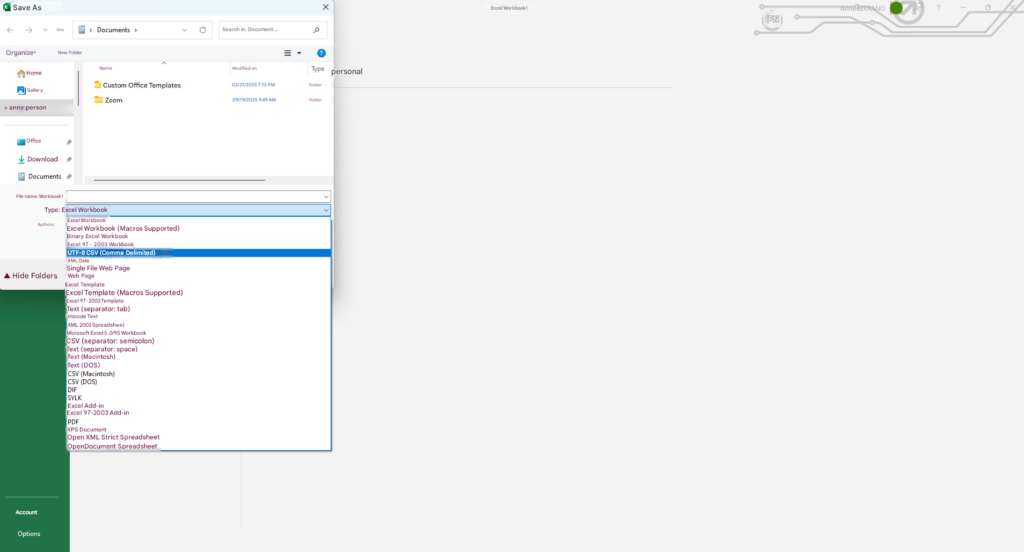
💡Using UTF-8 encoding is important because it prevents issues with accents and special characters when importing your file into a CRM or SaaS tool. ✨
How to Make a CSV File with Google Sheets?
Google Sheets also lets you create it for free, entirely online. ☁️
To download your file:
- Open Google Sheets.
- Create a new spreadsheet.
- Add your data to the columns.
- Click File > Download.
- Select Comma-separated values (.csv).
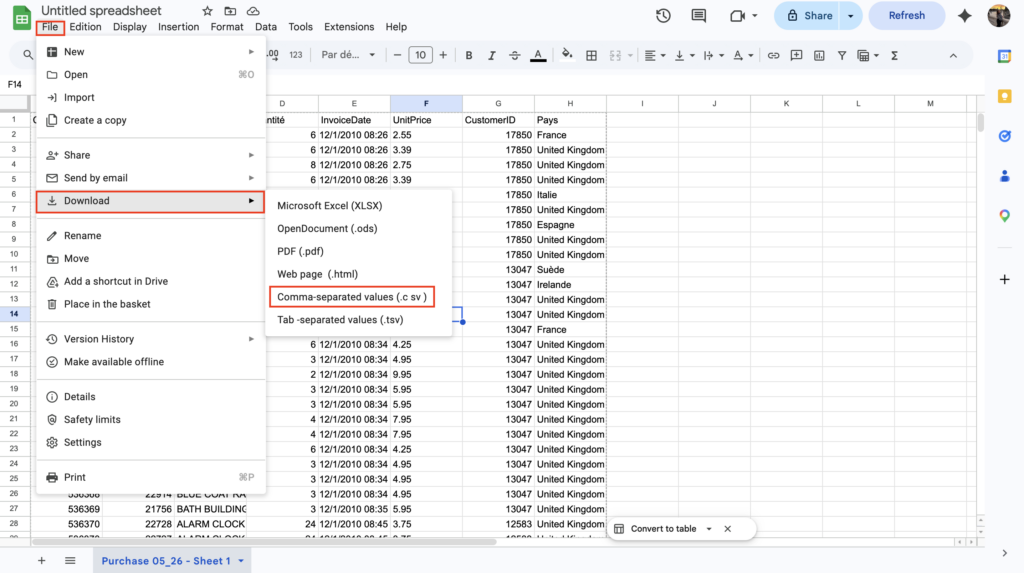
Your file will automatically download to your computer in CSV format.
How to Create a CSV File on Mac with Numbers ?
If you’re using a Mac, you can also create it with the Numbers app. 🍏
It’s very quick to do:
- Open Numbers.
- Create your spreadsheet with your data.
- Click File > Export To.
- Select CSV.
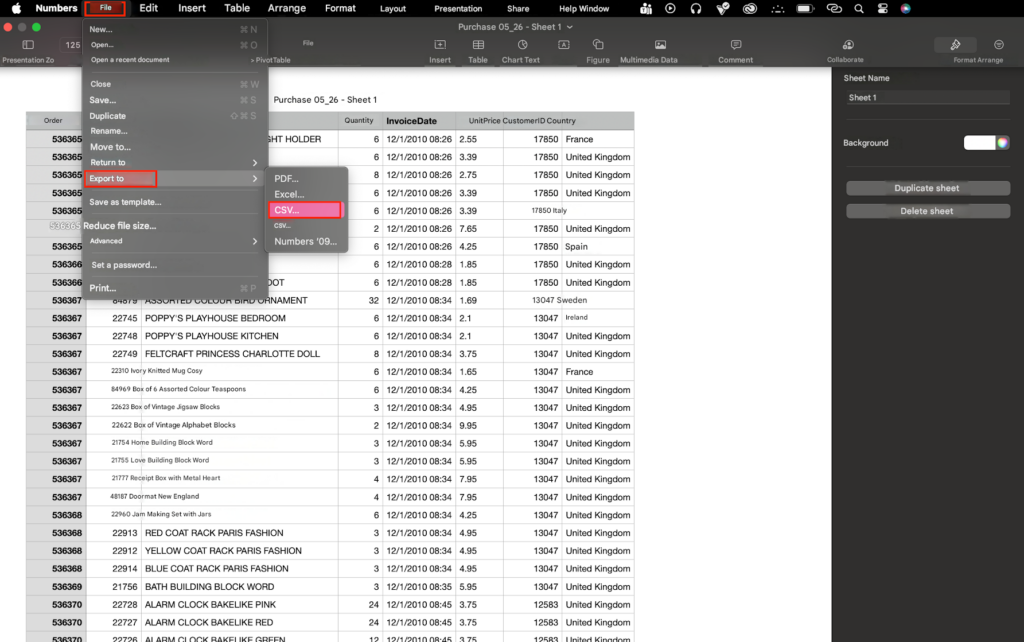
5. Check the text encoding in the advanced options.
Numbers automatically keeps your columns properly formatted, which helps avoid common formatting issues. 🙌
Create a CSV File Online
You can also create a CSV file directly online, without installing any software. 🌐
Several tools make this easy:
- Airtable.
- Notion.
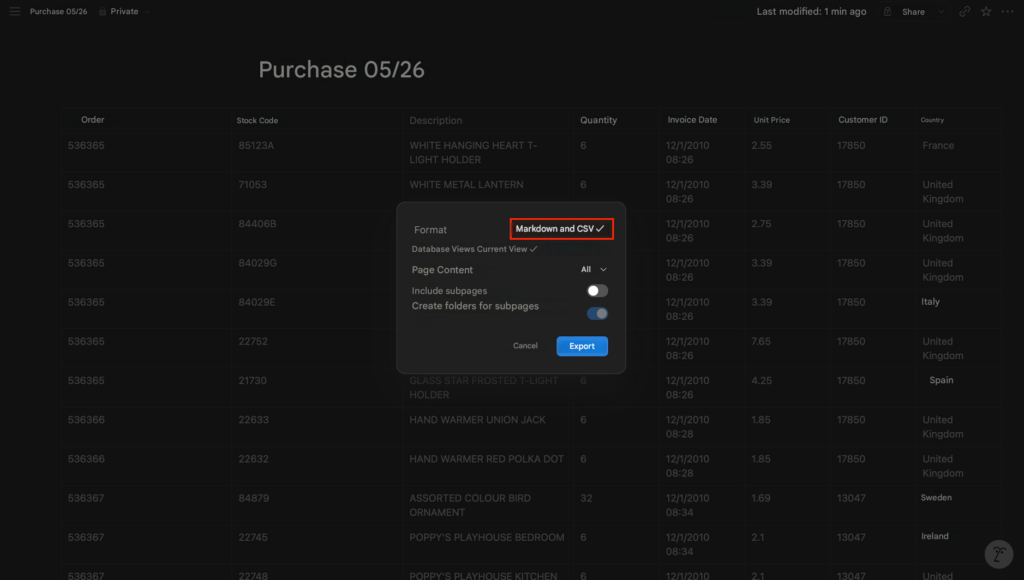
- or online CSV editors (Datablist, Table convert…).
This option is especially useful if you want to quickly share spreadsheets, collaborate with teammates, or access your files from any device.
Be sure to always check:
– The delimiter used (comma or semicolon).
– UTF-8 encoding.
– The column structure before importing into a CRM tool or lead generation tool.
How to Open a CSV File the Right Way ?
Sometimes, it opens with all the data crammed into a single column, broken special characters, or weird formatting. 🫠
Most of the time, the issue comes from the delimiter being used (comma vs. semicolon) or the file encoding. Luckily, fixing it is pretty simple. 👌
How to Open a CSV File in Excel?
Excel doesn’t always read CSV files correctly by default especially when the file uses semicolons instead of commas. 👀
Here’s how to open a file properly in Excel:
- Open Excel.
- Click the Data tab.
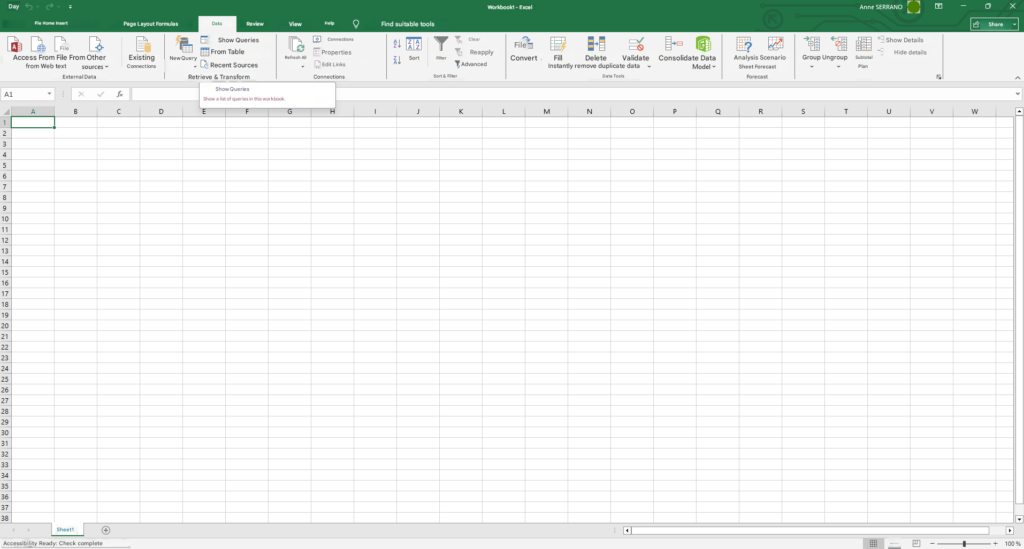
- Select “From Tex”.
- Select your CSV file.
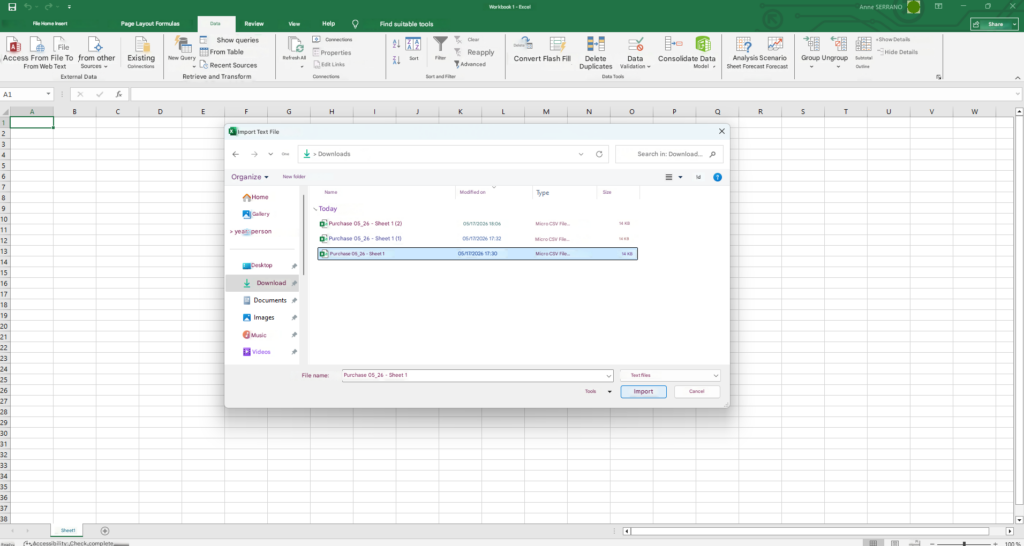
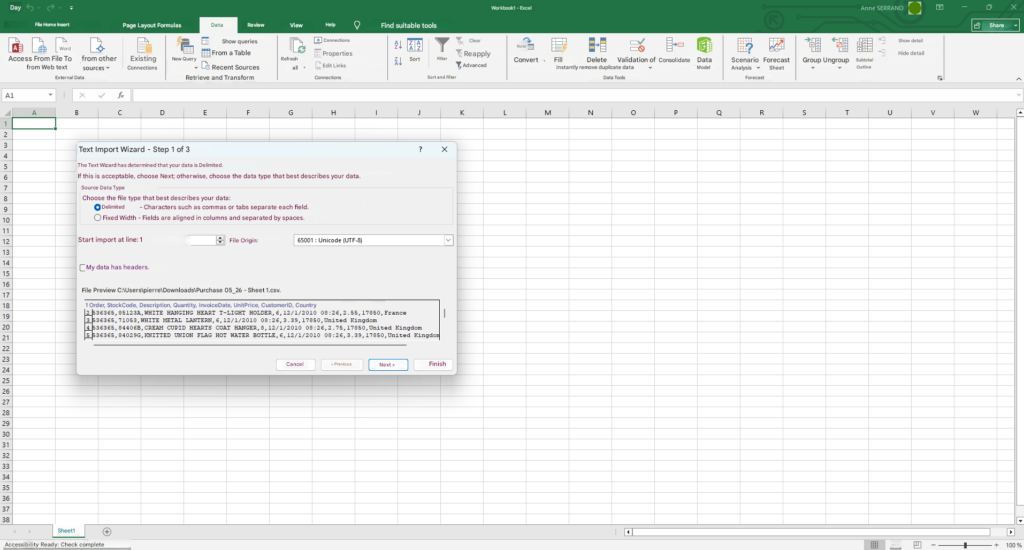
- Make sure the encoding is set to UTF-8.
- Select the correct delimiter: comma or semicolon.
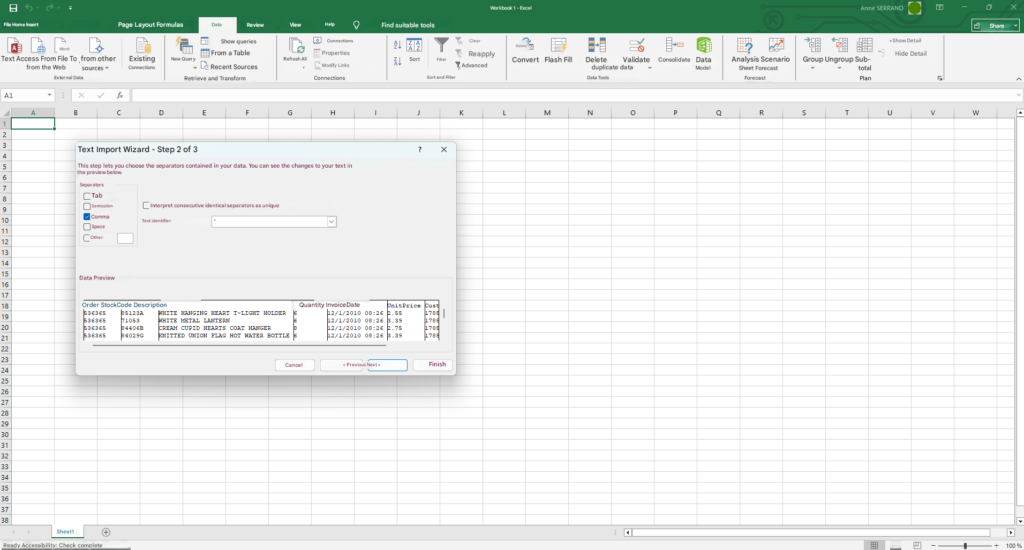
- Définissez les colonnes.
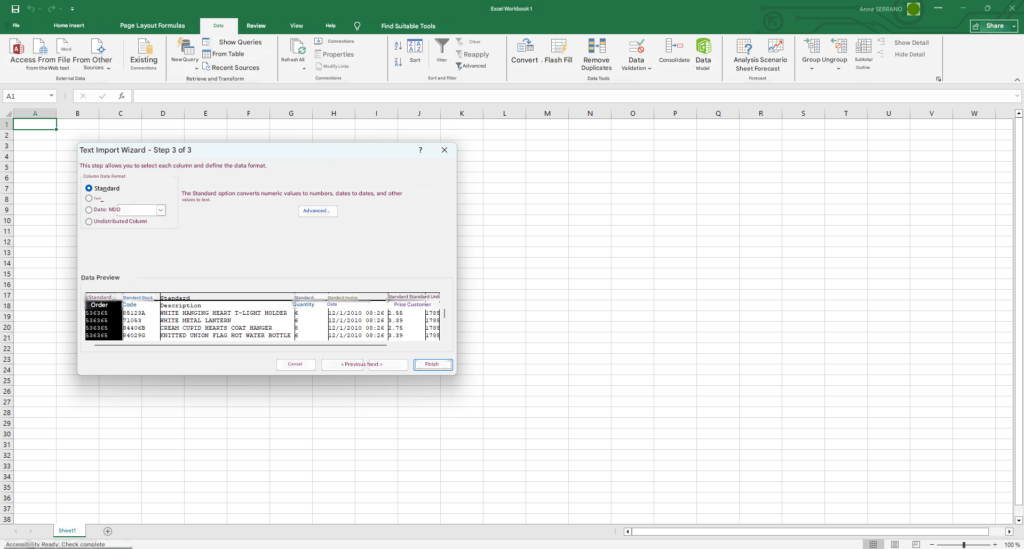
- Click Finish.
Your data will then be displayed neatly in the correct columns. ✨
Open a CSV File with Google Sheets
Google Sheets generally handles it very well. ☁️
To open your file:
- Open a blank Google Sheets spreadsheet.
- Click File > Import.
- Upload your file.
- Confirm the import.
Google Sheets automatically detects most delimiters and encodings, which helps avoid formatting problems. 🙌
Open a CSV in Numbers
If you’re using Apple Numbers, opening a CSV file is usually very straightforward. 🍏 Numbers automatically detects columns and delimiters, which prevents most display issues.
To open your CSV file with Numbers:
- Open the Numbers app.
- Select the file and click Open.
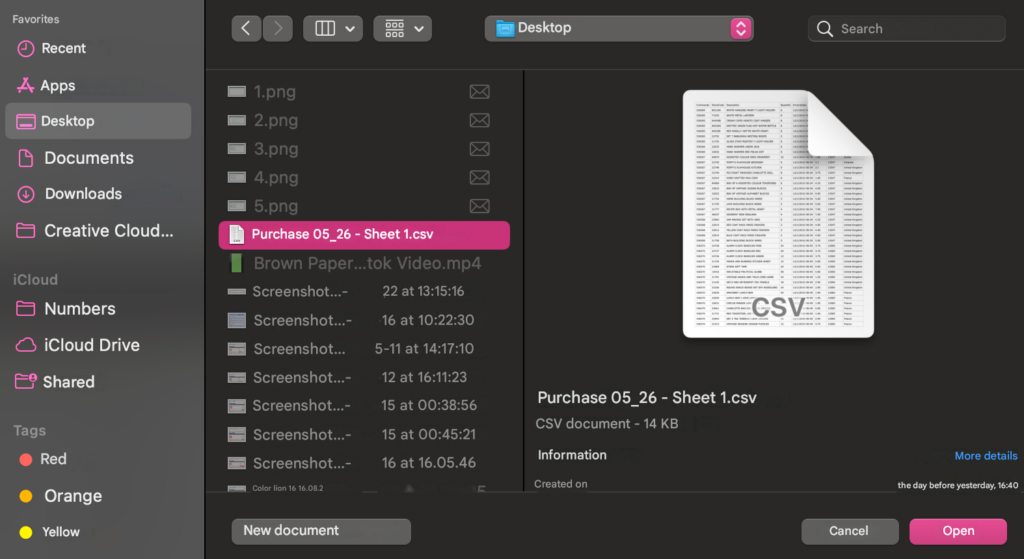
Your file will appear as a clean table with the data organized into the correct columns. ✨
Why Is My CSV File Unreadable?
If your CSV file looks unreadable, it’s usually caused by one of these common issues:
- Wrong separator (comma instead of semicolon).
- Incorrect encoding.
- Incompatible accents.
- Poorly structured columns.
- Data saved in the wrong format.
For example, if all your data appears in a single column, it usually means the software doesn’t recognize the delimiter used in the file. 😅
To avoid these issues:
- Always use the UTF-8 CSV format .
- Use the same delimiter throughout the file.
- Check the column structure before importing into a CRM or SaaS tool.
How to Export Your Waalaxy Leads to CSV ?
Waalaxy is a LinkedIn prospecting and outreach tool that helps you automate lead generation, manage campaigns, and keep all your leads in one place. 🚀
With Waalaxy, you can export your leads to CSV in just a few clicks. This is useful for:
- Importing leads into a CRM.
- Segmenting and organizing prospects.
- Analyzing campaign performance.
- Sharing lead data with your team.
- Enriching your contact database.
Export All Your Leads With Waalaxy
To export all your leads from Waalaxy:
- Go to the “Leads” tab.
- Select them all.
- Click on Export.
- Choose the CSV format.
- Download your file.
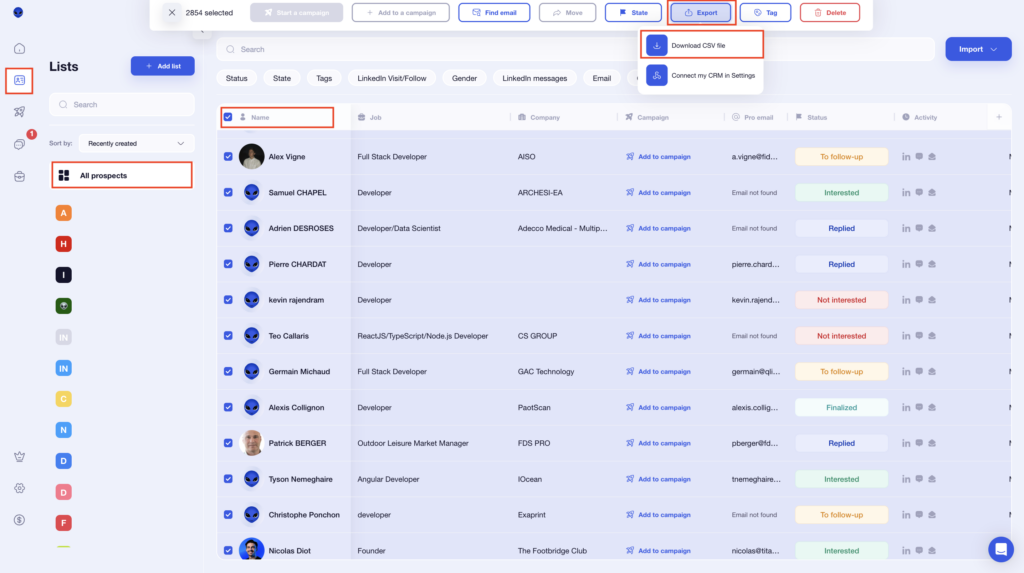
You’ll instantly get a CSV file ready to use in Excel, Google Sheets, or your CRM. ✨
Export a Specific Lead List With Waalaxy
If you only want to export specific leads, you can use Waalaxy’s lists and filters. 🎯
To do this:
- Open the “Prospects” tab with your lists.
- Select the list of leads to export.
- Filter the contacts if necessary.
- Click Export.
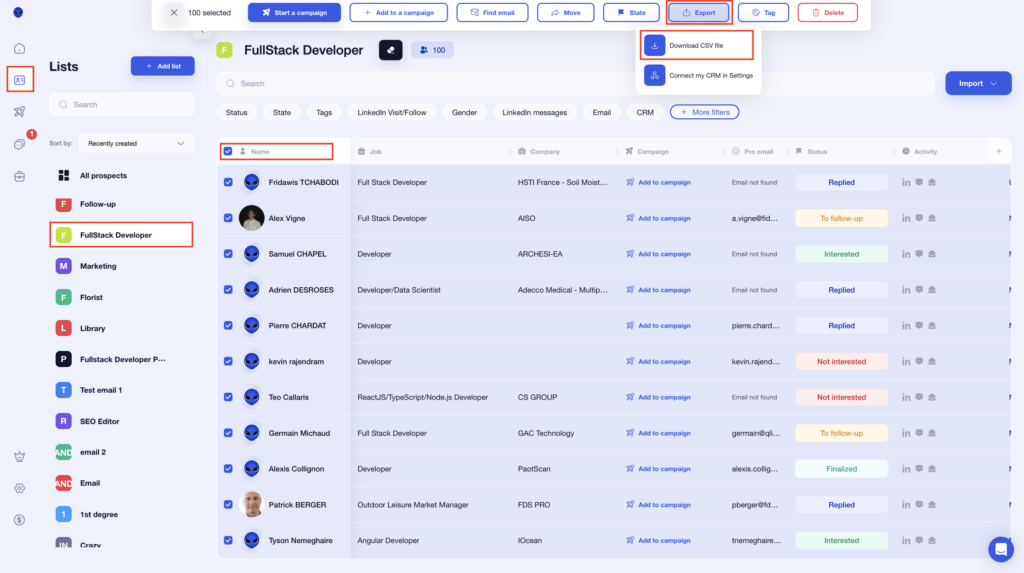
This is perfect for organizing leads by campaign, industry, status, or tags. 👌
Export Leads From a Waalaxy Campaign
You can also export leads directly from a specific campaign. 📩
Here’s how:
- Go to the Campaigns tab.
- Open the relevant campaign.
- Go to the “Leads” tab.
- Select the contacts you want to export.
- Click Export to CSV.
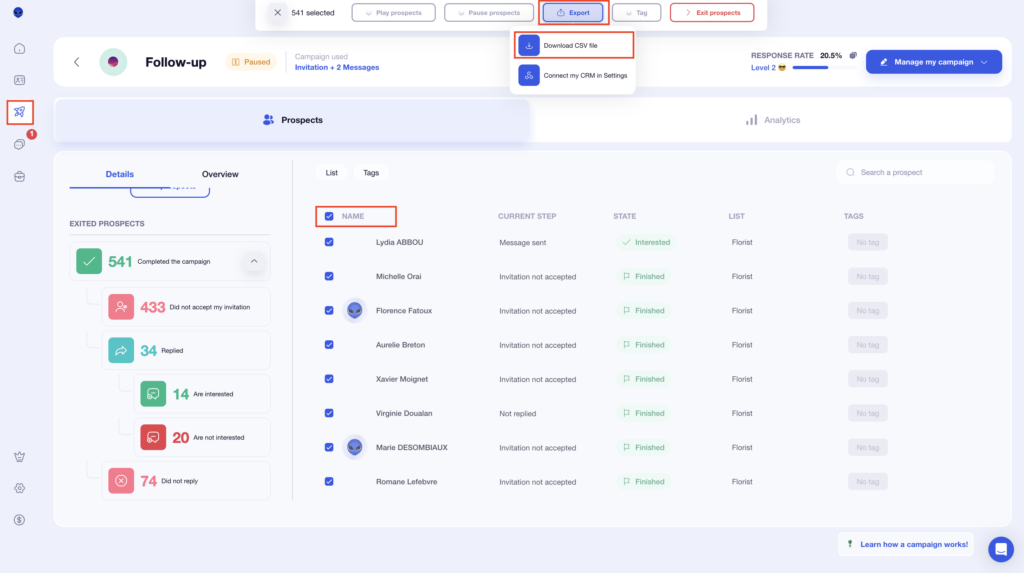
This is especially useful for analyzing campaign performance or transferring leads into another sales tool. 🚀
Let’s go over how to create a CSV file?
The CSV file has become an essential format for importing, exporting, and transferring data between multiple tools.
You now know how to create a CSV file, open it correctly, avoid encoding errors, and export your leads from Waalaxy in just a few clicks. ✨
Just remember to always check the UTF-8 encoding, the separator used, and the structure of your columns to avoid import issues. 😄
FAQ: How to Create a CSV File ?
How to prepare CSV file ?
To prepare a clean CSV, it’s important to keep your data structure clean and consistent. 👌
Each column should contain only one type of information: first name, last name, email, company, phone number, and so on.
You should also avoid:
- Empty rows
- Duplicate entries
- Unnecessary special characters
Before importing your file into a CRM or SaaS tool, always double-check:
- UTF-8 encoding
- The delimiter being used
- The column structure and organization
That quick review can save you from a lot of import issues later. ✨
How to Convert a PDF File to CSV?
To convert a PDF file into CSV format, you’ll usually need a conversion tool or OCR software that can extract table data from the PDF. 📄
Some popular options include:
- Adobe Acrobat
- Smallpdf
- ILovePDF
- Online PDF-to-CSV converters
Once converted, make sure to review the CSV carefully, since tables and columns can sometimes shift during the conversion process. 👀
How to Convert a CSV File to Excel?
To convert a CSV into an Excel file, you usually just need to open the CSV file and save it as an Excel workbook (.xlsx). 📊
Here’s how:
- Open the file in your preferred spreadsheet tool (in this example, Numbers).
- Click File > Export To.
- Select Excel Workbook (.xlsx).
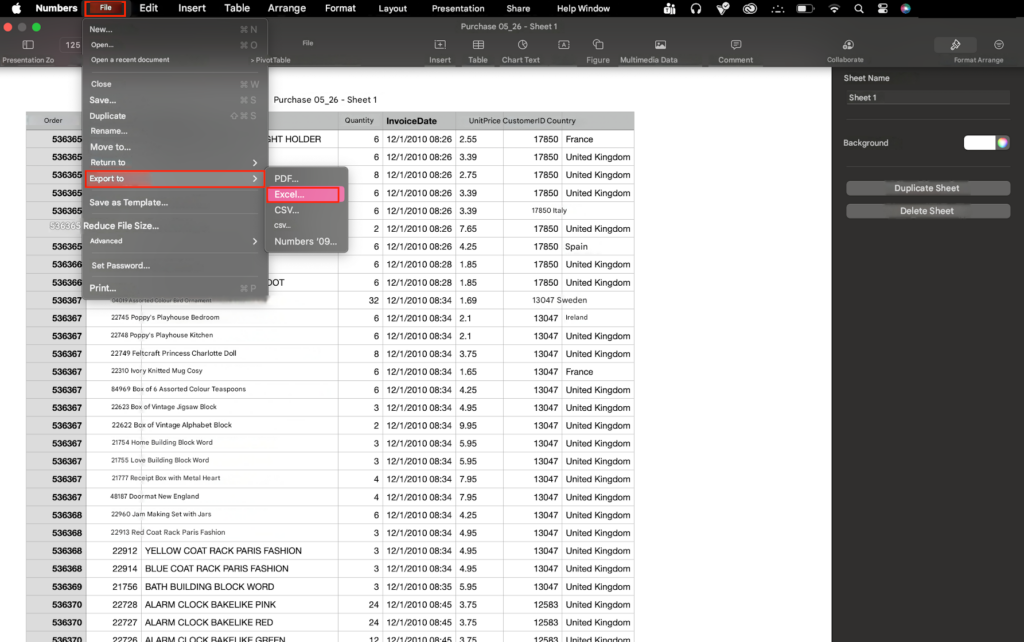
You can then open the file in Excel and use all the classic spreadsheet features like: Colors Filters Formulas Charts. 🎨
How to Combine CSV Files?
You can merge multiple CSV files together to keep all your data in one place. 🔄
You can do this with:
- Excel.
- Google Sheets.
- Power Query.
- Online CSV merge tools.
Before combining CSV files, make sure:
– All files use the same column structure.
– The same delimiter is used everywhere.
– Every file uses the same encoding format.
How to Write in a CSV File?
Yes, you can absolutely edit and write directly in it. ✍️
Since a CSV file is just a plain text file, you can modify it using Excel, Google Sheets, Numbers, a text editor like Notepad.
If you edit the file manually, make sure to double-check the delimiter used, UTF-8 encoding, the order of your columns.
Now you know everything you need to create and manage CSV files like a pro! 🧚🏻♀️
 Camila
23/06/2026
Camila
23/06/2026